Tag Archives: Economic Reforms

Ana Julia Faya: “Back to where everything began”

I still remember the very private sea-front golf course, west of Havana, on my way to Jaimanitas, a small public beach where my parents took us in the summer. It was a neat, bright, green course, which contrasted with the deep blue coast. Then, in 59 or so, the “bourgeois” field was swept by “proletarian” Caterpillar tractors. Now, the golf course is being built again by other “bourgeois” companies, for the survival of the elite in power.

After reading about the projects of those big Canadian companies in Cuba, with their luxury hotels, golf courses, villas for… whatever, and don´t know what else, I cannot but feel very frustrated. Fifty years –actually 52!– in the life of a whole country absolutely wasted; almost two million Cubans living abroad, including skilled professionals; families divided, torn apart; thousands of Cubans going through the trauma of changing all their social values twice in a life time; hundreds drown trying to cross the Florida Strait, or having suffered repression, incarceration, harassment in front of their homes and their children; a good portion of the population currently living in rags, and this “socialist” “revolutionary” Government is leading the country back to where everything began in 1959 –except that at that time, the Havana Biltmore green course was owned by Cubans, and now is owned by foreign companies; Cuba was a prosperous small country, and now is in ruins.

The Varadero Golf Course

Posted in Blog | Tagged , , | Leave a comment

A Further Step in the Liberalization of the Regulatory and Tax Environment for Small Enterprise Has Raul Now Got the “Horse before the Cart”?

By Arch Ritter

On Friday May 27, 2011, Granma, the official Cuban Newspaper announced a number of additional measures that would reduce the restrictions on micro and small enterprise, notably the “paladars” or small restaurants. (Continuar facilitando el trabajo por cuenta propia http://www.granma.cu/espanol/cuba/27mayo-continua.html)

The objective of the policy changes is to facilitate the expansion of employment in the small enterprise, creating new jobs to absorb workers to be declared redundant in the state sector.

The Government seems to now have the “horse before the cart: rather than the “cart befor the horse” in that job creation is being promoted first, with presumably the lay-offs coming afterwards, or perhaps through a normal process of letting those state sector work centers in personal service areas shut down, if they continuously make losses and have to be subsidized by the state.

There are a number of interesting measures:

1.      The most conspicuous measure is to permit the paladares or small restaurants to expand their capacity from 20 to 50 chairs – up from 12 before October.

2.      Loss-making state enterprises, notably state restaurants, may be offered for rental to self-employed individuals and operated as “cuenta-propistas”

3.      The hiring of up to 5 workers has been extended to all self-employment activities.

4.      The “minimum employment requirement” whereby for purposes of paying a tax on each employee a minimum number of employees were required, has been dropped.

5.      An exemption on paying the tax on each employee has been granted for the rest of 2011.

6.      Some additional new activities have been designated for self-employment;

7.      The payment of monthly taxes has been waived for taxi and bed and breakfast operators for up to three months while they repair their vehicles or rental facilities.

8.      The monthly up-front payment for bed-and breakfast operators has been reduced for the rest of 2011 from 200 to 150 pesos or convertible pesos (depending on whether they rented to Cubans in Moneda Nacional or foreigners in Convertible Pesos.

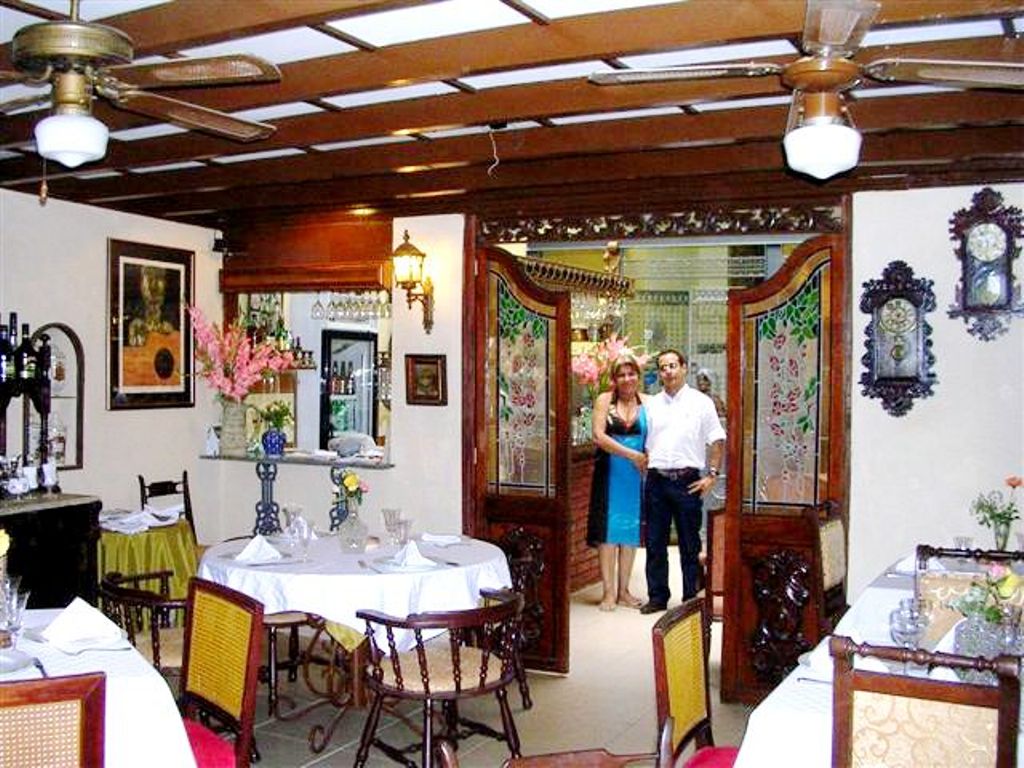
A Great New Paladar, with a Lucky Location on the Callejon del Chorro, Plaza de la Catedral

These changes are all reasonable. The government states that it is “learning from experience” (“rectificar en el camino”.) Pragmatism seems to be the growing vogue in economic management and that can only be positive.

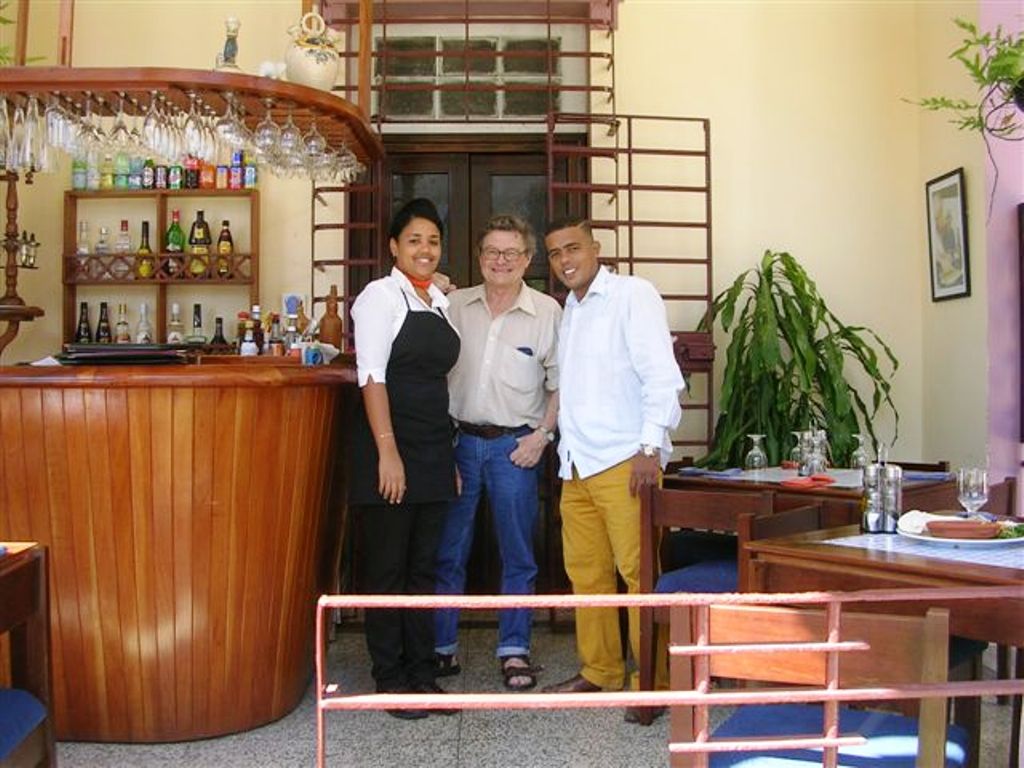
Anothe Great Paladar, 23 y Calle G (Avenida de los Presidentes)

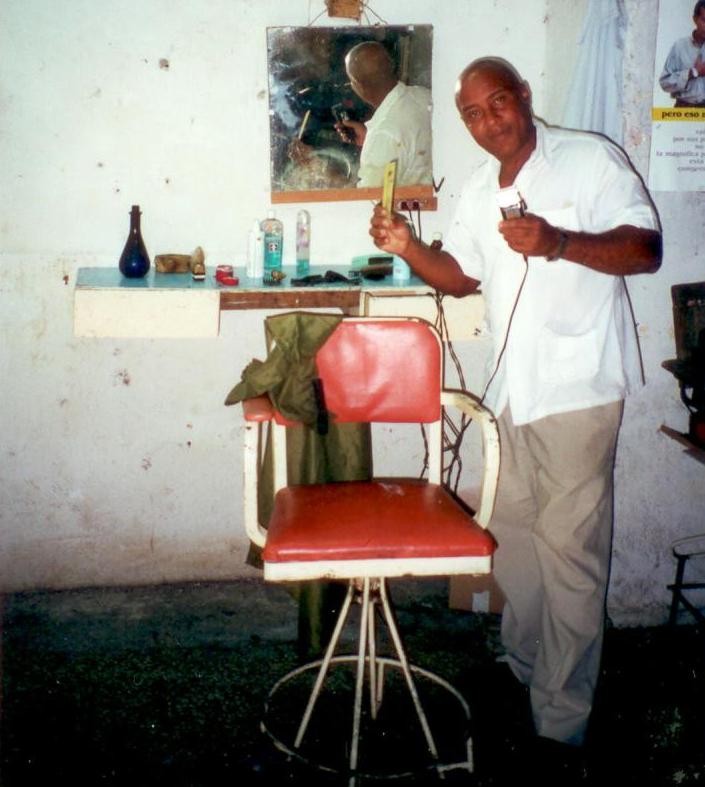
Cuenta Propista

Posted in Blog, Featured | Tagged , , , | Leave a comment

Mark Frank: “Cuba cracks down on “Guayabera” crime”

One morning this month the nearly half a million inhabitants of Sancti Spiritus, a leafy province in central Cuba, woke up to find their local government had fallen.

Rather than some kind of US-inspired coup, however, the removal and subsequent arrest of five senior provincial officials was part of the increasing drive by Raúl Castro, president, against white-collar corruption – or white “Guayabera” crime as it is called after the distinctive Cuban dress shirt.

The crackdown, launched two years ago, has already cost hundreds of senior Cuban Communist party officials, state managers and employees their jobs and sometimes their freedom, as Mr Castro has struggled to shake-up the country’s entrenched bureaucracy and move the country towards a less centralised and more market-driven economy.

Although such campaigns are not new, the intensity of the current drive is unprecedented, as are the number of high level targets and breadth of their illicit activities, Communist party and government insiders said this week.

As well as Sancti Spiritus’s wayward officials, Havana’s mayor resigned last month after most of the capital’s top food administrators were swept away in another probe.

Last year, in the all-important nickel industry, which exports some $2bn annually, managers from mines and processing plants up to deputy ministers of basic industry were arrested after “diverting resources” and padding export weights, according to industry sources. Yadira García Vera, the minister, was eventually fired.

The drive began in earnest in 2009 when Mr Castro, 84, opened the Comptroller General’s Office, saying it would “contribute to the purging of administrative and criminal responsibility, both the direct perpetrators of crimes and the secondary ones . . . [who] do not immediately confront and report them.”

The move is designed to try and allow state-owned companies to operate more profitably, as Mr Castro wants them to, while also preventing the kind of corruption that marked Russia’s and China’s own moves to the market.

“The creation of the Comptroller General in 2009 was a significant step in the first phase of Cuba’s reform,” said Arturo López-Levy, a former analyst at Cuba’s interior ministry and now a Cuba expert at the University of Denver in the United States.

“East Asia demonstrated the wisdom of creating an anti-corruption agency early in the economic transition from a command economy.”

Cuba is fertile ground for corruption. After 20 years of economic crisis, and with state wages worth around $20 a month – a level that the government admits does not cover necessities – almost all Cubans engage in illegal activities to survive.

At the same time, the government is loosening regulations on small private business even as it cuts subsidies and lays off government workers, thereby requiring more sacrifice from state employees and pensioners.

“Raúl Castro has clearly gone to extraordinary lengths to make it clear that corruption – particularly at the higher levels – will not be tolerated, signalling he means business and higher-ups must sacrifice too,” said John Kirk, a Latin America expert at Dalhousie University in Halifax, Canada.

Cuba does not suffer from drug-related corruption like many of its neighbours, said western diplomats and foreign security personnel who work closely with Havana on interdiction.

Rather, according to foreign investors, the biggest problems they face when forming domestic joint ventures are the long delays starting and then operating a Cuban business – in part due to draconian regulations designed to prevent white-collar crime.

That is not the case in the external sector, where foreign trade and off-shore activities make corruption easier.

“The huge disparities between peso salaries, worth just a few dollars a month, and the influx of strong currencies, even in very small amounts, create extremely strong incentives to become corrupted,” said one western manager, who requested anonymity.

Cuban cigars have become the most emblematic case. Distributors in Canada and Mexico had long complained that millions of valuable “puros” – high quality cigars – were somehow making their way to other Caribbean islands and then being smuggled into their franchised territories.

But it was not until last year that the Cohiba-puffing Manuel García, the long-time vice-president of Habanos S.A., a joint venture with London-listed Imperial Tobacco and the exclusive distributor of the island’s famous cigars, was arrested along with a number of other executives and staff.

“Turns out we were complaining to the very people who had set up the sophisticated operation, complete with shell companies and paths to avoid import duties,” one foreign distributor said.

Posted in Blog | Tagged , , , , | Leave a comment

Arturo Lopez-Levy: “Change In Post-Fidel Cuba: Political Liberalization, Economic Reform and Lessons for U.S. Policy”

Arturo Lopez-Levy

Here is the Hyperlink: Arturo Lopez Levy,Change In Post-Fidel Cuba: Political Liberalization, Economic Reform and Lessons for U.S. Policy” New America Foundation, May 2011,

Executive Summary:

This report explores the historic reform process currently underway in Cuba. It looks first at the political context in which the VI Cuban Communist Party Congress took place, including the Cuban government’s decision to release a significant number of political prisoners as part of a new dialogue with the Cuban Catholic Church. It then analyzes Cuba’s nascent processes of economic reform and political liberalization. To conclude, it discusses the challenges and opportunities these processes pose for U.S policy toward Cuba.

In his essay “Change in Post-Fidel Cuba”, Arturo Lopez-Levy, (a lecturer and PhD Candidate at the Josef Korbel School of International Studies at the University of Denver and also a graduate of the Carleton University-University of Havana Masters Program in Economics!) presents a wide ranging survey and careful analysis of economic and political changes in Cuba since Raul replaced Fidel in 2006, organizing his analysis around the pivotal Sixth Party Congress of April 2011.  Lopez-Levy tries hard to be even-handed and objective in his analysis. He succeeds well, though virtually no-one anywhere on any of the various political spectrums relevant to Cuba will be pleased with all of his assessments. His knowledge of Cuba at this juncture of its history is deep. He is particularly well qualified for undertaking such an analysis not only on the basis of his knowledge of Cuba and also given his academic work. His examination of Cuba’s political situation, the reform process, and US-Cuba relations is worth serious attention.

On the whole, Lopez-Levy is optimistic that the economic reform process, still in its initial phases, will be pragmatic, deep-cutting and irreversible but possibly excessively gradualistic.  He sketches the various elements of policy change that are slated for implementation and that will lead to a more decentralized and marketized economic framework that should help unleash and harmonize the economic creativity of Cuban citizens.

He is also optimistic that meaningful political liberalization will occur and indeed characterizes the regime under President Raul Castro as “Post-Totalitarian” – following some works of Juan Linz and Alfred Stepan (Problems of Democratic Transition and Consolidation, Baltimore: John

Hopkins University Press, 1996.) In Lopez-Levy’s words (p. 13), “Totalitarian practices have softened.” This obviously indicates that the author judges that practices indeed were totalitarian under Fidel and that they continue, though now somewhat “lighter”. (Political prisoners were released and independent critics have not been imprisoned.)

Lopez-Levy seems ready to be quite critical of Fidel but tends to give Raul the benefit of the doubt in a number of cases.  His euphemistic characterization of Fidel’s dictatorial rule is in fact damning if also humorous.

“By virtue of his historical leadership, Fidel Castro, in and of himself, embodied the minimum number of votes needed to establish a “winning coalition” in Cuban politics.”

But Lopez-Levy seems to want to find good things to say about Raul. For example,

“As Raul Castro hinted in his inaugural speech to the VI Party Congress2, this reform process will occur in tandem with political liberalization and the emergence of a Cuba more open toward the outside world.”

He also rather generously explains Raul’s selection of Jose Ramon Machado Ventura as First  Vice-President, and Second Secretary of the PCC as follows:

The decision to promote Machado (one year older than Raul)  to the second in command, first in the government, and now in  the Party, can be explained by two factors: 1) the triumph of the alliance of military leaders and provincial party czars as the dominant force in Cuban elite politics (versus government bureaucrats and Fidel’s appointed ideologues), and Raul Castro’s conviction that Fidel’s policy of promotion of young cadres “by helicopter”, not in a step by step Leninist fashion was a mistake.

The author’s own position on the political monopoly of the Communist Party of Cuba, sanctified by Article Five of the Cuban Constitution, does not seem clear. Lopez-Levy does speak supportively of political liberalization and refers to Fidel’s monopoly of the votes. But nowhere that I can see does he raise the over-arching central political issue and confront what he labels Raul’s “softer totalitarianism.”

The New America Foundation’s U.S.-Cuba Policy Initiative, directed by Anya Landau French, seeks to take advantage of recent developments to redirect U.S.-Cuba policy towards a more sensible, mutually beneficial relationship. Learn more at http://cuba.newamerica.net


Posted in Blog | Tagged , , , , , , , | 1 Comment

Juan Tamayo citing Oscar Chepe on the Revised PCC Sixth Congress Guidelines

Juan Tamayo,

El Nuevo HeraldMay 10, 2011
External Link: http://www.miamiherald.com/2011/05/09/v-fullstory/2209271/cuba-publishes-list-of-proposed.html

Cuba’s ruling Communist Party finally published its pie-in-the-sky list of proposed economic reforms on Monday, raising both high hopes for a more efficient economy and deep questions about exactly how that would be achieved.

The 313 “guidelines” proposed expanding the sale of homes and cars and the ability of Cubans to travel abroad as tourists, creating production cooperatives and slashing state subsidies and payrolls, among many other changes.

Endorsed last month at a Communist Party Congress, the proposals are designed to rescue a crisis-plagued economy by opening the doors to private business activity without totally abandoning Cuba’s half-century of Soviet-styled central controls.

But the proposals published in the Granma newspaper, the official voice of the party, provided few details on how those changes would be carried out, leaving optimists and pessimists alike to read whatever they wanted into the list.

Cars already can be bought and sold if they were manufactured before 1959 — the year that Fidel Castro’s guerrillas seized power — and houses can be legally exchanged in a complicated system of “permutas” or swaps.

Cubans already can travel abroad as tourists — as long as the government grants them “white cards” — the coveted permissions to leave the country, and return without being considered permanent émigrés who loses all their properties on the island.

Dissident Havana economist Oscar Espinosa Chepe said he was still analyzing the guidelines but considered it “very positive” that they recognized the need for various forms of production, including cooperatives and what Cuba calls “self-employment” — micro enterprises such as family restaurants and party clowns.

But he added that guideline 265 — “to study a policy that would make it easier for Cubans to travel abroad as tourists” — could easily create chaos because “a lot of people would leave for good because of the economic conditions that we face.”

Though officially only “guidelines,” their sensitivity is reflected in their history.

Raúl Castro first proposed 291 items that closely matched his own thinking on reforms late last year, then threw it open to a national debate. By the time the Communist Party Congress opened April 16, more than 40 items had been dropped, one-third had been reworded and the total had grown to 311. And when the government announced Sunday that they would be published on Monday, they had grown to 313.

They are expected to be put into effect by either government decrees or laws approved by the National Assembly of People’s Power, which usually meets only for two brief sessions a year.

The latest list of 313 proposals was not available outside Cuba as of late Monday, but news agency reports from Havana noted some of the details mentioned or left out of the items.

The section on buying and selling home, for example, made no mention of what kinds of taxes or fees will be charged on the transactions, according to the Associated Press. Blogger Yoani Sanchez told journalists that she was skeptical about item 265 because it made no mention of lifting the need for the “white cards.”

Many Cubans already now receive permission to travel abroad, for tourism or family reunions, to any country that would issue them visas, though the “white cards” are often denied to dissidents, physicians, minors and members of the military.

One proposal on foreign investment described it as needed but noted that it should bring with it advanced technologies and management methods as well as new export markets in order to create skills and capital for new jobs.

Mid-sized government enterprises could be spun off as cooperatives run by their current employees, according to the news reports, and would be allowed to sell their products on the open markets. But there was no word on who would set the prices for the goods produced.

Some state-owned buildings could be turned into private residences to ease Cuba’s critical housing shortage, according to an Associated Press report. The government also wants to eliminate the country’s burdensome two-currency system and legalize the sale of construction material at unsubsidized prices.

Other guidelines calls for the continued shrinking of the ration card, which provides all Cubans with a basic basket of food and personal items per month at highly subsidized prices, and replacing it with a system of subsidies for poor families only.

One big issue now is whether any reform enacted will have the desired impact in a country where tight government controls mean that few things can be done legally — but almost anything can be done illegally — Espinosa Chepe told El Nuevo Herald.

Cubans have been illegally buying and selling cars and homes for decades, often paying bribes to the very government officials who were supposed to be blocking or catching and punishing such deals.

“Now comes the strong fight over these points,” Chepe said, “truly the most profound changes in 52 years but one could argue that not enough for the level of crisis that we face in Cuba.”


Posted in Blog | Tagged , , | Leave a comment

Finally, the Guidelines Documents Approved at the Sixth Congress of the Communist Party of Cuba

By Arch Ritter

Finally, courtesy of Cubadebate, 10 de mayo de 2011, the key economic documents from the April Party Congress have been published. Here they are:

Lineamientos de la Política económica y Social del Partido y la Revolución, Aprobado el 18 de abril de 2011. VI Congreso del PCC

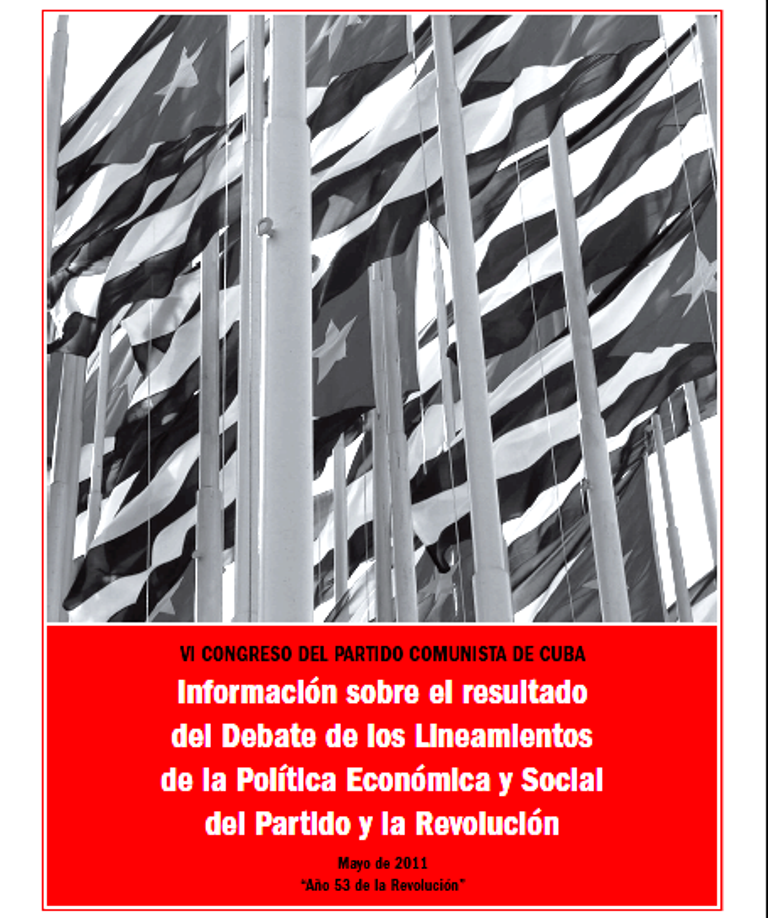
Información sobre el resultado del Debate de los Lineamientos de la Política Económica y Social del Partido y la Revolución

More on this later.

Posted in Blog | Tagged , | Leave a comment

Sixth Congress of the Communist Party of Cuba: Will Raul Forge His Own Legacy?

The Sixth Congress of the Cuba’s Communist Party, meeting from April 16 to 19, may be a turning point for Cuba. It may also be the beginning of President Raul Castro’s attempt to forge his own “legacy” and to emerge from the long shadow of his brother. In order to succeed, the reformist thrust of the Congress must be ambitious and courageous, moving Cuba away from the defunct economic and political approaches copied from Soviet orthodoxy in the 1960s.

How likely is Raul to succeed?

There seems to be no chance that Raul will abandon Cuba’s Soviet-style political institutions and Communist Party monopoly. While Cuba is a signatory to Universal Declaration of Human Rights, the International Covenant on Civil and Political Rights and the International Labour Organization’s Conventions, there is virtually no possibility that Raul will use the opportunity of the Congress to honor fully Cuba’s commitments to the human, political, civil and labor rights enshrined in these covenants.

But economic reform in a “market friendly” direction is probable.  In various speeches since 2006, Raul has indicated that he recognizes the problems that Cuba confronts in terms of the production of agricultural and industrial goods and improvement of Cuba’s infrastructure. He is well aware of the unbalanced structure of the economy, the monetary and exchange rate pathologies and the dysfunctional incentive environment. He has approached the problems systematically and deliberatively – though perhaps somewhat leisurely.

Raul’s new approach is embodied in the “Draft Guide for Economic and Social Reform” published in November 2010. This constitutes an ambitions and comprehensive “wish-list” or statement of aspirations designed principally for popular discussion. It represents a strong commitment to reform. While there are internal inconsistencies and opaque elements among the 291 recommendations, there are deep-cutting proposals on many aspects of economic organization and policy. However, there were no priorities indicated among the recommendations. There was no suggestion of the sequencing of policies. There was no apparent coordination among the proposals.

In order to forge a viable reformist strategy from this wish-list, a new document is required. This indeed has probably been prepared for approval at the Congress. This document may include a clearer statement of specific objectives. It also would need to prioritize policies and include some sequencing of actions and generally to provide some “focus” to what is in effect a check list of good intentions.

In such a reform process many things would be changing simultaneously with symbiotic impacts and consequences that will likely be painful and are difficult to foresee. Will Raul have the courage to take the risks inherent in an ambitious process of economic change? This was not apparent in view of his earlier “go-slow” approach prior to the Congress.

There undoubtedly is opposition, of indeterminate strength, to the prospective reform process. Former Minister Jos Luis Rodriguez, for example asserted that

“…essentially, the model could be sustained; the proof is that the economy continued growing since 1994. ….the fact is that there was not a recession despite all the problems”

If the model was not in crisis, ambitious and deep-cutting reforms obviously would be unnecessary and perhaps foolish.

However, while the “Fidelistas” will run interference, the reform process is likely sustainable. There are a variety of reasons for this conclusion:

  • Cuba’s economic problems must be dealt with;
  • As the micro-manager of the economy for some 45 years, Fidel himself is discredited:
  • All of the “Fidel Models” are discredited by current realities, by the “Draft Guide,,,”; by Raul’s statements and speeches and by the publicity regarding the need for a reform;
  • The “Fidelistas” appear to be on the wane;
  • Generational change is under way;
  • The climate of opinion seems to have changed and large numbers of Cuban citizens appear to be ready for reform – despite the risks that are already apparent;
  • Heightened popular expectations for change will be increasingly difficult to contain.

Moreover, the Fidelista Ministers have been replaced by President Raul Castro and he has moved his military colleagues into management positions throughout the economy – though this also is problematic.

Finally, at this stage of his life Raul is probably thinking about his “legacy” and his place in history. It is unlikely that he wants to be judged as the minor appendage of his older brother. He seems to want his own “economic model.”  Perhaps he recognizes that while “History will (not) absolve” Fidel, perhaps it might absolve him. If he were to introduce major political reforms he would earn a very significant place in “History.” However, introducing deep-cutting economic reform is a start.

The Sixth Congress of the Communist Party of Cuba is indeed Raul’s main chance.

Primer Congreso del Partido Comunista de Cuba

Posted in Blog, Featured | Tagged , , | 1 Comment

Cuban Public Opinion Survey, 2011, International Republican Institute

The International Republican Institute has just published the results of a public opinion survey taken in Cuba, the fifth such survey since 2007. A series of questions were asked concerning general perspectives on Cuba, attitudes towards political and economic change, and access to information technology. Some of the same questions have been asked since 2007 providing some interesting comparisons over time.

The complete survey is located here: Cuban Public Opinion Survey, 2011, Int’n’l Republican Institute

The survey methodology was as follows

  • Dates of Interviewing: The fieldwork was conducted Jan, 28 – Feb. 10, 2011.
  • Data Collection Method: Stratified-intercept methodology based on personal, face-to-face interviews in Cuba.
  • Sample Size: 463 Cuban adults (age 18 and older).
  • Sample: Interviews were conducted in twelve (12) Cuban provinces
  • The sample was stratified by province, then by sub-units within each province. Interviewees were allocated by gender and age quotas. The final selection of each interviewee was random.
  • Respondents: The sample selection for province, gender and age are based on the last available Cuban census data, released in 2002.
  • Maximum Sample Margin of Error: Margin of error of ± five percent for a 95 percent level of confidence.

There are a number of interesting results of the survey. Here are a couple.

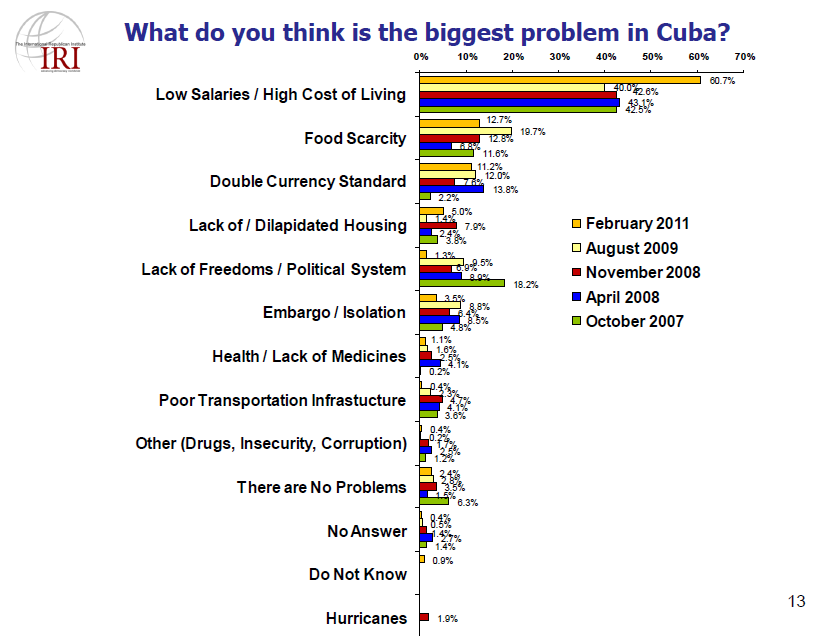
1. What do you think is the biggest problem in Cuba?   60.7% said that Low Salaries / High Cost of Living were the most serious, up from 40% in 2009,  while 12.7% said that food scarcity was the most serious. 1% of the respondents stated that the Lack of Freedoms / Political System was the most serious. This suggests that Raul Castro’s priority on the economy is not misplaced.

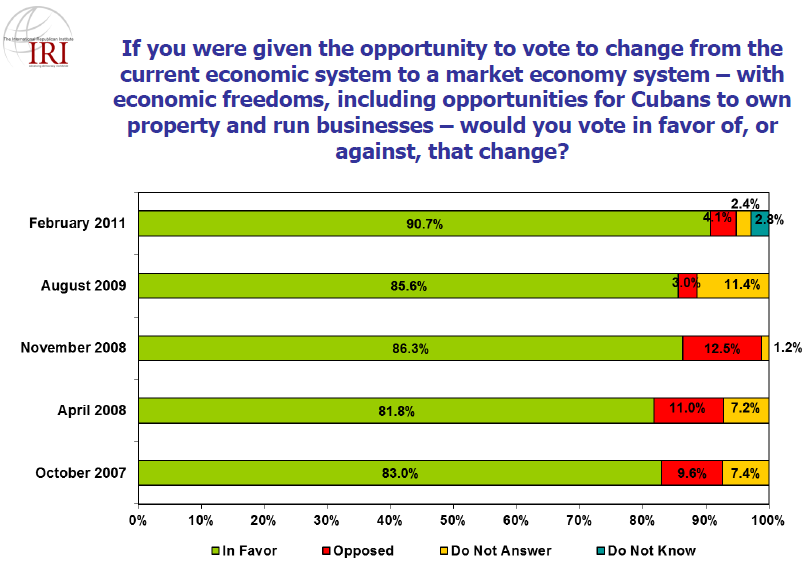
2.      If you were given the opportunity to vote to change from the current economic system to a market economy system – with economic freedoms, including opportunities for Cubans to own property and run businesses – would you vote in favor of, or against, that change?  90.7 of the respondents were in favor. The prospective pro-market reforms of the Sixth Congress would appear to be in line with public opinion.

3.      Do you believe the current government will succeed in solving Cuba’s biggest problem in the next few years?     77% say no, a higher proportion than in any IRI survey since 2007.

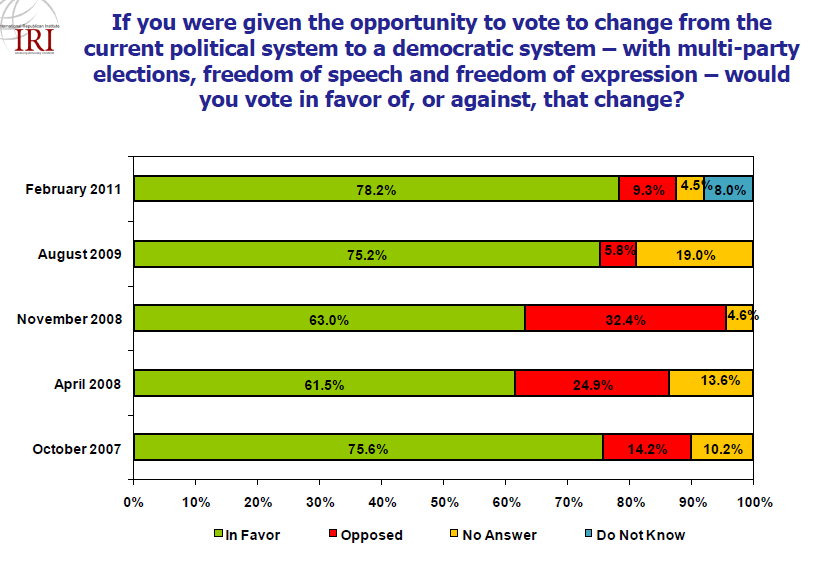
4.      If you were given the opportunity to vote to change from the current political system to a democratic system – with multi-party elections, freedom of speech and freedom of expression – would you vote in favor of, or against, that change? 78.2% were in favor.

5.      Do you regularly use a cellular phone?  25.3% said yes, up from 10% in 2007.

Presumably the Government of Cuba conducts similar studies but with differently worded questions that produce results somewhat more congenial to the status quo.

But the results of the IRI surveys certainly must be of deep concern to the Government and the Party.

Posted in Blog | Tagged , , , , , , | Leave a comment

Chronology: Raul Castro’s Road to Reform in Cuba April 13, 2011

By Marc Frank, Reuters, April 13, 2011

External Link: http://www.reuters.com/article/2011/04/13/us-cuba-reform-chronology

HAVANA (Reuters) – Cuba’s pace of economic reform is expected to pick up after a congress of its ruling Communist Party that begins this weekend and whose main agenda item is “modernizing” the socialist economy.

Reforms up for discussion include: decentralization of government decision-making and revenue flows; giving more autonomy to state-run companies; slashing state payrolls and subsidies and reducing the state’s role in agriculture and retail in favor of a growing “non-state sector”.

The congress crowns President Raul Castro’s efforts to build a consensus for major changes in how the Caribbean country runs its economy and how its people live.

Since he took over day-to-day rule from his ailing older brother Fidel Castro in 2006, Raul Castro signaled that one of the world’s last Soviet-style economies was due for overhaul. But he has ruled out any switch to Western-style capitalism.

What follows is a chronology of Castro’s most important reform measures and statements:

2007

July – In his first major speech, Raul Castro calls the state milk collection and distribution system “absurd” and says farmers will deliver directly to local consumers where possible.

“To have more, we have to begin by producing more, with a sense of rationality and efficiency,” he said.

August – Castro signs a law ordering all state companies to adopt a system of “perfecting” management. This was developed by the military when Castro was defense minister to improve performance using capitalist-style management techniques.

2008

February – In his formal inaugural address as the new Cuban president, Castro says: “We must make efforts to find the ways and means to remove any deterrent to productive forces. In many respects, local initiative can be effective and viable”.

March – Computers, cell phones, DVD players and electric appliances go on sale for the public and bans on Cubans renting cars and staying in tourism hotels are lifted.

A sweeping reform of agriculture begins. This includes decentralization of decision-making, increases in state prices paid to farmers, leasing of fallow state land and loosening of regulations on farmers selling directly to consumers.

August – A significant labor reform ties wages to individual productivity, and caps on earnings are eliminated.

Government announces domestic freight transport and housing construction will be decentralized to the municipal level.

2009

March – Castro purges his brother’s economic cabinet and places trusted military men and reform-minded technocrats in key economy and planning posts. The central bank head Francisco Soberon quits two months later and is replaced.

April – The new cabinet slashes the budget and imports. Plans are unveiled to develop suburban farming around most cities and towns, using mainly private plots.

July – Castro is quoted as stating “ideas chart the course, the reality of figures is decisive,” an unusual statement in a nation where ideology and politics trump economics.

August – National Assembly establishes office of the Comptroller General of the Republic. Castro says it will aim to improve “economic discipline” and crack down on corruption.

He calls for “elimination of free services and improper subsidies — with the exception of those called for in the constitution (healthcare, education and social security).”

Santiago mountain dwellers are allowed to sell fruits and produce at roadside kiosks. Spreads to adjoining provinces.

September – Licenses are issued to food vendors in various cities, making them legal.

October – Granma announces state work place lunchrooms will close in exchange for a daily stipend.

December – Economy Minister Marino Murillo tells parliament: “We have begun experiments … to ease the burden on the state of some services it provides.”

2010

January – Municipal governments are ordered to draw up economic development plans that may include cooperatives and small business. A pilot project where taxi drivers lease cabs instead of receiving a state wage begins in Havana.

April – Barbershops and beauty salons with up to three chairs go over to a leasing system. Rules for home construction and improvements are liberalized.

June – Sale of construction materials to the population is liberalized. The government authorizes farm cooperatives to establish mini-industries to process produce.

August – New rules authorize Cubans with small garden plots and small farmers to sell produce directly to consumers.

The state increases from 50 to 99 years the time foreign companies can lease land as part of tourism and leisure development projects, such as golf courses and marinas.

Stores open where farmers can purchase supplies in local currency without regulation.

September – The government announces the lay-off of more than 500,000 state workers and 250,000 new licenses for family businesses over six months. Some 200,000 of the state jobs will go over to leasing, cooperatives and other arrangements. Unemployment benefits are cut.

Self-employment regulations are loosened and taxes tightened. Family businesses are authorized for the first time to hire labor, do business with the state and rent space.

December – Castro gives most explicit reform speech yet urging change of “erroneous and unsustainable concepts about socialism that have been deeply rooted in broad sectors of the population over the years, as a result of the excessively paternalistic, idealistic and egalitarian approach instituted by the Revolution in the interest of social justice.”

2011

January – State banks begin issuing microcredits to would-be farmers who have leased land.

March – Castro announces the original timetable to lay-off 500,000 state workers by April has been scrapped and there is no fixed date to complete the process as workers resist losing their jobs and balk at the high cost of proposed leasing arrangements. Castro creates new post to oversee economic reform and promotes Economy Minister Murillo to the job.

April – Authorities announce 120,000 people have leased land since 2008 and 180,000 people have taken out licenses to work for themselves and rent space to new entrepreneurs since October. State banks are authorized to issue microcredits to new entrepreneurs and state bodies to do business with them.

Posted in Blog | Tagged , , | Leave a comment

Cuba’s Economic Agenda and Prospects: An Optimistic View!

By Arch Ritter

Published originally in FOCALPoint, April 2011, Volume 10, N0. 3.

The Sixth Congress of the Communist Party of Cuba, taking place April 16-19, 2011, will focus on a comprehensive range of economic reforms, labelled an “updating” of its model, but ostensibly not a movement away from Cuban socialism. This reflects the depth of Cuba’s economic problems as well as the unwillingness of the regime to tolerate discussion of political reform, which is not on the agenda.

The Cuban economy faces severe difficulties, despite purportedly high GDP growth figures. The real state of the economy can be summarized as follows. There has been minimal recovery from the near 80 per cent collapse in the population’s real income levels since 1989. De-industrialization brought 2010 industrial output to 51 per cent of its 1989 level. Sugar production has declined catastrophically, from roughly seven million tonnes in the 1980s to approximately 1.3 million tonnes per year at present. Reduced production of foodstuffs has resulted in major increases in food imports. Investment has been insufficient, at 8.5 per cent of GDP (compared with 21.9 per cent for Latin America in 2008). There are high levels of under-employment in the state sector —an estimated 1.2 to 1.8 million workers, or 20 to 35 per cent of the labour force— compared to the official unemployment rate of 1.6 per cent. These factors are combined with a half-century of monetary pathology, 20 years of the dual exchange rate and monetary systems, and heavy reliance on special trade arrangements of dubious sustainability with Venezuela.

President Raúl Castro has spoken forcefully on the need for economic reform (in contrast with the complacency of his brother Fidel), stating in April 2010:

“We face unpleasant realities, but we are not closing our eyes to them. We are convinced that we must break dogmas, and we undertake with strength and confidence the modernization, already underway, of our economic model.”

The character of socialism has also been redefined under Raúl’s regime as spelled out in the Draft Guidelines for Economic and Social Policy, a document released in November 2010 as part of the lead-up to the Congress: “In the economic policy that is proposed, socialism is equality of rights and opportunities for the citizens, not egalitarianism.” This may be of game-changing significance, suggesting that Cuba is moving toward “social democratic” orthodoxy.

When Raúl succeeded his brother in 2006, there were heightened expectations that he would introduce reforms, given his reputation for pragmatism. However, few significant changes were introduced in his first four years, with the exception of postponement of the retirement age and the granting of 10-year leases on unused state-owned farmlands to private farmers.

In October 2010, Raúl introduced a program to downsize the state sector that would lay off 500,000 redundant workers by March 31, 2011, and ultimately, 1.8 million workers in total by 2015. These workers were to be absorbed in an invigorated small-enterprise and co-operative sector. In order to encourage small enterprise, the licensing process, regulatory system and tax regime were liberalized. These measures were headed in the right direction, but were too modest to stimulate the required expansion of self-employment. By January 2011, some 83,400 new self-employment licenses had been granted —far below the 500,000 target for March 31. Because of this, the implementation of the state sector downsizing was decelerated and indeed appears to be on hold until after the April Congress. Few if any workers have actually been laid off, although some have been told that they are to be let go, prompting informational and procedural discussions in many workplaces.

The Draft Guidelines for Economic and Social Policy document was issued by the government to serve as the basis for public discussion of the reforms and prepare a more definitive strategy to be approved at the Congress. These Guidelines include 291 recommendations for changes in every area of economic and social policy. It is a statement of aspirations, with no indication of policy priorities, sequences or co-ordination. The reforms are to be within the framework of the socialist planning system.

There are a variety of views among analysts regarding the possible outcome of the Congress. Some expect no meaningful policy changes. But others —including some dissident economists and mainstream analysts alike— are optimistic and expect reforms. Indeed, the climate of opinion within Cuba decisively favours reform.

Can Raúl’s administration forge a workable strategy from the Guidelines’ wish list? Given the deliberative and systematic way in which Raúl has proceeded so far, this appears probable. A process of economic —but not political— reform will most likely begin after the Congress. Where it will lead is hard to predict. Presumably Raúl’s regime would like the process to end with a new balance between public and private sectors, with a controlled movement toward the market mechanism in price determination and the shaping of economic structures, and with the construction of a rational configuration of incentives shaping citizens’ daily economic actions so that their private endeavours become compatible with Cuba’s broader economic well-being. This, however, remains to be seen.

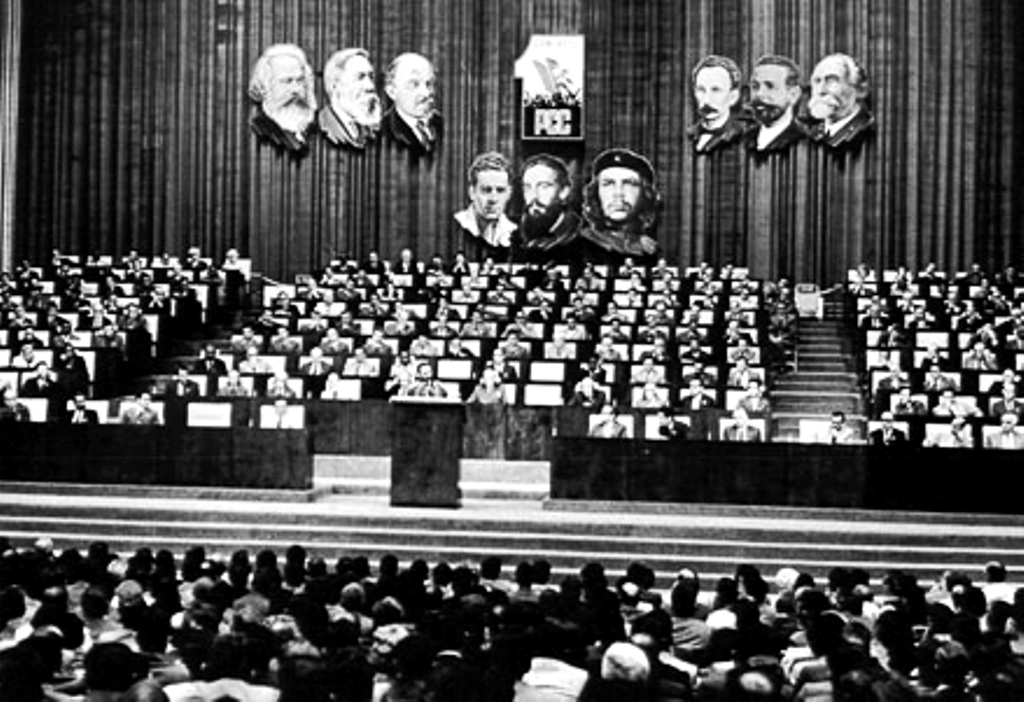
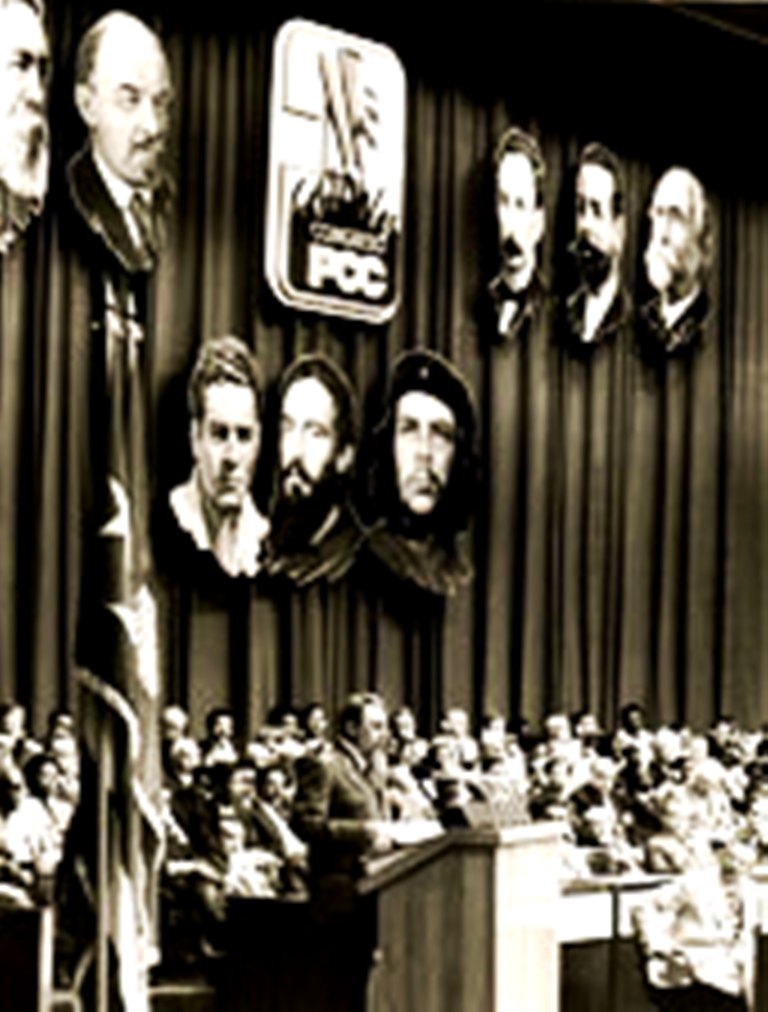
Third Congress of the Communist Party of Cuba, Bohemia, 8 April 2011.


Posted in Blog, Featured | Tagged , , , , , | Leave a comment