Tag Archives: Economic Reforms

Juan Tamayo: Espacio Laical Urges Communist Party to Embrace Significant Reforms

From Juan Tamayo, Miami Herald, Wednesday, 11.16.11

Espacio Laical Article Here: Espacio Laical, November 2011 Rectificar el Rumbo

A Catholic magazine in Havana has  complained that a plan for an upcoming Communist Party conference shows the party is tied to “failed dogmas” and called for profound changes in Cuba’s economy, its tightly controlled news media and its rubberstamp legislature.

The editorial in the magazine, Espacio Laical, used unusually direct wording to argue that the published agenda for the National Conference of Cuba’s ruling and only legal political party on Jan. 28 falls far short of what is so desperately needed. While any changes must be well-considered, it noted, “we do not have the luxury of confusing gradualism with a lack of clarity or speed” because “it would be painful if the current generations of Cubans must suffer the pain of seeing their aspirations truncated.”

Yet, the agenda for the conference shows the party remains “attached to failed dogmas and obstinately holding on to a very vertical relationship with society,” added Espacio Laical, published by and for lay Catholics in the archdiocese of Havana.

The most important reform needed would be to give common Cubans more opportunities to run their own lives and truly influence government decisions, the magazine argued, calling it a “re-founding of citizenship.”

For its part, the magazine added, it favors allowing small and medium private enterprises as well as all types of cooperatives, and freedom for professionals such as doctors and lawyers, who can now exercise their professions only in government jobs. Cuba also must promote the growth of civil society — that part of a country’s life not controlled by the government — by allowing independent social organizations and opening the heavily censured mass media “to the diversity of criteria in the nation,” it argued.

Reforms also are needed within the Communist Party, the magazine added, as well as “the mechanisms of people’s power, so that the institutions of public power can have the authority they need.” Cuba’s rubberstamp legislature is the National Assembly of People’s Power.

Espacio Laical’s arguments coincided on many points with recent columns by Pedro Campos, a well-known Havana historian and former diplomat sometimes described as the voice of Cuba’s democratic communists. Campos has argued that the party must end its “neo-Stalinist” ways and develop a version of socialism that includes more direct citizen participation in government decisions as well as the productive sector, through workers’ cooperatives.

The Raúl Castro government has launched a string of reforms designed to improve the economy, by slashing public spending and allowing an increase in private enterprise. It also has legalized the sale of dwellings and expanded the legal sale of cars and trucks. But some of the reforms remain in the planning stages, and there’s been no sign that the government would agree to any political changes that could endanger the Communist Party’s hold on power.

The Espacio Laical editorial acknowledged the Castro reforms so far and noted that others no doubt will follow, but added that Cubans “feel that there’s nothing big, capable of renovating life and driving away the hopelessness.”
The announcement that the party would hold a conference in January sparked “great expectations” for change, added the editorial. But the recent publication of the agenda “worried many who had hoped for renovation.”

With most of Cuba’s revolutionary rulers in their 80s, the editorial called the conference “the last moment for the so-called historical generation” and urged it to “propose substantial changes and convene the people to carry them out. Don’t lose this opportunity.”
 

Posted in Blog | Tagged , , | Leave a comment

Oakland Ross in the Toronto Star: Adios, Fidel. Hola, Hugo. Cuba charts new course

From the Toronto Star, November 14, 2011

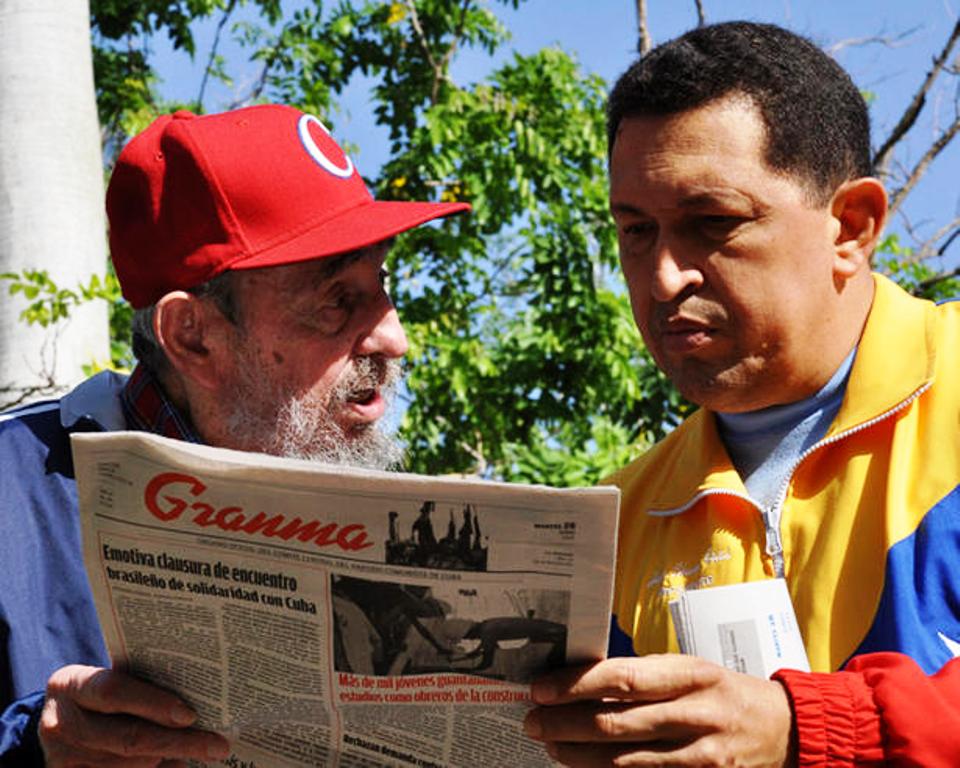
The new hero of the increasingly creaky Cuban revolution is a bumptious, 57-year-old politician burdened with what may well be grave medical problems — a former army officer who doesn’t sport a beard and isn’t even Cuban.

But Hugo Chavez is the president of Venezuela, and that means oil. Unfortunately, in this case, it also means cancer. The now bald-pated Chavez insists he’s licked the disease, but his prognosis is a matter of dispute.

Upon such slender, unpredictable strands do the destinies of small, socialist, island states depend — or at least those that bob above the Straits of Florida, just 170 kilometres from Key West.

“Without the Venezuelans, we’d have nothing,” says Oscar Espinosa Chepe, a prominent Cuban economist and dissident, speaking on the phone from his cramped Havana apartment. “If we lost this, I don’t know what would happen.”

This is the massive infusion of assistance — estimated to be worth about $3.5 billion a year — that Chavez now funnels into Cuba’s struggling economy, largely for ideological reasons and mainly in the form of petroleum.

Without that largesse, the island’s wilting economy might keel over, dead.

“The support from Venezuela has been phenomenal,” says Arch Ritter, an economics professor at Carleton University and an expert on Cuba. “If anything happens to Chavez, Cuba could be in trouble again.”

Cuba already is.

Two decades have spiralled past since the Cold War’s end, when Moscow hastily abandoned its only Caribbean satellite state. During those years, the island’s industrial output has shrunk by more than half, the result of rusting Soviet-era infrastructure and poor management.

“We are importing things we can make in Cuba,” says Espinosa. “We are importing coffee. We are even importing sugar. It’s crazy.”

It would be crazier still without Venezuelan support, which meets approximately two-thirds of the island’s annual petroleum needs and is delivered in at least nominal repayment for the services of tens of thousands of Cuban doctors now deployed across Venezuela and in other left-leaning Latin American states.

“Assistance from Venezuela is now the basic element of the Cuban economy,” says Espinosa. “Venezuela has converted itself into the new Soviet Union.”

Behold Cuba, 52 years after the triumph of Fidel Castro’s revolution: a country whose rulers are mainly geriatric, white and male, where the average salary works out to just $18 a month, where sugar production — once the backbone of the economy — now lurches along at about one-half the average international level of output per hectare, and where the economic future depends to a worrisome degree on the dubious health of a man named Hugo Chavez.

Who isn’t even Cuban.

By almost all accounts, Chavez and Fidel Castro share an intimate bond, but the elder Castro was laid low five years ago by a life-threatening gastrointestinal ailment. Now 85, he has surrendered all formal claims to power and has largely disappeared from public view.

Fidel’s successor — his slightly younger brother, Raul, now aged 80 — is trying to steer the country in a new economic direction, without actually calling it that and without diluting central political control.

Meanwhile, Cuba’s largest natural trading partner remains its bitterest political foe, an increasingly nonsensical standoff that has prevailed for more than five wearying decades and betrays little sign of changing now, especially not with a U.S. presidential election in only a year.

“I don’t know what it is about Cuba,” says Wayne Smith at the Center for International Policy, a Washington-based think tank. “Obama has done very little. It’s very disappointing.”

Shortly after taking power, U.S. President Barack Obama removed restrictions on Cuban Americans who wish to send money to relatives on the island or visit family there.

But that was about it.

The Americans still squander millions of dollars a year on provocative but ineffectual propaganda efforts aimed at destabilizing the Castro regime.

And the infamous U.S. economic embargo remains in place, still with the professed purpose of dealing a crippling blow to the Cuban revolution, something it has never done, isn’t doing now and never will do.

The reasons the punitive barrier has not been lifted have more to do with domestic U.S. politics than events in Cuba. Now, as in decades past, neither Republicans nor Democrats in the U.S. are inclined to cosy up to anyone named Castro, not if that means alienating more than a million Cuban-American voters.


The already bleak outlook for rapprochement between the two sides only got bleaker last March when Cuban authorities sentenced American Alan Gross to 15 years’ imprisonment on charges of distributing illegal communications equipment to members of the island’s small Jewish community.

Smith says Gross got what he deserved. After all, he had been making repeated trips to the island, delivering what Smith calls “rather sophisticated” devices, without proper documents. The Cubans finally lost patience, he says.

“I’m only surprised they waited that long.”

Others believe the Cubans are looking for a trade.

Cue the Cuban Five, a group of men sentenced in 2001 by a Florida court to jail terms ranging from 15 years to life on charges of espionage, in what many regard as a blatant miscarriage of justice.

“The case of the Cuban Five is a blot on the honour of the U.S.,” says Smith. “The trial was totally biased.”

Last month, one of the five was released from prison after his sentence was reduced for good behaviour. That was dual citizen René Gonzalez, who will be obliged to serve out his probation in the States. The others remain behind bars.

In Cuba, where the men are celebrated as heroes, the authorities fervently want them back.

But an exchange — Gross for the Cuban Five — seems a long shot at best. Besides, the most pressing challenges for Cuba right now are economic.

Raul Castro has warned that the country’s socialist economy is perched upon a precipice and last year announced his intention to lay off 1.3 million public-sector workers.

Layoffs there have been, combined with several cautious nods to small-scale entrepreneurship. Cubans may now own beauty parlours, restaurants and the like. They may buy and sell cars and even real estate.

The pace of reform isn’t fast enough for some. But even restless dissidents such as Espinosa acknowledge that Cuba has changed.

“The government has lost the ideological battle,” he says. “The majority of Cuba’s people, including the Communist party and the government, are in favour of change. There’s no turning back.”

In the meantime, there’s Hugo Chavez — and imported sugar.


Posted in Blog | Tagged , , , | 1 Comment

Center for Democracy in the America: New Analysis of U.S. Policy towards Cuba

A new analysis of U.S. policy towards Cuba has just been published by the  Center for Democracy in the Americas. It is another well-balanced and eloquent call for a change in the failed US approach towards Cuba, a failure that has endured for a half-century.

The Table of Contents and part of the concluding comments are presented below. The complete study can be found here: Center for Democracy in the America, CDA_Cubas_New_Resolve: Economic Reform and its Implications for U.S. Policy (Hyperlink)

Table of Contents

About this Project 1
Preface 3
Section One: Raúl Castro Addresses Cuba’s Economic Crisis 7
Section Two: How the Economy is Changing for Everyday Cubans 35
Section Three: Listening to the Cuban People . 45
Section Four: Findings and Recommendations 59
The Center for Democracy in the Americas’ Cuba Program 75
Acknowledgments . 77
Endnotes 81

What Should U.S. Policy Be?

U.S. sanctions are premised on the belief that strangling Cuba’s economy will lead the system to fail, motivating the Cuban people to rise up against their government and establish a multiparty liberal democracy. After five decades, it has failed to achieve its goal. Instead, it is inhumane and counter-productive. In addition to inflicting pain on the people we are ostensibly trying to help, the sanctions could even prompt a mass  xodus out of Cuba, putting the stability of the Caribbean at risk.

Twenty years ago, amidst the wreckage of the Special Period, U.S. Congress and the Executive Branch tightened sanctions with the hope of capitalizing on Cuba’s difficulties. American policy missed the chance to align itself with the humanitarian interests of Cubans and their leadership muddled through. As U.S. sanctions became more restrictive, we ceded the playing field to allies and competitors—Spain and Brazil, China and Venezuela—who are still in Cuba today, investing and trying to help its economy grow.

While the fate of Cuba’s economic reforms rests primarily with the government and the Cuban people, actions taken by President Obama, however limited, are now playing an important supporting role. But the

United States can do more. We have a new opportunity to be seen by Cuba’s people and its future leaders supporting their efforts to build a new economy and to help the Cuban people lead more prosperous lives. The greatest contribution our country can make now is to demonstrate we want the reforms to succeed, because we want the Cuban people to succeed. If this were a core principle of our democratic policy, a series of logical steps could then follow.

First, President Obama and other U.S. policy makers should acknowledge  that Cuba’s reforms are real; that this program opens the way to a greater role for the market, and the changes are likely to exact great hardships on the Cuban people. They should also acknowledge that the reforms represent an important beginning. Until that all happens, our ambivalence plays into the hands of hardliners in Cuba who oppose reform or rapprochement with the United States. Second, Cubans lack cash and credit to make full use of their newly granted right to form businesses. The embargo and its byzantine sanctions prevent U.S. banks and developers from financing investments in Cuba. By loosening restrictions on travel and remittances, President Obama  mobilized the financial capital and support of a good portion of the Cuban American community on behalf of Cuba’s economic revival. There are additional executive decisions the president can take to ease the flow of financing to Cuba and to spur demand for the activities the emerging private sector is performing.

For example, the president could further loosen restrictions on U.S. citizens to travel to Cuba. Although repeal of the statutory bar against tourist travel to the island would require an Act of Congress, unlikely in this political climate, President Obama could use his executive authority to open and expand categories of opportunities for Americans to visit Cuba.

…..

President Obama can, for example, order general licenses provided to freelance journalists, professional researchers, athletes who want to attend international sports competitions in Cuba, persons engaged in humanitarian activities, private foundations doing research, and business-related travel for authorized activities such as telecommunications,informational materials, and some marketing. He could also broaden the licensing for advisors from firms who could assist the Cubans in safe drilling and environmental protection as Cuba explores for oil in the Gulf of Mexico (as CDA recommended in the 21st Century Report on energy).

There is a broad consensus extending from the U.S. travel industry to the international human rights community that travel to Cuba should be expanded: travel is a constitutional right of U.S. citizens and has the added virtue of providing U.S. businesses broad opportunities. For Cuba’s citizens, it provides a source of profits and jobs for small businesses.

We also encourage the Executive Branch to clarify remittance expansion rules established in January 2011. President Obama has said any American is permitted to send remittances to an unlimited number of qualified Cubans of up to $2,000 per year each, but guidelines for sending remittances to non-family members are vague and need to be better defined. The regulation has no mechanism to open the door to Americans without family ties who wish to contribute remittances to Cubans they do not know and, if they could, no means for accountability exists for U.S. citizens to see if their donations were making a difference. Neither does the rule say whether the U.S. government allows Cuban recipients to seek or aggregate remittances from U.S. citizens. And answers are also needed from the Cuban government—it could identify recipient institutions which could distribute remittances to Cubans in need. Cuba should also be removed from the U.S. State Department list of State Sponsors of Terrorism. This designation subjects Cuba to sanctions including restrictions on U.S. foreign  assistance; controls over exports of certain dual use items; and miscellaneous financial and other restrictions.

Cuba’s presence on the list of State Sponsors of Terrorism is both substantively wrong and harmful to the Cuban economy, because it punishes Cuba for legal trade and financial transactions and deprives its people access to modern technology. The president can remove Cuba unilaterally from the terror list. He should do so.

The International Financial Institutions (such as the International Monetary Fund and World Bank), have provided useful support to countries undergoing economic transitions but are off limits to Cuba because of U.S. objections. The U.S. should allow Cuba to have access to their experts and advice.

……

Our final recommendation is to stop funding the USAID Cuba program. The U.S. government wastes millions of dollars each year to bring about the type of economic and political transition it sees fit for Cuba but the effect of the program increases suspicion and tension between the two governments. A failure of the program in 2009 resulted in the arrest and imprisonment of Alan P. Gross, a U.S. subcontractor. It is impossible, under the current circumstances, for USAID to take part in meaningful programs welcomed by the Cuban government, such as those that Brazilian and Spanish development agencies carry out. “Development assistance,” USAID’s actual mandate, should be discussed bilaterally between the two countries, leading to the establishment of programs agreed upon by both countries (as is done in the rest of the world). It will take time for trust to be restored, but it’s in the interest of both countries to start now.

In the final analysis, ending the embargo and normalizing relations with Cuba ought to be a foreign policy priority of the United States. As Steve Clemons, editor at-large of The Atlantic, noted: “Failure of the U.S. to finally snuff out the last vestiges of the Cold War in the U.S.-Cuba embargo signals impotence in American strategic vision and capability. Those who support the embargo undermine the empowerment of Cuban citizens, harming them economically and robbing them of choices that could evolve through greater engagement—exactly what we have seen in transitioning communist countries like Vietnam and China.”133

In the interim, these recommendations could make an important difference.They would put the interests of the United States into alignment with the humanitarian interests of the Cuban people, send a long overdue message of encouragement to the advocates of reform on the island, and demonstrate that our country is finally ready to move beyond Cold War policies of the past and modernize our approach toward Cuba for the 21st Century.

None of these actions would sit well with the hardest of the hardliners in the Cuban American community or their representatives in Washington. Their terms of surrender for Cuba, as Phil Peters pointed out in his Cuban

Triangle Blog, are written into the statutes of the U.S. embargo. In Congress, legislators including   Representatives Mario Díaz-Balart, David Rivera and others, are trying to reverse President Obama’s travel reforms, dialing back family travel and remittances to the levels imposed by President Bush. They will certainly fight actions that loosen restrictions to help push along Cuba’s economic reforms.

Nevertheless, we believe that the political dynamic of the Cuban American community has already shifted—many have moved from supporting isolation and aggression toward the island’s government to building on family ties and helping their relatives prosper and live more autonomous lives in Cuba’s new economic environment. The potential for home ownership in Cuba, and the U.S. expansion of travel and remittances, are enabling Cuban Americans to invest in the goal  of helping Cuba succeed. But this effort should go far beyond the Cuban family. It should become the motivating force behind U.S. policy.

These changes are in the broad national interest of the United States, and it is time for our policy makers to respond affirmatively and creatively to the process of reform underway in Cuba today.

Posted in Blog | Tagged , , , | 2 Comments

Mark Frank: “Cuba lifts ban on trade in property”

From the Financial Post, November 3, 2011

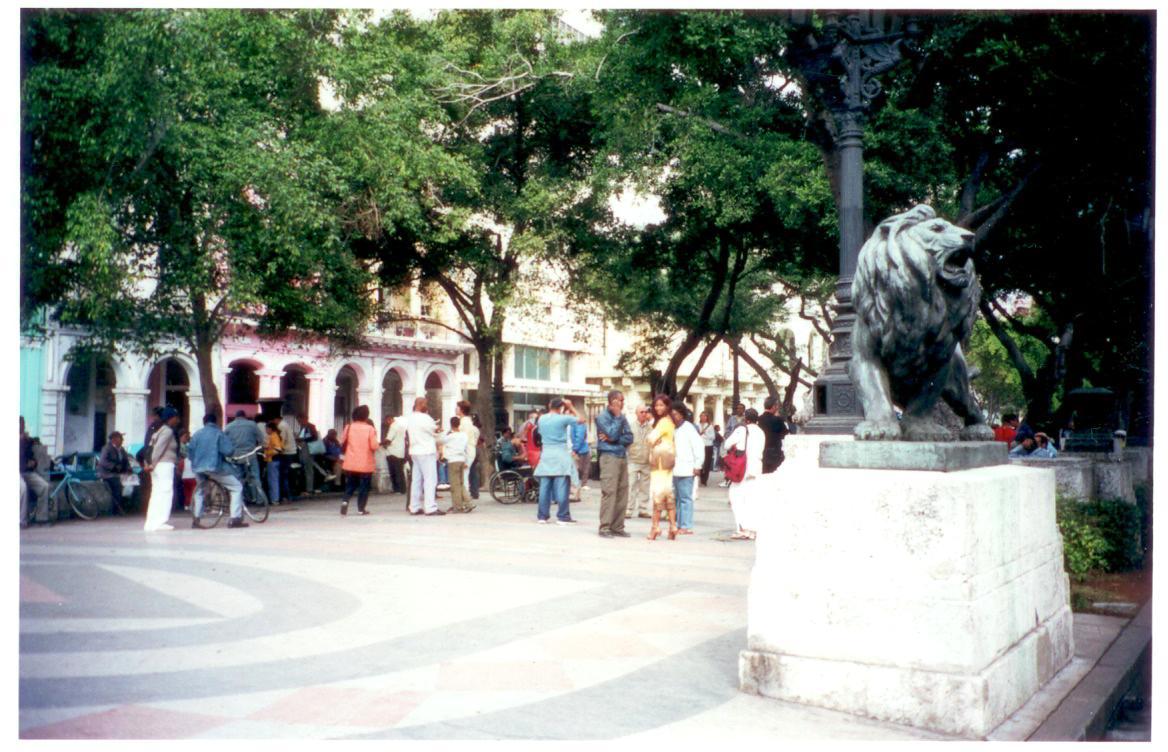
Havana’s Pre-Reform Housing Market Place on Paseo del Prado (for “Permutas” Plus…  ); Photo by Arch Ritter, 2009

Cuba has formally lifted a five-decade ban on residents buying and selling property as the communist government of President Raúl Castro makes its most significant move yet to liberalise the island’s Soviet-era economy.

For the first time since the 1959 revolution, Cubans will be able to sell property to other Cuban residents without government approval. The changes, already approved by the National Assembly in August but now formalised, come into effect on November 10.

The easing of restrictions on property ownership is likely to reshape Cuban cities, spur real estate development and speed renovation of Cuba’s picturesque but dilapidated housing stock. It is also expected to reconfigure Cuban conceptions of class as some homeowners cash in their properties and areas of Havana are gentrified.

“I hope the new law gets rid of so much paperwork, bureaucracy and other problems that simply lead to corruption. If you can now move without months and years of effort and paying people off, we will be content,” said Maritza, a 35-year-old food service worker.

Previously, any Cuban who wanted to swap their home for another had to penetrate thick layers of bureaucracy. Houses were also confiscated by the state if a Cuban moved abroad. Now by contrast, the new rules state that the purchase, sale, donation and trading of houses will be recognised even in cases of “divorce, death or permanent departure from the country”.

The measure is the latest and most dramatic signal that the authorities are serious about implementing reforms adopted this year. Last month, the government ended another ban, also dating from 1959, on the sale of cars. State companies have been given more autonomy, state payrolls and subsidies have been trimmed, and retail services liberalised.

Analysts say that home sales could free up capital needed to jump-start small businesses. Cubans living abroad, especially in the United States, who remit some $1bn a year to the island, have proved instrumental in financing and supplying thousands of small businesses since the sector was liberalised last year. They are now expected to invest in housing through their relatives, pumping millions of dollars into the local economy and helping to renovate the crumbling housing stock.

“This change is another example of the failure of ‘big bang’ models to predict the evolution of the Cuban economy,” said Jose Gabilondo, associate professor of law at Florida International University, said. “Changes in the rules of the game are already under way.”

However, the new housing law dashes hopes that the local real estate market might open up to large domestic or foreign investment as it continues to prohibit foreigners from owning property unless they are permanent residents. A special exception is expected in the next few months for golf course and other tourist developments currently under negotiation with various foreign companies.

Every property transaction will require a notary, with payment through a state bank, and both the seller and buyer paying a 4 per cent tax.

Posted in Blog | Tagged , , | Leave a comment

Cuba legalizes sale, purchase of private property

PAUL HAVEN, Associated Press; Nov. 3, 2011 8:08 AM ET
Original Article available here: Cuba legalizes sale, purchase of private property

HAVANA (AP) — Cuba announced Thursday it will allow real estate to be bought and sold for the first time since the early days of the revolution, the most important reform yet in a series of free-market changes under President Raul Castro.

The law, which takes effect Nov. 10, applies to citizens and permanent residents only, according to a red-letter headline on the front page of Thursday’s Communist Party daily Granma.

The brief article said details of the new law would be published imminently in the government’s Official Gazette. Authorities have said previously that sales will be subject to taxes and the rules will not allow anyone to accumulate great property holdings.

The change follows October’s legalization of buying and selling cars, though with restrictions that still make it hard for ordinary Cubans to buy new vehicles.

Castro has also allowed citizens to go into business for themselves in a number of approved jobs — everything from party clowns to food vendors to accountants — and has pledged to streamline the state-dominated economy by eliminating half a million government workers.

Cuba’s government employs over 80 percent of the workers in the island’s command economy, paying wages of just $20 a month in return for free education and health care, and nearly free housing, transportation and basic foods. Castro has said repeatedly that the system is not working since taking over from his brother Fidel in 2008, but he has vowed that Cuba will remain a Socialist state.

Cubans have long bemoaned the ban on property sales, which took effect in stages over the first years after Fidel Castro came to power in 1959. In an effort to fight absentee ownership by wealthy landlords, Fidel enacted a reform that gave title to whomever lived in a home. Most who left the island forfeited their properties to the state.

Since no property market was allowed, the rules have meant that for decades Cubans could only exchange property through complicated barter arrangements, or through even murkier black-market deals where thousands of dollars change hands under the table, with no legal recourse if transactions go bad.

Some Cubans enter into sham marriages to make deed transfers easier. Others make deals to move into homes ostensibly to care for an elderly person living there, only to inherit the property when the person dies.

The island’s crumbling housing stock has meant that many are forced to live in overcrowded apartments with multiple generations crammed into a few rooms. Even divorce hasn’t necessarily meant separation in Cuba, where estranged couples are often forced to live together for years while they work out alternative housing.

The new law will eliminate a state agency that regulated the exchange-by-barter of homes, meaning that from now on sales will only need the seal of a notary, according to Granma.

The government has also dropped hints in recent months about the new property law, saying it will allow family members to inherit homes even if they are not living in the property.

Cubans who can afford it will be allowed to own one home in the city and one in the countryside.

Posted in Blog | Tagged , , , , | Leave a comment

Liberating Cuba’s Long-Suppressed Resource: Entrepreneurship

By Arch Ritter

In early 1996, I visited the home of a high Cuban official with whom I had become acquainted.  While there, a “colero or  “queuer” arrived after having waited in the queue to purchase the family’s rations of cigars and cigarettes among other things. (A source of income for many people in Cuba was to stand in line and purchase short-supply rationed products for other families.)  Although no members of the family smoked, they happily collected their rationed tobacco products for resale on the black market in order to acquire other necessities. My friend the official was as “revolutionary” as anyone that I have known in Cuba, going so far in the early years of the Revolution as to return the “per diems” that he saved from foreign travel to the government rather than buying such things as shoes for his children. However, by 1996, buying and selling on the black market was natural and comprehensible for him and most other people.

I. From “School for Socialism” to “Nation of Entrepreneurs”

During the thirty years or so in which the exercise of entrepreneurship in a market-oriented setting was largely prohibited, Cuba in fact created a nation of entrepreneurs.  Although the intention was to convert Cuba into a “school for socialism,” the reality is that Cuba has also been a school for market-oriented entrepreneurship.  This is one of the more significant paradoxes of the Cuban Revolution.

The nature of Cuba’s planned economy itself inadvertently promoted widespread entrepreneurial values, attitudes, behavior, and savoir-faire as citizens of necessity have had to buy and sell, hustle and “network” in order to improvise solutions to their personal economic problems.  The most important phenomenon in this process was the rationing system, implemented in 1961. This system was designed to provide everyone with a basic supply of foodstuffs, clothing, and household consumables, in order to achieve a minimum level of equality of consumption and real income.  It provided every individual (or household for some products) with fixed monthly quotas of foodstuffs, cigarettes, or household consumables and with annual quotas for clothing and footwear.  Everyone received the same allocations of products at controlled and generally low prices (in relation to average monthly incomes).  (Children and those with special health problems such as diabetics were treated differently and provided with special food rations.)  Because everyone received essentially the same rations, many people would receive some items that they did not want or which were of lower priority than other items.  In the context of generalized shortage and excess demand which existed with varying intensities since 1962, especially after 1989, everyone had an incentive to sell the rationed items they did not want or to trade them for other products they did want.  For example, non-smokers would purchase their cigarettes and cigars through the rationing system and would then give them to other family members or friends, resell them on unofficial markets, or trade them for other products. Thus, the rationing system converted many people into “mini-capitalists.”

The situation of excess demand and generalized shortage, especially after about 1989 when the subsidization from the Soviet Union ceased, also meant that anyone with privileged access to a product at an official price could resell it at a higher free-market price or in the dollar economy.  There was therefore a strong incentive making a profit from exchanging many types of product between the fixed-price official sources and the unofficial or “black market” determined price.  Related to the above phenomenon was “amiguismo” or “sociolismo” or “partner-ism”, that is, the reciprocal exchange of favors.  While such reciprocity probably occurs in all countries and in many different contexts, it took on some important additional forms in Cuba.  Basically, any person with control over resources could exchange access to those resources for some current or future personal material benefit.   Cultivating friends or associates in this way was vital for assuring oneself and one’s family access to the goods and services necessary for basic material well-being.  Complex networks of reciprocal obligations thus became an important part of the functioning of the economy.  Daily life involved continuing endeavors in maintaining the personal relationships necessary to ensure access to necessary goods and services through the unofficial channels or through the official channels unofficially.

In short, citizens in their everyday material lives had to behave in an entrepreneurial manner.  People had to explore and evaluate new economic opportunities, to acquire the consumer goods they and their families needed, to sell some consumer goods (or in some cases outputs of goods and services), to bear uncertainty, face risk and take ultimate responsibility, and to invest in the maintenance of their supply and market networks, all under hard and unforgiving budget constraints.

A second area where entrepreneurial action was necessary was the central planning system itself. In a perfectly functioning planning system, enterprise managers would have little to do besides obeying and implementing orders.  But because the planning system could not and cannot work perfectly especially in the face of continuing disruptions and uncertainty, enterprise managers had to take initiatives in resolving unforeseen problems. Frequently, solutions to such problems were to be found outside the normal channels of the planning system and required improvised responses by the enterprise managers. This often involved enterprise managers obtaining the required inputs through negotiations with other enterprises, with superior officials, or with superiors or inferiors in other sectors or Ministries.  In these negotiation processes, political argumentation, political or Party “amiguismo” or “sociolismo” (i.e. the exchange of favors within the Party for political and material benefit) as well as economic criteria were central, and economic management was therefore highly political. Managers throughout the Cuban economy had to invest large amounts of time and energy in resolving such input-supply problems. Indeed, their performance depended upon their entrepreneurial success in operating “outside the plan.”

While entrepreneurial talents have been developed broadly among the population, their exercise until 1993 was for the most part restricted to the important but low-level everyday tasks of sustenance and survival, often carried out in the underground economy or in “black markets.”  But when the space available for entrepreneurial activity was increased with the liberalization of microenterprise beginning in September 1993, the expansion and diversification of micro-entrepreneurial activity was impressive.

II. Liberating Cuban Entrepreneurship

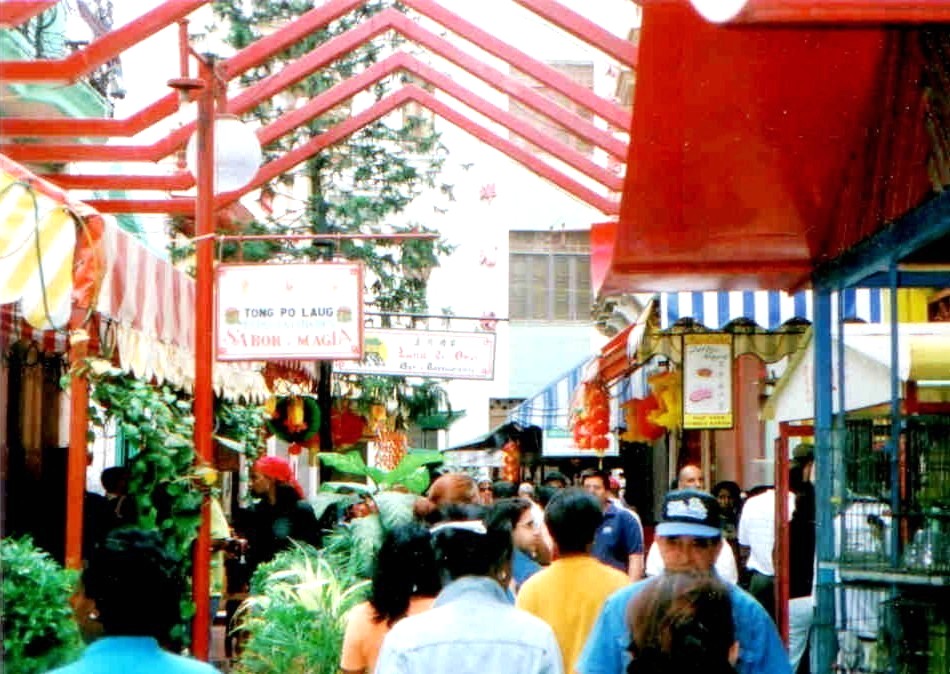
The advantageous consequences of further policy liberalization towards micro-enterprise have been illustrated dramatically by the arts and crafts market and by the Barrio Chino. The production of arts and crafts, largely for the tourist market, expanded immensely and the quality and diversity of the products has improved greatly after 1993. It is now a major source of foreign exchange for Cuba, though statistics on this do not seem to exist. Similarly, the quasi-private restaurants in the Barrio Chino that enjoyed a cultural exemption from the 12 chair size-limitation emerged some time ago as dynamic, large, diverse and efficient restaurants – perhaps the best in Havana. They are a living example of what many sectors of the Cuban economy could become with further relaxation of restrictions and a reasonable  tax regime were implemented.

The liberalization of licensing and the other policy changes that were introduced in 2010 and 2011 have already born fruit. (The policy reforms are outlined here Raul Castro and Policy towards Self-Employment and here: State Sector Lay-offs then Private Sector Job Creation.) The numbers of micro-enterprises have increased significantly even if the initial objective of 500,000 new jobs in the sector by March 31 2011was not achieved. This is illustrated in the accompanying chart.

Source: Republica de Cuba, Oficina Nacional de Estadisticas (ONE), Anuario Estadistico de Cuba, various issues

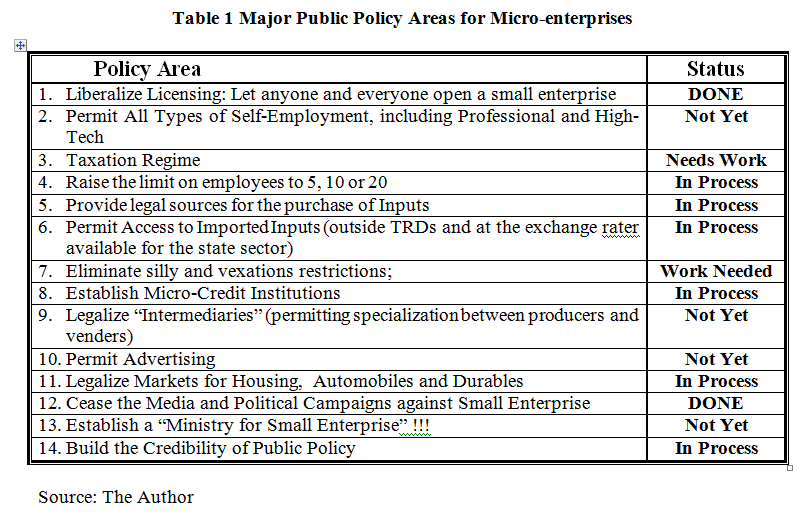
While the task of modifying the policy framework for the micro-enterprise sector is incomplete, major improvements have been instituted so far and more are in the process of implementation. In the summary presented in Table 1, it can be seen that advances have been made in a number of areas, notably licensing and “de-stigmatizing”. Progress has been made or promised in other areas. In still other areas, some reforms have been introduced but further action is desirable. And in a few areas there has been no action yet.

It is worth noting again the benefits that a deeper liberalization of policy towards small enterprise would generate. These would include:

  • More productive employment would be created, a vital objective if redundant state workers are to be reabsorbed into the economy.
  • An increase in small enterprise would increase competition, lower prices, improve quality and broaden diversity of the goods and services produced.
  • Incomes would be generated.
  • The average levels of incomes in the small enterprise sector would tend to be driven to the average national level if it were opened up with free entry for anyone wanting to establish a micro-enterprise.
  • Citizens would gain when reduced effort and time was necessary to obtain the goods and services necessary for survival.
  • Improved productivity of small enterprises would permit higher material well-being throughout Cuban society.
  • The massive underground economy would shrink.
  • Tax revenues from the sector would increase as it expanded.
  • Foreign exchange earnings and savings would occur as domestic products replaced imported products and as markets for tourists and for export expanded.
  • Innovation and improvement would be promoted.
  • Urban and rural commercial revival would occur.
  • The general quality of life would be improved.
  • The culture of compliance and respect for public policy rather than regulation avoidance and illegality would in time take effect.

Most important, further liberalization of the small enterprise sector would harness the ingenuity, creativity, industriousness and enthusiasm of a substantial proportion of the Cuban people to more productive economic activities.

Would such an apertura worsen income distribution? In the early stages, as some small enterprises increased in size, this would perhaps occur. But Cuba already has an income tax and an effective administrative system for taxing small enterprise so that this effect could be managed. Opening self-employment and small enterprise to all possible entrants would also increase competition in the sector and push prices and thence incomes towards average levels.

Barrio Chino, November 2008, Photo by Arch Ritter


Posted in Blog, Featured | Tagged , , , , , | 1 Comment

Mark Frank: “Cuba to grant much larger plots to farmers”

By Marc Frank;  Wed Oct 19, 2011

HAVANA (Reuters) – Cuba will greatly expand the amount of land granted to private farmers, an agriculture official said on Wednesday, as the Communist-run country struggles to boost productivity in the sector.

Under new regulations expected to be approved this year, productive farmers will be eligible for temporary land grants covering as much as 165 acres (67 hectares), up from the current maximum of 33 acres (13 hectares) mandated in a 2008 decree, said William Hernandez Morales, the top agricultural official in the eastern province of Santiago de Cuba.

“Those persons or lease holders that have really shown they can produce will be able to increase their land to five caballerias,” he said on state-run radio. A caballeria is an old land measure still used in Cuba equivalent to 33 acres (13 hectares).

The state owns more than 70 percent of the arable land on the Caribbean island, of which some 50 percent lies fallow and the remainder produces less than the private sector.

A local agricultural expert said private farmers produce 57 percent of the food on only 24 percent of the land.

President Raul Castro has made increasing food production a top priority since taking over from his brother Fidel Castro in 2008, but with poor results.

In one of his key reforms, the government has turned over 4 million acres (1.6 million hectares) of land to 143,000 farmers and would-be farmers since October 2008, but farmers have complained that the small size of the plots and other restrictions hampered production.

They said bigger plots and a recent measure that makes it easier to employ laborers were positive steps.

“This is special. They should redistribute all the fallow land that’s been overrun with brush,” Roberto Hernandez, a farmer who leased 33 acres in 2009, said in a telephone interview.

“Now the land produces nothing, when it should be producing root vegetables, beans, rice or what have you,” he added.

Central Camaguey farmer Jorge Echemendia agreed.

“This is what they have to do without waiting any longer. I don’t know how they do it, but when the state gives the land to the people they manage to clean it up, even if with their fingernails, and put it into production.”

Castro has also decentralized decision-making, increased prices paid for produce, opened stores where secondary farm supplies such as clothing and tools are sold and promised farmers more freedom to grow and sell their crops.

Agriculture output increased 6.1 percent through June, compared with the same period in 2010, a year that saw a 2.5 percent decline despite the reforms.

Food production remains below 2005 levels and food prices at farmers markets have increased 7.8 percent this year, according to the government. (Editing by Jeff Franks and Mohammad Zargham)

Posted in Blog | Tagged , , | Leave a comment

Toronto Globeand Mail, “Small acts of free enterprise attest to reform looming large in Cuba”

Small acts of free enterprise attest to reform looming large in Cuba

By SONIA VERMA
Globe and Mail, Toronto, October 18, 2011

Regime can no longer afford to finance socialist ideals upon which it was founded

Original Article Here: Small acts of free enterprise….

Just off the Malecon, Havana’s famous seaside corniche, Omar Gatierrez strikes a deal to sell his ’56 Oldsmobile for the rough equivalent of $14,500. It’s the most money he’s ever made.

At a burger joint not far from there, Alfredo Garcia, an economist, shells out twice as much as he normally would for a strawberry milkshake just because it tastes good. Around the corner, Lazaro Rafael, a mechanic, haggles over the price of repairing an infirm Peugeot on the street near the sea where he lives.

Nerci, Cuenta Propista and Artisan, Habana Vieja, Photo by Arch Ritter, November 2008

These small acts of free enterprise would have been inconceivable in Fidel Castro’s Cuba. Under his younger brother, Raul, however, they add up to dramatic economic reform that is quietly reconfiguring the country into something altogether different. Cuban authorities are careful to depict this restructuring as upgrading the revolution rather than forsaking it, yet underpinning it all is an overriding sense of urgency to change.

Floated by fickle Chinese credit and Venezuelan oil, the regime can no longer afford to finance the socialist ideals upon which it was founded. With Cuba at a crossroads, the future remains unclear. One path appears to lead to nowhere, should the regime prove too brittle to allow private enterprise to truly flourish. The alternative route, others worry, would morph the island into something resembling a Floridian mega-mall.

Both outcomes would be disastrous. Most analysts believe the country’s true destiny lies in becoming a mixed economy where the state loosens its grip over some sectors but maintains leverage over others. The aim, Cuban sources said, is to have 35 per cent of the economy privatized by 2015. Achieving this elusive balance, however, will prove exceedingly difficult. The reforms that have been rolled out so far – such as allowing cars to be sold and licensing small businesses – have been relatively painless, eclipsing more agonizing ones that lie ahead.

For Cubans, many of whom have virtually no memory of life before the revolution, the reforms are confusing and their consequences unknown. The regime has vowed to implement a progressive tax structure to avoid a Russian-like result where vast amounts of wealth is concentrated in the hands of the few. But a schism of class – however minor – would symbolically violate Mr. Castro’s symbolic contract with his people.

Over the next five years, for instance, the regime intends to lay off up to a million public-sector workers, equalling 10 per cent of its work force. Food rations, for which many Cubans rely on for their daily sustenance, are also due to be phased out. Betting on an increase in productivity, the government has promised to boost wages, but economists doubt it will be enough to keep pace with a rising cost of living, as goods are removed from the ration card.

“These larger state-led reforms are going to be wrenching,” said Christopher Sabatini, editor-in-chief of Americas Quarterly. One of the biggest obstacles to real change in Cuba, he argues, is the awkward paradox the regime finds itself in: Downgrading its leverage in order to save itself from ruin.

“There’s an inherent tension in any economic reform that involves the Cuban state reducing its own authority over the economy, which is [Fidel] Castro’s real legacy,” Mr. Sabatini explained.

Another problem is that while Cuban authorities seem to have a clear idea of the main focus of the restructuring – reducing the state payroll, nourishing the private sector, boosting food production – the government is vague on its timeline for implementing the changes and even more so on how it plans to deal with any fallout. The haphazard transition means that whenever one of the 311 new decrees issued by the Communist Party at its April Congress becomes law, few people on the street in Havana seem to notice or understand why they should care.

Josefina Vidal, director of the North America Department for Cuba’s Ministry of Foreign Affairs, said the protracted rollout is deliberate: “It’s a slow process because we are very much interested in avoiding any kind of social impact. We don’t want anybody to be abandoned or left behind,” she said in a recent interview with The Globe And Mail. Some measures, she acknowledged, were easier to implement than others.

When it comes to defining Cuba’s end goal, officials are equally open-ended, maintaining the state is not trying to emulate other countries – such as China or Vietnam – but rather aiming to pursue an entirely unique set of reforms. Observers, however, disagree.

“They want this to be a made-in-Cuba type of economic system. But if it is made in Cuba it certainly resembles the Chinese approach, and it’s moving more and more in that direction,” said Arch Ritter, an economist at Carleton University who specializes in Cuba.

As he points out, Cuba’s economy is nowhere near China’s in terms of scale or scope. Also, China’s ruling Communist Party is less ossified than Cuba’s, which is still dominated by octogenarians. The recent death Cuba’s minister of defence, Julio Casas Regueiro, at the age of 75, highlighted the frailty of the state’s older generation of leaders who are still firmly in charge.

Without political renewal, analysts say Cuba’s economic reforms are doomed. “They are trying to let the economic genie out of the bottle while keeping the political genie in. That’s not going to work,” predicted Arturo Lopez-Levy, a former political analyst in the Cuban Interior Ministry and a lecturer at the University of Denver.

Meanwhile it remains unclear how Cuban society, much less the regime, will deal with social changes that will inevitably follow the economic ones. How will the state prevent Cuba’s new generation of entrepreneurs from accumulating the kind of wealth that could give rise to a new upper class? How will it ensure all Cubans have access to capital, not just the ones with relatives in Europe or Miami? How will it provide incentives for productivity and initiative if it plans to heavily tax the rewards of that?

“Don’t be fooled,” Mr. Sabatini says. “They want to preserve the system in many ways … at least the perks of the system.”

As sweeping as Cuba’s current economic reforms are, key enterprises such as mining, oil and sugar production will remain in the hands of the state. Cuba’s health system and its lucrative tourist industry will also remain unchanged, at least for now. The rebranding of the revolution, Mr. Sabatini argues, is still very much a work in progress.

“What was Castroism anyways? It was really about survival. Cuba’s future will boil down to whatever it needs for political and economic survival, rather than any principled commitment to the revolution,” he said.

Posted in Blog | Tagged , , , | Leave a comment

From the Toronto Globe and Mail: CUBA: Fifty years later, an agricultural revolution

Sonia Verma

Toronto Globe and Mail, Thursday, Oct. 13, 2011 9:21PM EDT

Original Article Here: CUBA: Fifty years later, an agricultural revolution

For years the land lay fallow, swallowed by thorny weeds. Strangers called it a lost cause. Armando Aroche saw a golden opportunity.

It was 2008 and Raul Castro, in his first major speech as Cuban President, made a shocking admission: 50 years of state-controlled agriculture had failed, resulting in chronic food shortages. The island was importing 80 per cent of the food it subsequently rationed for public consumption.

Mr. Castro offered free, 10-year leases on idle land to anyone willing to try their hand at farming.

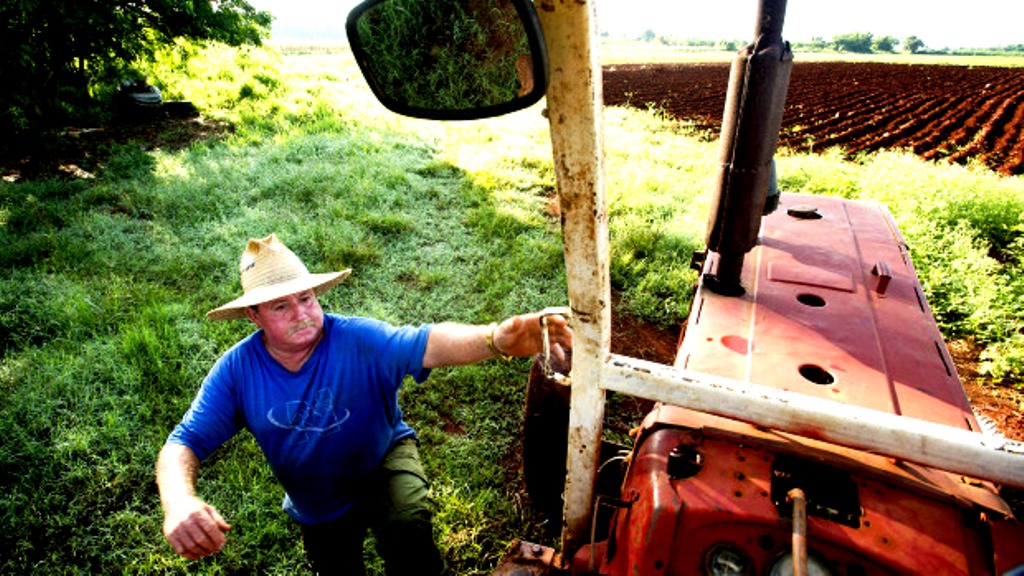
Mr. Aroche, a rotund, 53-year-old peasant, was among the first to queue in San Antonio, a small municipality a half-hour drive from Havana.

“I was not afraid of anything,” he recalled. He had a faint childhood memory of a well on the southwest corner of a particular stretch of land, which he requested. He was awarded 7.28 acres and named his farm “San Juan.” He borrowed his neighbour’s tractor and irrigation system and, against all odds, managed to coax 68 tonnes of sweet potatoes and tomatoes from the earth that year, which he sold back to the state at a profit.

Today, he gazes out on his fields from beneath his sunhat. Too much rain means his tomato plants are flowering. His 1952 Ferguson tractor is on its last legs. A team of oxen plow the land as if in slow motion.

But despite these hardships, farmers such as Mr. Aroche are being held out as shining examples of the new face of Cuban socialism. The cabbage, onions, carrots and lettuce he cultivates are described by government officials as the fruits of their “new and improved system” that has boosted food production by awarding more land to peasants who farm it for a profit.

Mr. Aroche mounts his tractor

Since Decree No. 259 was passed in 2008, 170,000 peasants across Cuba have been granted land. In San Antonio alone, 410 people have applied for land with 283 of those applications granted.

“Pretty soon we will run out of lands to grant,” confessed Georgina Gutierrez Jimenez, president of the local chapter of the National Association for Small Farmers.

Each farmer can apply for a land grant of 13.48 acres. If the farm proves successful, they can apply for another. Farmers can also use their profits to buy their own equipment, insecticides and fertilizer – something the state used to strictly control. Each farm owner pays a 5-per-cent income tax to the state, and 3 per cent to the local agricultural co-operative.

Mr. Aroche, a trained mechanic, used to work at the “state enterprise of assorted crops,” and earned the equivalent of $9 a month. He demurred when asked about his income today, but acknowledged it is exponentially higher. For the past few years, his family has been able to afford long holidays on the beach.

He employs six workers, who are each paid a monthly wage of $12, plus a yearly bonus. They help themselves to food grown on the farm and often receive a small cash “tip” at the end of each day.

The new agricultural policy has succeeded in boosting food production, officials say.

“There has been an enormous impact,” said Arturo Aleaga Cespedes, a lawyer with the National Farmer’s Association. He cites a 60-per-cent increase in the production of rice, milk, vegetables and root vegetables.

However, it’s still not enough to satisfy Cuba’s food needs.

“We produce a lot, but the demand and consumption are always increasing,” Ms. Jimenez said.

Another challenge is persuading a younger generation of Cubans to take up their leaders’ challenge and return to the land. Many, like Mr. Aroche’s own children, were educated for urban jobs in state offices that are under enormous pressure to trim their bloated payrolls.

The country’s public service is set to lose up to half a million jobs over the next five years.

Mr. Aroche’s 26-year-old daughter, Joseline, quit her job as an economist when her son was born three years ago. Now, as she contemplates returning to the work force, she faces “not a lot of options,” she said.

Her father believes the future of his family, and that of his country, lies in the land: “To work in the field is very hard. It’s something most people don’t like, but it’s work that needs to be done,” he said.

The agricultural reforms – considered radical at the time – have proved to merely foreshadow larger changes sweeping through Cuba as the government relaxes its communist grip on everything from private enterprise to real estate in an attempt to generate revenue.

“The only problem is that all of this should have been done sooner,” Mr. Aroche added.

Posted in Blog | Tagged , | 1 Comment

New Publication from Cuba: Cooperativas y Socialismo: Una Mirada DesdeCuba

A collection of essays on Cooperatives has just been published in Cuba, compiled by Camila Piñeiro Harnecker of the Centro de Estudios sobre la Economia Cubana. Ms. Camila Piñeiro comes with an impeccable political pedigree, with parents Manuel Piñeiro Losada (a Revolutionary from 1952 onwards and a 32 year veteran of the Central Committee) and Marta Harnecker, (a Chilean sociologist,  leading ideologue and prolific author.) The volume was made available courtesy of ASCE and Joaquin Pujol

The complete document is available hyperlinked here: Cooperativas y Socialismo: Una Mirada DesdeCuba, La Habana: Editorial Caminos, 2011

Compiladora: Camila Piñeiro Harnecker; Coordinador editorial: José Ramón Vidal

Edición: Mayra Valdés Lara; Diseño: Olmer Buchholz Espinosa

The Table of Contents is reproduced below.

Índice

Prólogo Camila Piñeiro Harnecke, 7

Parte 1 ¿Qué es una cooperativa?

1.       Una introducción a las cooperativas, Jesús Cruz Reyes y Camila Piñeiro Harnecker, 31

2.       La construcción de alternativas más allá del capital,  Julio C. Gambina y Gabriela Roffinelli, 55

Parte 2 Las cooperativas y los pensadores socialistas

3.       Cooperativismo y autogestión en las visions de Marx, Engels y Lenin,  Humberto Miranda Lorenzo 71

4.       Cooperativismo socialista y emancipación humana. El legado de Lenin, Iñaki Gil de San Vicente, 103

5.       El Ché Guevara: las cooperativas y la economía política de la transición al socialism, Helen Yaffe 132

6.       Las bases del socialismo autogestionario: la contribución de István Mészáros, Henrique T. Nova, 167

Parte 3 Las cooperativas en otros países

7.       Mondragón: los dilemas de un cooperativismo maduro, Larraitz Altuna Gabilondo, Aitzol Loyola Idiakez y Eneritz Pagalday Tricio, 191

8.       Cuarenta años de autogestión en vivienda popular en Uruguay, El “Modelo FUCVAM”,  Benjamin Nahoum, 219

9.       Economía solidaria en Brasil: la actualidad de las cooperativas para la emancipación histórica de los trabajadores/ Luiz Inácio Gaiger y Eliene Dos Anjos, 245

10.   Autogestión obrera en Argentina: problemas y potencialidades del trabajo autogestionado en el contexto de la poscrisis neoliberal, Andrés Rugge, 272

11.   De las cooperativas a las empresas de propiedad social directa en el proceso venezolano Dario Azzellini, 301

Parte 4 Las cooperativas y la construcción socialista en Cuba

12.   Las cooperativas agropecuarias en Cuba: 1959-presente,  Armando Nova González, 321

13.   La UBPC: forma de rediseñar la propiedad estatal con gestión cooperative, Emilio Rodríguez Membrado y Alcides López Labrada, 337

14.   Notas características del marco legal del ambiente cooperativo cubano,  Avelino Fernández Peiso, 366

15.   Retos del cooperativismo como alternativa de desarrollo ante la crisis global. Su papel en el modelo económico cubano, Claudio Alberto Rivera Rodríguez, Odalys Labrador Machíny Juan Luis Alfonso Alemán, 397

Posted in Blog | Tagged , , , , , | Leave a comment