Yearly Archives: 2011

Cuba in Transition: Volume 20 Proceedings of the Twentieth Annual Meeting of the Association for the Study of the Cuban Economy

The papers from the 2010 meetings of the Association for the Study of the Cuban Economy have just been posted on the ASCE Web Site and can be found at Papers and Proceedings of the Twentieth Annual Meeting of ASCE.

As usual, a wide range of excellent papers are presented at ASCE’s annual meetings Many essays include valuable, original and ground-breaking analyses on a wide range of economic as well as socio-economic and politico-economic issues..

A Table of Contents with hyperlinked titles of the papers is included below.

Preface

Conference Program

Table of Contents

The Cuban Economy in 2010 as Seen by Economists Within the Island and Other Observers

Joaquín P. Pujol

La Economía Cubana: ¿Tiempos de Esperanza?

Oscar Espinosa Chepe

Crisis Management of Cuban International Liquidity

Luis R. Luis

If It Were Just the Marabú… Cuba’s Agriculture 2009-10

G.B. Hagelberg

The Numbers Diet: Food Imports as Economic Indicators

Lauren Gifford

Government-Controlled Travel Costs to Cuba and Costs of Related Consular Services: Analysis and International Comparisons

Sergio Díaz-Briquets

Envios de Remesas a Cuba: Desarrollo, Evolución e Impacto

Emilio Morales Dopico

Dashed Expectations: Raúl Castro’s Management of The Cuban Economy, 2006–2010

Jorge F. Pérez-López

Cuba: ¿Hacia otro “Periodo Especial”?

Mario A. González-Corzo

Cuban Education and Human Capital Formation

Enrique S. Pumar

La Masonería Cubana y su Contribución a la Sociedad Civil

Jorge Luis Romeu

The Internet and Emergent Blogosphere in Cuba: Downloading Democracy, Booting Up Development, or Planting the Virus of Dissidence and Destabilization?

Ted Henken

El Insostenible Apoyo Económico de Venezuela a Cuba y sus Implicaciones

Rolando H. Castañeda

Cuba-Venezuela Health Diplomacy: The Politics of Humanitarianism

Maria C. Werlau

British Policy-Making and Our Leyland in Havana (1963–1964)

Maria Carla Chicuén

La Desigualdad en Cuba: El Color Cuenta

Natalie Kitroeff

A Macroeconomic Approach to Foreign Direct Investment (FDI) Inflow from the People’s Republic of China to Cuba

Orlando R. Villaverde

A Survey of the Relationship between Cuba and China: A Chinese Perspective

Pin Zuo

The Evolution of the Cuban Military: A Comparative Look at the FAR with the
Bureaucratic-Authoritarian Model of South America

Michael Aranda

Empowering the Cuban People Through Access to Technology

Cuba Study Group

The Global Economic and Financial Crisis and Cuba’s Healthcare and Biotechnology Sector: Prospects For Survivorship and Longer-term Sustainability

Elaine Scheye

Globalization and the Socialist Multinational: Cuba and ALBA’s Grannacional Projects at the Intersection of Business and Human Rights

Larry Catá Backer

Racismo Estructural en Cuba y Disidencia Política: Breves Antecedentes

Ramón Humberto Colás

Arbitration and Mediation: Impartial Forums to Resolve International Commercial Disputes in Cuba

Rolando Anillo-Badia

Gazing at the Green Light: The Legal and Business Aspects of Real Property Investment in Cuba

Richard M. David

The Creation and Evolution of the Legal Black Hole at Guantánamo Bay

Michael J. Strauss

Las Relaciones Cuba-Israel: A la Espera de una Nueva Etapa

Arturo López-Levy

Revolutionary Cuba’s GDP: A Survey of Methods and Estimates

Jorge F. Pérez-López

A Dynamic Factor Model of Quarterly Real Gross Domestic Product Growth in the Caribbean: The Case of Cuba and the Bahamas

Philip Liu and Rafael Romeu

Cuba’s Attempts at Democracy: The Colony

Roger R. Betancourt

Lessons Learned from 20 Years of Privatization: Albania, Estonia and Russia

Jorge A. Sanguinetty and Tania Mastrapa

The Cuban Tourism Sector: A Note On Performance in the first Decade of the 21st Century

María Dolores Espino

Prospects for Tourism in Cuba: Report on the Residential Sales/Leases in Golf and Marina Developments

Antonio R. Zamora

Posted in Blog | Tagged , , , , , , , , | Leave a comment

News and Articles, March 7 – 13, 2011

Cuba Standard.Com, March 13: Brazil supporting Cuban Banks http://www.cubastandard.com/2011/03/13/brazil-to-support-cuban-banks/

Havana Times, March 12: Soy Meat, but Transgenic? http://www.havanatimes.org/?p=39535

The Baltimore Sun, March 12: Senate amendment threatens BWI flights to Cuba http://www.baltimoresun.com/news/opinion/readersrespond/bs-ed-cuba-flights-letters-20110312,0,1667121.story

The Miami Herald, March 12: Travel to Cuba is the talk of DC http://miamiherald.typepad.com/cuban_colada/2011/03/travel-to-cuba-is-the-talk-of-dc.html

Diario de Cuba, 12 de marzo: Cuba ficción http://www.diariodecuba.com/opinion/3563-cuba-ficcion

El Nuevo Herald, 11 de marzo: Cuba crea un nuevo sistema de información estadístico http://www.elnuevoherald.com/2011/03/11/901555/cuba-crea-un-nuevo-sistema-de.html

El Nuevo Herald, 11 de marzo: Cuba: Puerto financiado por Brasil estará listo en 2014 http://www.elnuevoherald.com/2011/03/10/900675/cuba-puerto-financiado-por-brasil.html

Granma, 11 de marzo: Electos los 1,000 delegados http://www.granma.cubaweb.cu/2011/03/11/nacional/artic09.html

Europa Press, 11 de marzo: Petróleos de Venezuela crea una empresa mixta con Cuba y Angola http://www.europapress.es/latam/economia/noticia-venezuela-petroleos-venezuela-crea-empresa-mixta-homologas-cubana-angolena-20110311075508.html

The Miami Herald, 11 de marzo: Too many vendors spreading too fast http://miamiherald.typepad.com/cuban_colada/2011/03/too-many-vendors-spreading-too-fast.html

Diario de Cuba, 11 de marzo: Carroza fúnebre http://www.diariodecuba.com/opinion/3545-carroza-funebre

Havana Times, March 10: Neoliberal Strategy Failing in Cuba http://www.havanatimes.org/?p=39436

Sun Sentinel, March 10: Government Oks charter flights to Cuba from Fort Lauderdale http://articles.sun-sentinel.com/2011-03-10/business/fl-cuba-flights-lauderdale-20110310_1_charter-companies-cuban-americans-charter-flights

Cuba Standard.Com, March 10: Big U. S. travel provider wading into Cuba http://www.cubastandard.com/2011/03/10/qa-big-u-s-travel-provider-wading-into-cuba/

Reuters, March 10: Petrobras has relinquished Cuba oil block, official http://www.reuters.com/article/2011/03/10/cuba-oil-petrobras-idUSN1010561820110310

The Sealy News, March 10: Cuba a viable market for Texas agriculture http://www.sealynews.com/news/article_2cc16354-4b19-11e0-a9e3-001cc4c03286.html

Diario de Cuba, 10 de marzo: El Gobierno prepara el terreno para nuevas “medidas de ahorro” energético http://www.diariodecuba.com/cuba/3526-el-gobierno-prepara-el-terreno-para-nuevas-medidas-de-ahorro-energetico

IPS, 10 de marzo: Socialismo a debate en Cuba http://cubaalamano.net/sitio/client/report.php?id=1256

Diario de Cuba, 10 de marzo: La más popular tienda virtual http://www.diariodecuba.com/cuba/3522-la-mas-popular-tienda-virtual-cubana

The Ledger, March 9: Port Officials Want to Run Slow Boats to Cuba http://www.theledger.com/article/20110309/NEWS/103095029/1002/sports?Title=Port-Officials-Want-to-Run-Slow-Boats-To-Cuba

Cuba Standard.Com, March 9: Cuba to switch to daylight saving time http://www.cubastandard.com/2011/03/09/cuba-to-switch-to-daylight-savings-time/

Havana Times, March 9: Fear of the Void http://www.havanatimes.org/?p=39276

Inside Costa Rica, March 9: Cuba, El Salvador to Hold Trade Talks http://www.insidecostarica.com/dailynews/2011/march/09/centralamerica1103000902.htm

The Washington Post, March 9: BWI, 7 Other Airports Cleared for Charter Flights to Cuba http://www.washingtonpost.com/wp-dyn/content/article/2011/03/08/AR2011030806126.html

Reuters, March 8:  Cuba state layoffs move slowly, workers uneasy http://www.reuters.com/article/2011/03/08/us-cuba-reform-idUSTRE7275PC20110308

Havana Journal, March 8: US Cuba Travel from Atlanta, Tampa, Chicago and more airports http://havanajournal.com/travel/entry/us-cuba-travel-from-atlanta-tampa-chicago-and-more-airports-922/

Europa Press, 8 de marzo: KLM lanza una nueva ruta a La Habana (Cuba) a partir del 31 de octubre http://es.noticias.yahoo.com/5/20110308/tbs-klm-lanza-una-nueva-ruta-a-la-habana-5056f3e.html

AP, 7 de marzo: Cuba impulsa producción de café http://es.noticias.yahoo.com/11/20110307/tbs-car-eco-cuba-cafe-f8250da.html

Cuba Standard.Com, March 7: Washington opens eight new U.S. airports to Cuba travel http://www.cubastandard.com/2011/03/07/washington-opens-eight-new-u-s-airports-to-cuba-travel/

Cubaencuentro, 7 de marzo: La producción de petróleo cayó un 3,5% en 2010 http://www.cubaencuentro.com/cuba/noticias/la-produccion-de-petroleo-cayo-un-3-5-en-2010-257618

North Texas e-News, March 7: Cuba a viable market for Texas agriculture http://www.ntxe-news.com/artman/publish/article_68198.shtml

UPI, March 7: Cuba cuts jobs to embrace market economy, but still holds 100 dissidents http://www.upi.com/Top_News/Special/2011/03/07/Cuba-cuts-jobs-to-embrace-market-economy-but-still-holds-100-dissidents/UPI-59861299499620/

El Nuevo Herald, 7 de marzo: Crece el número de trabajadores privados en la isla http://www.elnuevoherald.com/2011/03/06/898217/crece-el-numero-de-trabajadores.html

Posted in News on the Cuban Economy | Leave a comment

A Major Slow-Down for the Public Sector Layoff / Private Sector Job Creation Strategy

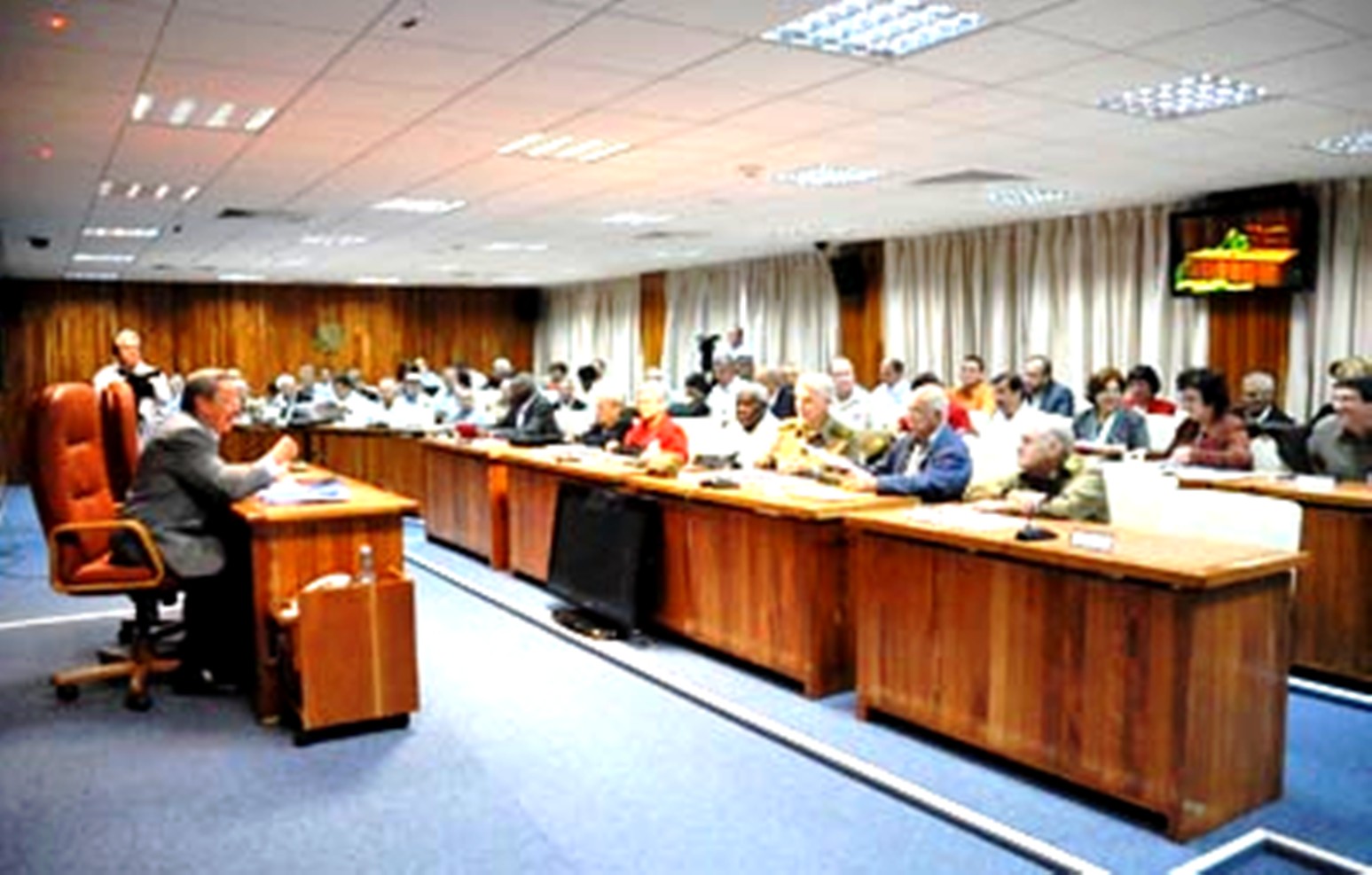
Raul Castro and the Council of Ministers, Granma, March 1, 2011

By Arch Ritter I had been looking in vain for any concrete information on public sector redundancies and the granting of self-employment licenses since December 2010.  After some searching in the Cuban press, the foreign press and various blogs, I came up empty handed. I was starting to think that the program had been aborted. Then yesterday, Raul announced in a publicized meeting of the Council of Ministers a major slow-down of the program, noting, in the words of the journalists, that “the up-dating of our model is not the work of a day or even a year but because of its complexity, it will require not less than a five year period to unfold its implementation” (Granma, 1 de Marzo de 2011) As far as I can determine, there have in fact been virtually no lay-offs yet in the public sector, although the original March 31 target for 500,000 fired workers is close at hand. Or at least, none have been clearly reported. The latest numbers for license-granting for the end of December 2010 indicated that some 75,000 new licenses had been issued with another 8,340 still in process – a slow start towards the March 1 target date. Granma, 7 de enero de 2011 The slow-down and delay in implementation is understandable.  Although the original proposal was in the right direction, it was seriously flawed and excessively hurried. The most obvious weakness of the strategy was that it called for lay-offs first, followed by or concurrently with job creation in the micro-enterprise sector which was only slightly liberalized in October 2010. As various critics quickly observed, this was placing the “cart before the horse”. The original time frame for the lay-off process – from July 20, 2010 to March 31, 2011 – became even more condensed as months of inactivity followed months. If implemented, this approach would have amounted to a draconian type of shock therapy. The process of firing workers is not easy under any circumstances. Though the Government stressed repeatedly that those made redundant would be supported by the state, the prospects of being laid off and having to establish one’s own micro-enterprise in a policy environment that is still difficult if not hostile must be unnerving for many people. It was to be implemented during the Cuban recession – (though Cuba is now appears to be in a process of recovery, due to higher nickel prices, increased tourism including US tourism, higher remittances.) Moreover, workers have no independent Unions to defend their rights during such a process of redundancies. (It was the Central de Trabajadores de Cuba that announced the lay-off strategy.) There was a potential for irregularities and perversions in the firing process as well, with redundancy being determined by factors such as Party faithfulness, personality issues,  or friendship with the relevant officials, rather than labor effectiveness, which is usually difficult to determine in any case. Moreover, the strategy, which was to be a defining component of economic reform and structural change, was adopted before the public discussions around the Proyecto de Lineamientos de la Política Económica y Social del Partido y la Revolución,” There had been no public input or discussion in the media or public forums before this strategywas sprung on the Cuban people. Furthermore, it was clear from the start that the liberalization of self-employment was insufficient for the necessary level of job creation. (See Perez and Vidal, Ritter and Mesa-Lago for example.) There are some measures that are supportive of micro-enterprise expansion. These include a small increase in the permitted range of activities, minor relaxation of regulations and a small modification of the tax regime. More significant and positive are the liberalization of licensing and the “de-stigmatization” of the self-employed by the media and politicians. However, a variety of policies continues to constrain the activities of micro-enterprises and will prevent it from expanding as envisioned by the Government: –        Exceedingly onerous taxation continues. –        The tax on hiring workers will discourage job creation. –        A narrow definition of legal activities will limit enterprise and job creation. –        Exclusion of virtually all high-tech and professional activities blocks development of knowledge-intensive enterprises and wastes the training of the highly educated. –        Bizarre restrictions remain (such as a 20 chair limit on restaurant chairs). –        Restrictions and prohibitions on hiring workers remain. –        Taxes and regulations result in the stunting of enterprises which prolong inefficiencies and promote the underground economy. –        Unreasonable restrictions and heavy taxes breed contempt and non-compliance for the law. Under these circumstances, the necessary expansion of Small Enterprise will be slow and in fact probably would not occur. In this case, the Government will have two basic choices: either it can abort the structural change process or it can further liberalize the micro-enterprise sector in order to permit it to generate jobs for redundant state workers. In order to establish an “enabling environment” for micro-enterprise, here are some of the types of policy modification that would be necessary:

  1. Modify the tax regime: Eliminate the tax on hiring workers and permit all costs to be deductible from gross revenues for calculating taxable income;
  2. Broaden of permitted activities, including professional and high-tech activities;
  3. Relax vexatious regulations;
  4. Liberalize hiring restrictions;
  5. Establish microcredit institutions (international assistance is available for this)
  6. Improve access to wholesale input purchase – not done yet;
  7. Legalize “intermediaries” (permitting specialization between producers and venders)
  8. Permit Advertising
  9. Establish a “Ministry for Small Enterprise”!!!


Posted in Blog, Featured | Tagged , , , , , , , , | 2 Comments

News and Articles, February 28 – March 6, 2011

Havana Times, March 6: Guantanamo’s Creeping Unemployment http://www.havanatimes.org/?p=39143

The Miami Herald, March 6: Ferry operators  hope to offer service from South Florida to Cuba http://www.miamiherald.com/2011/03/06/2101186/ferry-operators-hope-to-offer.html

Daily Finance, March 6: Cuba’s Deep Water Oil Exploration Could Be a Game Changer http://www.dailyfinance.com/story/cuba-deepwater-oil-exploration-game-changer/19865273/

Havana Times, March 6: Havana Relic: From School to Ruins http://www.havanatimes.org/?p=39074

Prensa Latina, 4 de marzo: Crece cifra de trabajadores por cuenta propia en Cuba http://www.prensa-latina.cu/index.php?option=com_content&task=view&id=268967&Itemid=1

The Miami Herald, March 4: Tampa presses for air franchise to Cuba http://miamiherald.typepad.com/cuban_colada/2011/03/tampa-presses-for-air-franchise-to-cuba.html

Granma, 4 de marzo: Ineficientes bajo la sombrilla de los mejores http://www.granma.cubaweb.cu/2011/03/04/nacional/artic01.html

IPS, 4 de marzo: Incendios forestales causaron pérdidas millonarias en Cuba http://cubaalamano.net/sitio/client/brief.php?id=8861

Havana Times, March 3: The Right to Defend Rights in Cuba  http://www.havanatimes.org/?p=38957

Cubanet, 3 de marzo: Ciudad sin agua http://www.cubanet.org/noticias/ciudad-sin-agua/

El Mundo, 2 de marzo: Los agricultores privados aumentan la producción de arroz en Cuba http://www.elmundo.es/america/2011/03/02/cuba/1299101127.html

 AFP, March 2: Cubans’ 50-year tax holiday coming to an end http://www.google.com/hostednews/afp/article/ALeqM5gnkuMFKrZh_RVIq8FzQ1-Gmosh_g?docId=CNG.6f16a0d80ca69b0ceb3b801f55d1d760.c81

El Nuevo Herald, 2 de marzo: Suben nuevamente precios del combustible http://www.elnuevoherald.com/2011/03/01/895566/suben-nuevamente-precios-del-combustible.html

LAHT, March 2: Cuba Needs 5 Years to Teform Economy, Raul Castro Says http://www.laht.com/article.asp?ArticleId=388432&CategoryId=14510

Granma, 2 de marzo: Marzo avizora menos lluvia de lo habitual http://www.granma.cubaweb.cu/2011/03/02/nacional/artic06.html

Cuba Headlines, March 2: KLM launches scheduled service to Havana http://www.cubaheadlines.com/2011/03/02/29846/klm_launches_scheduled_service_to_havana.html

IPS, 2 de marzo: Turismo amenaza arquitectura de Varadero http://cubaalamano.net/sitio/client/report.php?id=1251

ACN, March 1: Cuba to Open Modern Tire-Retreading Plants http://www.cubanews.ain.cu/2011/0301Cuba-to-Open-New-Modern-Retread-Tire-Plants.htm

Granma, 1 de marzo: Sesionó reunión ampliada de Consejo de Ministros http://www.granma.cubaweb.cu/2011/03/01/nacional/artic06.html

BBC, March 1: Cuba’s Raul Castro admits mass lay-offs behind schedule  http://www.bbc.co.uk/news/world-latin-america-12606044

Cubanet, 1 de marzo: Militarizarán corporación CIMEX http://www.cubanet.org/noticias/militarizaran-corporacion-cimex/

EFE, 28 de febrero: Concluyen los debates en Cuba las reformas económicas y sociales http://ar.news.yahoo.com/s/28022011/11/mundo-noticias-cuba-concluyen-debates-cuba.html

Reuters, February 28: Castro says Cuba’s mass layoffs delayed http://ca.reuters.com/article/topNews/idCATRE7200XF20110301?pageNumber=1&virtualBrandChannel=0

AP, February 28: Cuba acknowledges delay in layoff plan  http://finance.yahoo.com/news/Cuba-acknowledges-delay-in-apf-1193996898.html?x=0&.v=2

Reuters, February 28: Fidel Castro expected to resign as Cuba party chief http://nz.news.yahoo.com/a/-/world/8927478/fidel-castro-expected-to-resign-as-cuba-party-chief/

Diario de Cuba, 28 de febrero: Fidel Castro en bancos suizos http://www.diariodecuba.com/cuba/3356-fidel-castro-en-bancos-suizos

AFP, 28 de febrero: “Libreta” y salarios, eje del debate popular sobre reformas en Cuba http://espanol.news.yahoo.com/s/afp/110228/latinoamerica/cuba_econom__a_pol__tica

Café Fuerte, 28 de febrero: Autoridades cubanas prometen resolver crisis de aspirinas http://cafefuerte.com/2011/02/27/autoridades-cubanas-prometen-resolver-crisis-de-aspirina/

IPS, 28 de febrero: Cuba extiende fincas para recuperar frutales http://cubaalamano.net/sitio/client/brief.php?id=8846

Posted in News on the Cuban Economy | Leave a comment

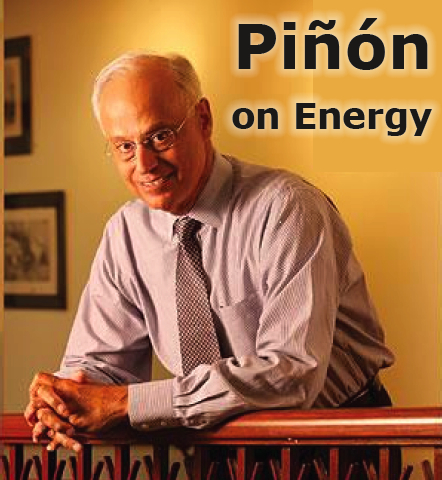
From The Cuba Standard: “Piñón on Energy: Analyzing Sherritt”

On February 24, The Cuba Standard published an analysis by Jorge R. Piñón by on Cuba’s energy sector focusing in particular on Sherritt International, which has a joint venture in oil extraction and refining, natural gas, electric power and nickel mining, concentrating, refining  and marketing.

The full article can be found here: http://www.cubastandard.com/2011/02/23/pinon-on-energy-analyzing-sherritt/

An introduction to Piñón’s analysis is presented below.

Crude oil: Crude oil prices reached this week a 30-month high of nearly $100 per barrel, with industrial residual fuel oil prices close behind at a 28-month high of $80. These price increases are reflected in Sherritt’s year-end 2010 financial reports released today.

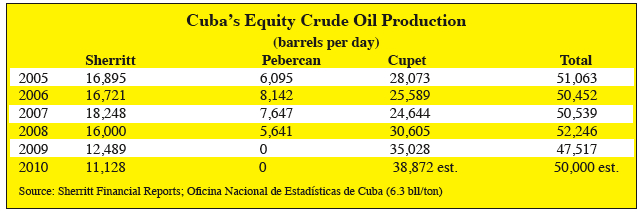
Cuba’s onshore and coastal 2010 crude oil production is estimated at approximately 50,000 barrels per day, of which 11,128 barrels per day represents Sherritt’s net working interest (equity) production. This is an 11-percent decrease from 2009 levels of 12,489 barrels per day.  Sherritt sells this production to state oil company Cupet at a discounted U.S. Gulf Coast residual fuel oil price.

Sherritt and Cuba do not realize the true value of the island’s crude oil production — based on its refined products yield — because Cuban crude is used directly as industrial fuel for electric power plants, instead of optimizing its inherent value by processing it into high-value refined products such as gasoline, diesel and jet fuel.

Cuba’s realized crude oil value could substantially rise if it was able to market its crude oil to U.S. Gulf Coast refining companies.Realized prices should also rise once Cuba is able to monetize its heavy-oil production in planned conversion facilities at Cienfuegos and Matanzas.

High oil prices negatively impact Cuba’s balance of payments in two ways: Not only as the value of its crude oil imports from Venezuela under the 2000 Convenio Integral de Cooperación services for oil barter agreement increases, but also as it has to purchase part of its domestic crude oil production from Sherritt. We estimate that the total value of Venezuelan petroleum imports and the purchase of Sherritt equity production for 2010 will be approximately $2.894 billion.

Nickel: The good news is that nickel prices also reached this week a 24-month high of $13 per pound, an increase of 177 percent from a low of $4.50 in February 2009. However, this is still far from the contract record high of $24 a pound in May 2007.

Canada’s Sherritt reported nickel and cobalt revenues for 2010 of $453.1 million, reflecting a 29-percent improvement over 2009 revenues of $350.7 million. The reported figures only reflect Sherritt’s 50-percent interest in the Moa/Saskatchewan nickel joint venture with Cubaníquel; therefore a similar improvement should mirror its Cuban partner operations.

Cuba and Sherritt offset receivables between Sherritt’s nickel and crude oil operations, therefore alleviating Cuba’s crude oil negative cash flow impact on the national balance of payments.

Jorge R. Piñón was president of Amoco Corporate Development Company Latin America from 1991 to 1994; in this role he was responsible for managing the business relationship between Amoco Corp. and regional state oil companies, energy ministries and energy regulatory agencies

Posted in Blog | Tagged , , , , , , | Leave a comment

English Version of Partido Comunista de Cuba, “Proyecto de Lineamientos de la Politica Economica y Social”: Viable Strategic Economic Re-Orientation and / or Wish List ?

A complete English translation of the “Lineamientos” has just been published by Walter Lippmann, the Editor-in-Chief of CubaNews , the free Yahoo news group on Cuba.

The “Draft Guide for Economic and Social Policy” for the Fifth Congress of the Communist Party is available here: http://www.walterlippmann.com/pcc-draft-economic-and-social-policy-guidelines-2010.html

What follows here is the Blog entry for November 11, 2010 on the “Guidelines”.

I. “Structural Adjustment” on a Major Scale

On Tuesday, November 9, a major document appeared for sale in Cuba entitled “Proyecto de Lineamientos de La Political Economica y Social” or “Draft Guide for Economic and Social Policy.”  The purpose of the “Guide’ presumably is to spark and to shape public discussion and education on the economic matters that will be the focus of the long-postponed Sixth Congress of the Cuban Communist Party to take place in April, 2011. It also provides the essentials of the new approach that will likely be adopted at the Sixth Congress.

It can be found in its entirety, courtesy of the Blog Caf Fuerte. (http://cafefuerte.com/, here: Projecto de Lineamientos de la Politica Economica y Social,

The “Guide” is a broad-reaching and comprehensive document that puts forward 291 propositions for the improvement of the functioning of the Cuban economy. It signals a break in the four years of near inaction that the Cuban economy endured since Raul Castro took over as acting and then actual President – and the ten years of paralysis from about 1995 to 2006 under President Fidel.  It amounts to a major process of “structural adjustment” of the sort that was begun in 1992-1994, but was then stalled when the Cuban economy appeared to rebound after 1994.  The document is also a contradiction and maybe a “slap-in-the-face” for Fidel Castro, as it indeed indicates that the Fidelista-style Cuban model – his life’s work – is not working. (See “Fidel’s No-Good Very Bad Day” and The “FIDEL” Models Never Worked; Soviet and Venezuelan Subsidization Did.)

II. General Character of the Proposals

The Table of Contents provides a quick idea of the scope of the document:

Introduction

Contours of Economic and Social Policy

I           Economic Management Model

II          Macroeconomic Policies

III        External Economic Policies

IV        Investment Policy

V         Science, Technology and Innovation Policy

VI        Social Policy

VII       Agroindustrial Policy

VIII     Industrial and Energy Policy ix

IX        Tourism Policy

X           Transport Policy

XI         Construction, Housing, and Hydraulic Resource Policy

xii        Commercial Policy.

The Introduction summarizes the basic objectives required to overcome the principal problems of the economy. These include putting into productive use the unused lands constituting almost 50% of total, raising agricultural yields, developing new mechanisms to reverse the process of industrial and infrastructural de-capitalization, eliminating excess and redundant employment, raising labor productivity, recovery of export capacity in traditional exports, undertake studies in order to eliminate monetary dualism, and provide improved capacities for more decentralized regional development.

The “Contour” section then states that “…only socialism is capable of overcoming the difficulties and preserving the conquests of the Revolution, and the implementation of the economic model prioritizes planification and not the market”. However, the next paragraph states “…socialism is equality of rights and equality of opportunity for all citizens, not egalitarianism.” The latter sounds less like “socialism” and more like “social democrat” if not the common approach of most Western countries. The latter quotation makes the former somewhat hard to interpret if not meaningless.

The document then goes on to list the 291 propositions under the 12 different headings. A few of the more interesting propositions are summarized below:

  • Wholesale markets for supplying state, cooperative and self-employment enterprises will be established. (9)
  • State enterprises will decide themselves how to allocate their investment funds, and normally will not receive budgetary support for this. (13)
  • Insolvent enterprises will face liquidation. (16)
  • Workers incomes in state enterprises will be linked to enterprise performance (# 19)
  • Monetary and exchange rate unification will be “advanced” (54)
  • The taxation system will be advanced in terms of progressivity and coverage, and will be based on generality and equity of its structure. (56 and 57)
  • The centralized character of the determination of the planned level and structure of prices will be maintained. (62)
  • Recover the place of work as the fundamental means of contributing to the development of society and the satisfaction of personal and family needs. (130)
  • Modify the structure of employment, reducing inflated staffing and increasing employment in the non-state sector (158-159)
  • Eliminate the ration book as a means of distributing products. (162)
  • Improve agriculture so that Cuba is no longer a net importer of food, prioritizing import substituting activities, reviving citrus fruit production, augmenting sugar production. (166, 174, 179, 194.)
  • Promote export-oriented industry (197)
  • Develop a range of new industries such as tires, construction materials and metallurgy (213, 215, 216)
  • Restructuring of domestic retailing and wholesaling. (283-291)

III. Preliminary Evaluation

This document will receive a great deal of attention inside and outside Cuba. It provides fodder – along with the recent legislation on self-employment – for analysts and observers of Cuba, who have had little of hard substance on which to base their analyses of Cuban policy under the “Raulista” Presidency for some time.

In some senses, this document is remarkable. It sets out an ambitious reform program for much of the Cuban economy. It may indeed constitute a “Wish List” of all the types of policy improvements and changes that would be nice to have. The question is “can and will they be implemented?”

This document also is a major risk for the Raul Castro Administration. It provides a check-list of tasks that will be difficult to achieve. If future implementation and economic performance is far below the expectations that are now being raised to high levels, there could well be a serious fall-out for the Government and the Party.

The document is also broad and ambitious but does not set any clear priorities and does not propose a sequence of actions. Everything can’t be done at once. How should the policy changes be phased or sequenced?

Some observers are skeptical and perhaps cynical regarding the “Guide” – for good historical reasons. In her Blog Entry entitled The Art of Speaking Without Speaking (http://www.desdecuba.com/generationy/?p=2088) Yoani Sanchez states:

When you grow up decoding each line that appears in the newspapers, you manage to find, among the rhetoric, the nugget of information that motivates, the hidden shreds of the news. We Cubans have become detectives of the unexpressed, experts in discarding the chatter and discovering — deep down — what is really driving things. The Draft Guidelines for the Communist Party’s VI Congress is a good exercise to sharpen our senses, a model example to evaluate the practice of speaking without speaking, which is what state discourse is here.

The Guide undoubtedly could be seen as an economic rescue program designed to rescue also the Communist party of Cuba, which faces steady de-legitimation as the economy deteriorates – even as the official GDP statistics appear to rise steadily.

What is missing from the “Guide”? Here is a first brief listing. Further analysis will be incorporated here later.

1.      Nothing is said regarding labor rights. A vital part of the reform approach if labor is to be used effectively would be freedom of association, collective bargaining and the right to strike. In the absence of these, pressures and insights from the grass roots to improve economic policy and its effectiveness are suppressed.

2.      Nothing is said regarding freedom of expression and the right to criticize the policies and institutions openly, honestly and continuously. The absence of this right leads to economic inefficiency and corruption as argued elsewhere. ( Freedom of Expression, Economic Self-Correction and Self-Renewal)

3.      No further elaboration of how the self-employment or micro-enterprise sector is presented, suggesting that the recent reforms are the end of the journey not a first step.

4.      The dedication to centralized determination of prices is problematic. If maintained strictly, it would make the decentralized decision-making allotted to enterprises for investment, the hiring of resource inputs, etc. meaningless, and the problems of trying to run the economy from a few office towers in Havana would continue.

Posted in Blog | Tagged , , , , , , , , , , | Leave a comment

News and Articles, February 21 – 27, 2011

Diario de Cuba, 27 de febrero: El dólar del ‘enemigo’ sigue trastornando a la Isla http://www.diariodecuba.com/cuba/3352-el-dolar-del-enemigo-sigue-trastornando-la-isla

Havana Times, February 26: Cuba’s Humidor Auction Brings 1.1 Million USD http://www.havanatimes.org/?p=38629

Manila Bulletin, February 26: Cuba’s medical tourism http://www.mb.com.ph/articles/306351/cubas-medical-tourism

Generation Y, February 26: Go Bankrupt or Prosper … http://www.desdecuba.com/generationy/?p=2330

The Miami Herald, February 25: Vietnamese official is in Cuba to share his country’s formulas for economic ‘renewal’ http://miamiherald.typepad.com/cuban_colada/2011/02/vietnamese-official-is-in-cuba-to-share-his-countrys-formulas-for-economic-renewal.html

Havana Times, February 25: Janas’ Schizophrenia and Cuba http://www.havanatimes.org/?p=38495

Cuba Standard.Com, February 25: Mexicana to resume Havana flights http://www.cubastandard.com/2011/02/25/mexicana-to-resume-havana-flights/

 Granma, 25 de febrero: Evitar violaciones en la “vía láctea” http://www.granma.cubaweb.cu/2011/02/25/nacional/artic01.html

 Cuba Standard.Com, February 24: Venezuela, Cuba set up mining joint venture http://www.cubastandard.com/2011/02/24/venezuela-cuba-set-up-mining-joint-venture/

 The New York Times, February 24: In Cuba, Cigars Lovers Are a Lifeline http://www.nytimes.com/2011/02/25/world/americas/25cigar.html

 San Francisco Chronicle, February 24: Cuba Education Tours Announces Rainbow Cuba Tours For LGTB People for May 2011 http://www.sfgate.com/cgi-bin/article.cgi?f=/g/a/2011/02/24/prweb8162145.DTL

BBC Mundo, 24 de Febrero: Lo difícil de los cambios http://www.bbc.co.uk/blogs/mundo/cartas_desde_cuba/2011/02/lo_dificil_de_los_cambios.html#more

Canadian Press, February 24: Festival shows off Cuba’s signature cigars with glitz, glamour and a lot of smoke http://www.google.com/hostednews/canadianpress/article/ALeqM5j15iQYKP-6kgqwF5SyvuK1ldMm-w?docId=6050472

IPS, 24 de febrero: Se desploma construcción de viviendas en Cuba http://cubaalamano.net/sitio/client/brief.php?id=8833

Diario de Cuba, 24 de febrero: Expertos: EEUU debe abrir un diálogo con La Habana sobre cooperación energética http://www.diariodecuba.com/cuba/3307-expertos-ee-uu-debe-abrir-un-dialogo-con-la-habana-sobre-cooperacion-energetica

Cubanet, 24 de febrero: Las tiendas están vacías http://www.cubanet.org/noticias/las-tiendas-estan-vacias/

Cuba Standard.Com, February 23: Piñón on Energy: Analyzing Sherritt http://www.cubastandard.com/2011/02/23/pinon-on-energy-analyzing-sherritt/

Cuba Standard.Com, February 23: Sherritt expects production decline in Cuba for ’11 http://www.cubastandard.com/2011/02/23/sherritt-expects-production-declines-in-cuba-for-11/

Canadian Business, February 23: Sherritt International fourth quarter profits rise, revenues higher http://www.canadianbusiness.com/markets/headline_news/article.jsp?content=b6039832

Europa Press, 23 de febrero: Cuba recibió en enero casi 300.000 turistas, un 15,9% más que en 2010 http://es.noticias.yahoo.com/5/20110223/tbs-cuba-recibi-en-enero-casi-300-000-tu-9e5b28e.html

La Vanguardia, 23 de febrero: Asia y Europa del Este salvan las ventas de puros habanos http://www.lavanguardia.es/internacional/20110223/54119413726/asia-y-europa-del-este-salvan-las-ventas-de-puros-habanos.html

Reuters, February 22: Arrival of Cuba offshore oil rig delayed again http://www.reuters.com/article/2011/02/22/cuba-oil-idUSN2228950320110222

Cuba Standard.Com, February 22: Castro to visit Belarus http://www.cubastandard.com/2011/02/22/castro-to-visit-belarus/

Sun Herald, February 22: American Tours International Expands Reach in Cuba, Brazil, China http://www.sunherald.com/2011/02/22/2884889/americantours-international-expands.html

The Guardian, February 22: Chinese come to their Cuban comrades’ rescue by lightning up cigars http://www.guardian.co.uk/world/2011/feb/22/china-cuba-cigar-sale-rise

The Miami Herald, February 22: Belarussian leader looks to expand trade http://miamiherald.typepad.com/cuban_colada/2011/02/belarussian-leader-looks-to-expand-trade.html

AFP, 21 de febrero: Iglesia apuntala reformas de Raúl Castro en Cuba http://espanol.news.yahoo.com/s/afp/110221/latinoamerica/cuba_iglesia_presos_pol__tica
 
Itar Tass, February 21. Cuba FM to discuss broader bilateral cooperation in Moscow http://www.itar-tass.com/eng/level2.html?NewsID=15973265&PageNum=0

Radio Nuevitas, 21 de febrero: Récord de llegada de turistas a Cuba http://www.radionuevitas.icrt.cu/index.php/ultimas-noticias/noticias-cuba/6119-record-de-llegada-de-turistas-a-cuba.html

Univision, February 21: Cuba: Cigar sales up despite economic crisis http://wires.univision.com/english/article/2011-02-21/cuba-cigar-sales-up-despite

CNN, February 21: Cuba ready for golfing revolution http://www.cnn.com/2011/SPORT/golf/02/21/cuba.golf.revolution.castro/index.html?section=cnn_latest

Granma, 21 de febrero: Más caña que esfuerzo http://www.granma.cubaweb.cu/2011/02/21/nacional/artic01.html

Granma, 21 de febrero: El azúcar se suma a la venta liberada http://www.granma.cubaweb.cu/2011/02/21/nacional/artic04.html

Café Fuerte, 21 de febrero: Denuncian severos daños por grupos electrógenos en Cuba http://cafefuerte.com/2011/02/21/denuncian-severos-danos-por-grupos-electrogenos-en-cuba/?utm_source=twitterfeed&utm_medium=twitter

Posted in News on the Cuban Economy | Leave a comment

Espacio Laical, Interview with Pavel Vidal, “Disarticulating the Monopoly of State Centralization”

In its February 2011 issue, Espacio Laical has published an interview with Pavel Vidal by Lenier Gonzalez Mederos on the future of the Cuban economy.

In the interview, Vidal discusses Cuba’s current macroeconomic situation, the structural changes that he considers necessary for Cuba, the dual monetary and exchange rate systems, the Viet Nam mode’s implications for Cuba and the agricultural sector, among other things.

“The change of the planning model must grant a larger space to the market and the signals that it generates for prices, exchange rates and the diversity and complexity of demand. If we do not promote this type of environment for Cuban enterprise, I don’t think that we can improve its efficiency much.  The market has shortcomings and we have to regulate it. But regulation also has shortcomings, and we cannot let the remedy be worse than the sickness. Moreover, what we must try to do is to regulate it intelligently, not to replace it with a centralized system that has demonstrated itself one thousand and one times to be inefficient inside and outside Cuba.”

The interview is available only in Spanish, unfortunately. It can be found here:

Espacio Laical, February 2011, Interview with Pavel Vidal Desarticular el monopolio de la centralización estatal

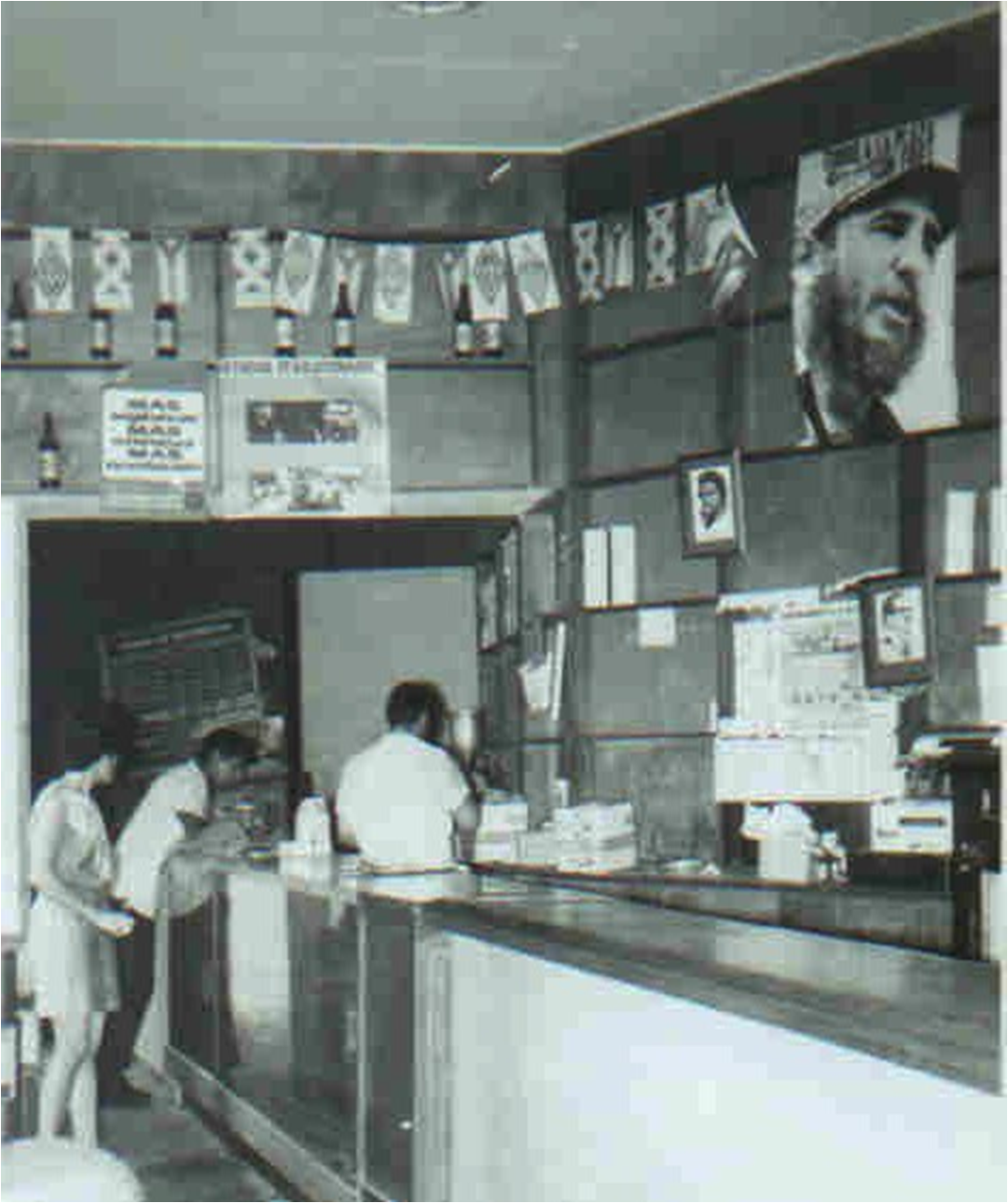
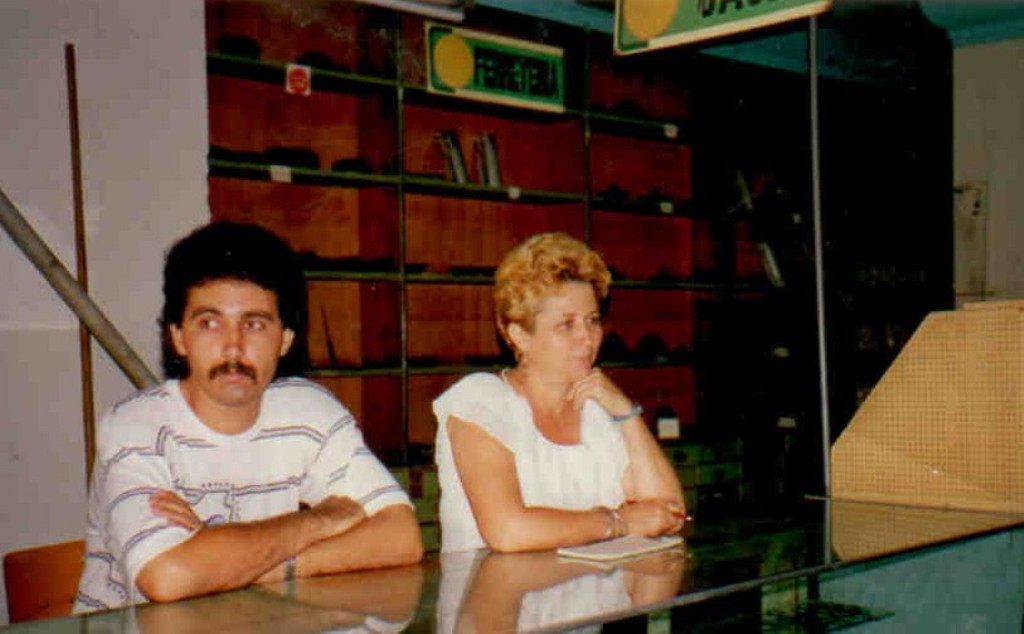
Retailing a la Central Planning circa 1968, Photo by Arch Ritter

Posted in Blog | Tagged , , , | 1 Comment

Economic Analyses Published by Espacio Laical, CONSEJO ARQUIDIOCESANO DE LAICOS DE LA HABANA

Perhaps surprisingly, Espacio Laical, the journal of the CONSEJO ARQUIDIOCESANO DE LAICOS DE LA HABANA, has become a most interesting medium for economic and political and religious analyses and exchanges. Its circulation in digital format within Cuba via the “Intranet” is unclear. However, it has produced a variety of works by some of Cuba’s leading economic analysts including those in the main Research Institute focusing on the on the domestic Cuban economy, namely the Centro de Estudios sobre la Economia Cubana, (CEEC), ttp://www.ceec.uh.cu/. Many of the analysts in CEEC publish their work in Espacio Laical or other sources outside their own institution, which unfortunately has a rather minimalist web site at this time, .

Here is an Index of Economic Articles that have appeared in Espacio Laical, with most of them  hyperlinked to the original source.

Barbería, Lorena – Remesas, pobreza y desigualdad en Cuba. (Año 4 / No.14)

Calvo, Cristina – X Semana Social Católica: Globalización y desarrollo integral inclusivo. (Año 6 / No.23)

Espacio Laical – Economía cubana (portada) (Año 4 / No.14)
Economía cubana: retos y opciones. (Año 4 / No.14)

Everleny Pérez, Omar – Se extiende el cuentapropismo en Cuba. (Año 6 / No.24)

Laborem , boletín del Movimiento de Trabajadores Cristianos (MTC)  – Sin quitarle una letra. (Año I / No.1)

La Quincena. – Textos para la reforma social. (Año I / No.4)

Mesa, Armando – Mercado y solidaridad: ¿un debate intergeneracional? (portada) (Año 4 / No.14)
Mercado y solidaridad: ¿un debate intergeneracional? (Año 4 / No.14)

Mesa-Lago, Carmelo – Posible restablecimiento de relaciones económicas entre Cuba y Estados Unidos: Ventajas y desventajas. (Año 4 / No.14)
La crisis financiera mundial y sus efectos en Cuba (Año 4 / No.16)
¿Se recupera el mundo de la crisis económica global? (Año 5 / No.20)
– X Semana Social Católica: Implicaciones sociales y económicas para el sistema de seguridad social en
El desempleo en Cuba: de oculto a visible. (Año 6 / No.24)

Monreal González, Pedro – El problema económico de Cuba. (Año 4 / No.14)

Pérez Villanueva, Omar Everleny – X Semana Social Católica: Notas recientes sobre la economía en Cuba. (Año 6 / No.23)

Robles, Reydel – X Semana Social Católica: Presentación al panel sobre economía y sociedad. (Año 6 / No.23)

Veiga González, Roberto – Propiedad privada en Cuba: una percepción de futuro. (Año I / No.4)

Vidal Alejandro Pavel – Redimensionando la dualidad monetaria (Año 3 / No.11)
Los salarios, los precios y la dualidad monetaria. (Año 4 / No.14)
El PIB cubano en 2009 y la crisis global. (Año 5 / No.18)
Los cambios estructurales e institucionales. (Año 6 / No.21)
– X Semana Social Católica: La actual crisis bancaria cubana. (Año 6 / No.23)
Se extiende el cuentapropismo en Cuba. (Año 6 / No.24)

Posted in Blog | Tagged , , , , , , , , | Leave a comment

CARMELO MESA-LAGO and PAVEL VIDAL-ALEJANDRO, “The Impact of the Global Crisis on Cuba’s Economy and Social Welfare”

Journal of Latin American Studies. 42, 689–717,  Cambridge University Press, 2010

Carmelo Mesa-Lago and Pavel Vidal have teamed up to produce a fine analysis of the impacts of the world recession of 2009-201o on Cuba,  its macro-economy and its social sectors.  It is certainly encouraging to see such cooperation in the economics discipline! The article can be found here: Pavel Vidal and Carmelo Mesa-Lago, Cuba economic social impact crisis-JLAS-11 (2)

Abstract.The mechanisms by which the world economic crisis has been transmitted from developed to developing economies are conditioned by domestic factors that may attenuate or accentuate external economic shocks and their adverse social effects. Cuba is a special case : it is an open economy and hence vulnerable to trade growth transmission mechanisms, but at the same time, it is a socialist economy with universal social services. This article reviews the literature, summarises Cuba’s domestic socio-economic strengths and weaknesses prior to the crisis, evaluates the effects of the crisis on the macro-economic and social services indicators, assesses the government response and suggests alternative socio-economic policies.

Carmelo Mesa-Lago


Pavel Vidal

Posted in Blog | Tagged , , , , , , , , , , , | Leave a comment