Tag Archives: Petroleum

Arturo Lopez-Levy and Jonathan Benjamin-Alvarado, “A Clash of Generations: U.S. 50 Year Old Embargo Meets Scarabeo 9″

Original from Infolatam: http://www.infolatam.com/2012/02/13/cuba-choque-de-generaciones-la-scarabeo-9-y-el-embargo-de-50-anos/

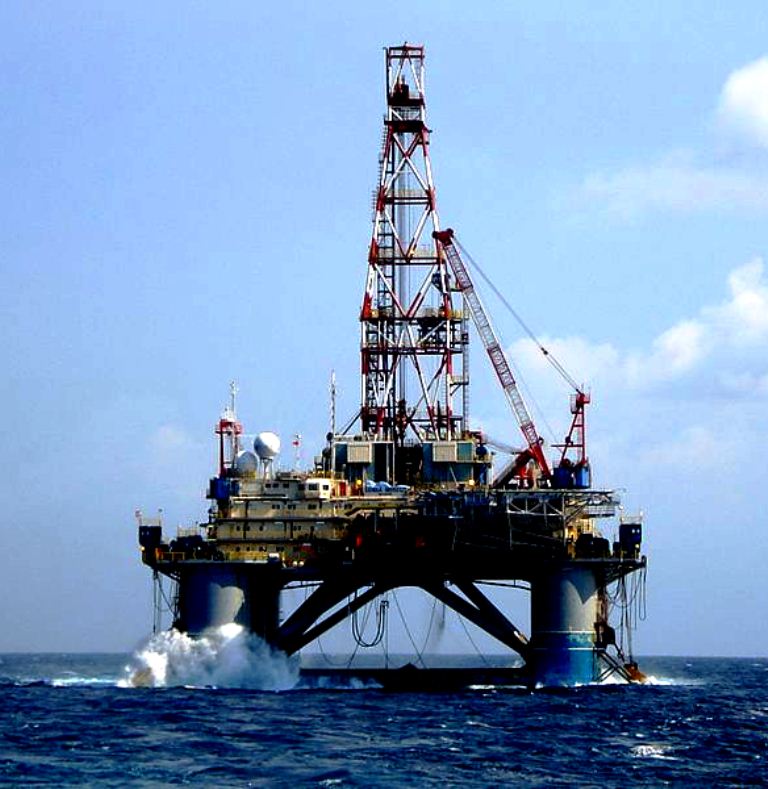
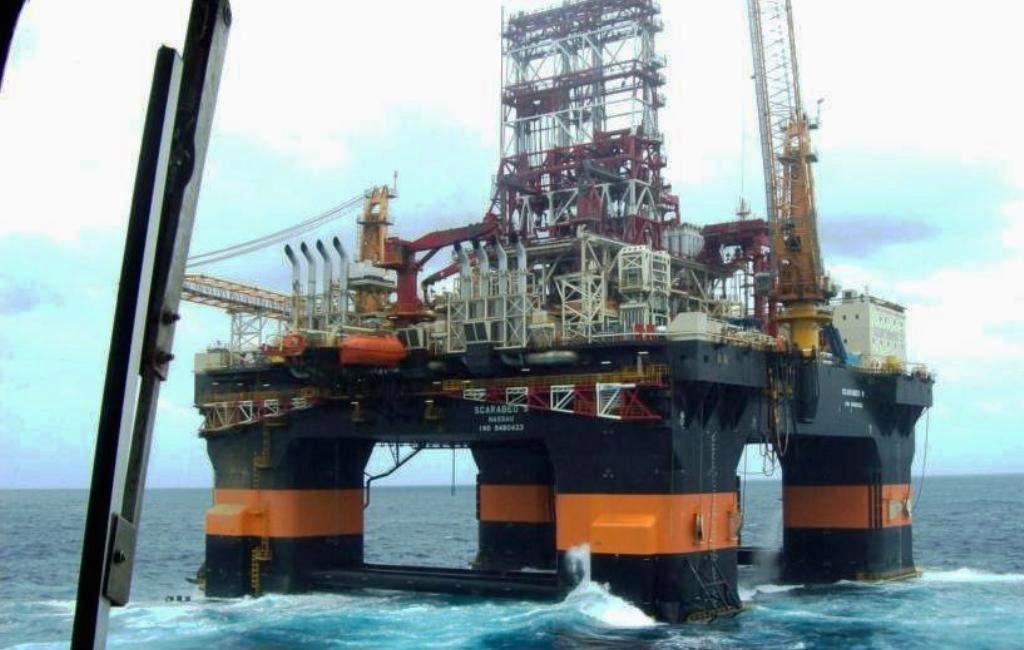
Scarabeo 9, the semi-submersible oil rig contracted by the Spanish company Repsol completed its journey from Singapore to Cuba. Repsol’s rig will explore Cuba’s exclusive economic zone, an area in the Gulf of Mexico of about 112000 square kilometers. Oil exploration in the zone is being contracted to several foreign companies such as Venezuela’s PDVSA, Malaysia’s Petronas, and Vietnamese PetroVietnam. Cuba’s Ministry of Basic Industry estimates the oil reserves in the zone are between 5 billion to 9 billion barrels of oil. CNN GPS host Fareed Zakaria referred to Cuba’s total oil potential as between 5 billion and 20 billion barrels of oil.

The start of the oil exploration will not derail Raul Castro’s reform program. At a minimum, oil will not come from the offshore wells soon enough, while the reforms are needed immediately. The Cuban government needs to create jobs for the million and half workers that are supposed to leave the government sector in the next two years as part of the reforms program proclaimed last April by the Cuban Communist Party in its VI Congress. It must also alleviate critical situations of poverty in the five most eastern provinces, where unrest has been rising. With or without oil, the Cuban economy sorely needs to develop an environment in which businesses and individuals feel confident to invest.

The development of an oil based economy also poses a challenge for the anti-corruption policy President Raul Castro claims to support. The risk of potential backdoor deals and traffic of influence associated with the volume of oil profits cannot be contained without more transparency to hold corrupt or incompetent officials to account. To improve the quality of governance, the Cuban government must accelerate its opening to the best monitoring world practices and the training of its project managers, accountants, economists, and regulators. It must also lessen controls over the media and nongovernmental activities in ways that they can monitor and identify negligent and corrupt officials.

The impact on U.S.-Cuba relations:

In the early 1990’s, several studies of Cuban future scenarios (Edward Gonzalez and David Rondfelt’s “Cuba Adrift in a Post-Communist World”

of the Rand Corporation for instance) warned that a discovery of oil in Cuba would be a game changer for U.S-Cuba relations. Given the expectation that it will find oil in Cuba’s waters; the mere arrival of Scarabeo 9 strengthens Havana’s position versus Washington’s policy of isolation.

One must add that oil offshore exploration in Cuba has important implications in terms of U.S. national security, energy and environmental policies. Facing the danger of an oil spill in the Gulf of Mexico, Cuban American oil expert Jorge Piñón, associated with the University of Texas at Austin Jackson School of Geo-sciences, recommended an industry wide license “allowing U.S. oil equipment and services companies to provide goods, services and personnel to oil companies operating in Cuba in the event of an emergency”.

At a minimum, Piñón suggested that CUPET, Cuban oil company be allowed to join the International Association of Drilling Contractors (IADC) “in order to gain experience in deep-water drilling by the sharing of industry health, safety and environmental best practices through IADC conferences, training seminars, and technical publications in areas such as drilling and completion technology; standards, practices, legislation and regulations which provide for safe, efficient and environmentally sound drilling operations”.

The activation of the American business and environmental community about oil exploration in Cuban waters is already in motion. In December 2011, a joint delegation of the International Association of Drilling Contractors and the Environmental Defense Fund visited Cuba to explore ways to cooperate with Cuba beginning by common responses to potential spills. Last fall Senators Lisa Murkowski (R-AL) and Mary Landrieux

(D-La) sponsored a bill to allow “U.S. citizens and residents to “engage in any transaction necessary” for oil and gas exploration and extraction in Cuba — “notwithstanding any other provision of law.” The bill passed the Senate Committee on Energy and Natural Resources with the support of The Petroleum Equipment Suppliers Association (PESA).

Even in the “worst case scenario” for Cuba of a Republican victory in 2012, historical precedents such as the lifting of the embargo against Vietnam allow us to predict that the pro-embargo lobby doesn’t have the spine to stop the push of the American petroleum lobby. The opening of Agricultural trade with Cuba in 2000, showed how a mobilized and well-funded American farmers community defeated the pro-embargo lobby in a matter of two years. In the last decade, food sales to Cuba averaged $350 million a year. The trade peaked in 2008 at $ 700 million. If Scarabeo 9 discovers oil, the potential profits of American trade and investment in Cuba will easily exceed the agricultural trade revenues.

The Way Forward:

Sooner or later, we will read an op-ed by a pro-embargo lobbyist explaining that all this is a campaign by the Cuban government to entice the American business community, and that the only way forward is for the United States to fight with the companies that dared to explore oil fields next to our shores, respecting international laws and showing goodwill to our government but refusing to go along with the Cuban American right wing lobby in Southern Florida. It will insist that there are neither reforms nor reformist elements to nurture by engaging Cuba.

Here is a better course: The Obama Administration, which wasted a year since Repsol-YPF contracted the platform in China, should instead include Cuba in all regional cooperation efforts to design mutually beneficial hemispheric energy and environmental protection policies. To pursue such a goal and protect Florida and Gulf coast, the American and Cuban government should begin negotiations to train their officials for coordinated responses against accidents in the Florida Straits and protect their installations against any potential terrorist attack, from enemies of the United States or violent Cuban exile groups.


To nurture economic reform and anti-corruption initiatives in Cuba’s dealing with the oil industry, is clearly in the national interest of the United States. Since American companies contracting overseas are regulated by the 1977 Foreign Corrupt Practices Act, by far a more restrictive anti-corruption legislation than any of the countries involved in Cuba’s oil industry, President Obama can argue that it is in U.S. national interests to license American oil companies to contract any oil related activity in Cuba, beginning by environmental protection. This is legal within the framework of the Helms-Burton law.

A secure and stable world oil market is a fundamental United States national security interest. All serious predictions by American academic and intelligence community are forecasting the globalization of energy demand and an increase in world demand for oil by 20% or more over the next two decades, mainly in emerging markets. The risks of disruptions of oil extraction, refining or transportation, and oil spills are always present. Washington should not postpone anymore an urgent discussion about the convenience and the opportunity costs of refusing to engage Cuba’s oil industry.

Jonathan Benjamin-Alvarado

Arturo Lopez-Levy

Posted in Blog | Tagged , , , | 1 Comment

Spain’s Repsol begins Cuba offshore drilling-sources

By Jeff Franks | Reuters – 17 hrs ago; HAVANA (Reuters)

Spanish oil company Repsol YPF has begun drilling the first well in Cuba’s long-awaited exploration of offshore oilfields that the communist country says hold both billions of barrels of oil and the key to greater prosperity, industry sources told Reuters on Thursday.

The massive Scarabeo 9 drilling rig, which arrived in Cuban waters two weeks ago, began drilling into the sea floor about 30 miles northwest of Havana on Tuesday night, the sources said.

A Repsol spokesman said the company could not comment on “operational details.”

The newly built, high-tech rig is operating in 5,600 feet of water, or what the oil industry calls “ultra-deep water,” in the Straits of Florida, which separate Cuba from its longtime ideological foe, the United States.

Sources close to the project said such wells generally take about 60 days to complete.

Repsol, which is operating the rig in a consortium with Norway’s Statoil and ONGC Videsh, a unit of India’s Oil and Natural Gas Corp, has said it will take several months to determine the results of the exploration.

The well is the first of at least three that will be drilled in Cuban waters with the Scarabeo 9, which was built in China and is owned by Saipem, a unit of Italian oil company Eni.

Sources have said that Repsol will drill the first well and then the rig will go to Malaysia’s Petronas in partnership with Russia’s Gazprom Neft and then back to Repsol for the third well.

It is not clear what happens after that, although some sources have said Repsol, which is leasing the Scarabeo 9 from Saipem at a rate said to be more than $500,000 a day, will move the rig to Brazil for exploration there.

Cuba has said it may have 20 billion barrels of oil in its northern waters, which are its part of the Gulf of Mexico. The U.S. Geological Survey has estimated it may have 5 billion barrels of oil, but its study does not include the entire Cuban gulf zone.

EASE FINANCIAL WOES

Cuba, which is in the midst of reforming its Soviet-style economy, is hoping oil will ease it chronic financial woes and bring energy independence from its socialist ally Venezuela. It receives about 115,000 barrels daily from the oil-rich South American country.

But if oil is found, experts say it could take five years or so to begin production because more drilling will be needed and production infrastructure put in place.

Repsol drilled the only previous offshore well in Cuba in 2004 and said it found oil but that it was not “commercial.”

It has been difficult to find a rig for more drilling because of the 50-year-long U.S. trade embargo against Cuba, which limits the amount of U.S. technology that can be used.

The Scarabeo 9, which is of Norwegian design, has only one piece of American equipment – the blowout preventer, a key part that failed in the 2010 blowout of a BP well in the U.S. Gulf of Mexico.

The BP well, which was in more than 5,000 feet of water and spilled 5 million barrels of oil, stained hundreds of miles of U.S. coastline.

In Florida, 90 miles north of Cuba, the Cuba offshore project has raised fears that a similar accident could damage the state’s beaches and coral reefs.

Drillers in Cuban waters could get within 45 miles of Florida, while in the U.S. gulf no exploration is permitted within 125 miles of the state.

At Repsol’s invitation, a team of U.S. experts inspected the rig in December in Trinidad and Tobago and said it complied with all existing engineering and safety standards.

But the United States, which has no official diplomatic relations with Cuba, has only made safety preparations from afar and has not been otherwise involved in the project.

Countries such as Norway and Brazil have helped lead an international effort to get Cuba ready for oil exploration and the possibility of an oil spill.

The project has gone forward despite opposition in the United States from Cuban exile leaders, who have proposed legislation in the U.S. Congress to try to stop Repsol.

They fear that oil will enrich and assure the survival of the Communist government they have long opposed.

“We need to figure out what we can do to inflict maximum pain, maximum punishment to bleed Repsol of whatever resources they have if there’s a potential for a spill that would affect the U.S. coast,” U.S. Rep. David Rivera from Florida told a congressional subcommittee in Miami on Monday.

Posted in Blog | Tagged , , , | Leave a comment

Marc Frank: US Frets at Cuba Oil Exploration

Financial Times, January 18, 2012

By Marc Frank in Havana

A huge oil drilling platform will sink deepwater wells off Cuba next week in a move that has caused angst in the US at the prospect of significant oil discoveries that could alter Cuba’s economic future and Havana’s relations with Washington.

Cuba’s largely unexplored share of the Gulf of Mexico is thought to contain billions of barrels of oil and gas equivalent and has already drawn more foreign investment than any other sector of the economy.

“The discovery of even modest amounts of oil would be significant for Cuba,” said Ricardo Torres Perez, deputy director of Havana University’s Center for the Study of the Cuban Economy.

“Cuba would become less energy dependent and might eventually become an energy exporter; new credit and foreign investment would materialize, along with refining and service jobs.”

A significant discovery would almost certainly buy time for President Raúl Castro, as he works to reform the Soviet-style economy. In addition to environmental worries – as the drilling would unfold about 70 miles from Florida’s coast – this possibility has prompted vehement criticism from some US conservatives.

Ileana Ros-Lehtinen, who chairs the House foreign relations committee, has sought to introduce legislation that would place sanctions on participating foreign companies.

“A state sponsor of terrorism is poised to achieve a tremendous economic boon by entering the oil business and endangering US waters to boot,” the Republican congresswoman said this month.

“It is deeply disappointing that the Obama administration appears content to just watch that happen,” she added. Adding extra piquancy to the controversy is its timing: the Republican party’s Florida primary election take place on January 31.

The $750m platform is owned by Italian oil giant Eni’s offshore unit Saipem and assembled in China using less than 10 per cent of US technology to accommodate sanctions that also bar US companies from participating. It is contracted for at least six months.

A first consortium grouping Spain’s Repsol, Norway’s Norsk Hydro and India’s ONGC Videsh will drill two wells. A second consortium, made up of Malaysia’s Petronas and Russia’s Gazprom, will drill subsequent wells.

Despite the sanctions, Washington has engaged both with these foreign companies and the Cuban government after the National Commission on the BP Deepwater Horizon Oil Spill and Offshore Drilling recommended such co-operation to protect “fisheries, coastal tourism and other valuable US natural resources”.

US officials inspected the rig in Trinidad and Tobago this month before it left for Cuban waters, and in December held talks with Cuba, Mexico and the Bahamas in Nassau on emergency planning in the gulf. A second round of talks is scheduled for February.

Experts are divided on whether significant oil discoveries would spur or slow Cuban economic reforms.

“With or without oil, the Cuban economy sorely needs an environment in which businesses and individuals feel confident to invest,” said Arturo Lopez-Levy, a Cuban academic at the University of Denver.

But most agree the prospect has brought Havana and Washington closer as they look to safeguard their mutual economic and environmental interests.

“The meeting between US and Cuban officials on environmental co-operation … is an example of new bridges of communication, which if it wasn’t for oil and gas development would not have happened,” said Jorge Piñón, former president of Amoco Corporate Development Company Latin America and now a research fellow at Florida International University.

Just as “ping-pong diplomacy brought the US and China together, oil might very well bring Cuba and the US together”.

Posted in Blog | Tagged , , , | Leave a comment

US-Cuba policy, and the race for oil drilling

By Sarah Stephens,Executive Director of the Center for Democracy in the Americas. Jake Colvin, Vice President for Global Trade Issues at the National Foreign Trade Council - 09/29/11 03:39 PM ET
.

To protect the national interest — and for the sake of Florida’s beaches and the Gulf of Mexico’s ecosystem — it is time to stop sticking our heels in the sand when it comes to U.S.-Cuba policy.

Before the end of the year, a Chinese-made drilling platform known as Scarabeo 9 is expected to arrive in the Gulf.  Once it is there, Cuba and its foreign partners, including Spain’s Repsol, will begin using it to drill for oil in waters deeper than Deepwater Horizon’s infamous Macondo well.  The massive rig, manufactured to comply with U.S.-content restrictions at a cost of $750 million, will cost Repsol and other companies $407,000 per day to lease for exploration.

They are taking this financial risk because Cuba needs the oil and its partners — Spain, Norway, Russia, India, Vietnam, Malaysia, Canada, Angola, Venezuela, and possibly China — believe that drilling in waters said to contain undiscovered reserves of approximately 5 billion barrels of oil is good business.

In virtually every other country in the world, developments like these would prompt high-level discussions about how to exploit these resources safely or to anticipate a crisis were a disaster to strike. Experts who have studied the currents say a spill in Cuban waters would send 90 percent of the oil into the Keys and up the East Coast of Florida. But the embargo leaves Florida’s sensitive coastal resources defenseless.

Due to the fact that the drilling involves Cuba, American companies and workers cannot lend their expertise to what could be a risky operation.  U.S. economic sanctions prevent our private sector from helping Cuba drill safely and paralyze the U.S. government, which ought to be convening bilateral discussions on best practices and coordinating disaster response.  In fact, the U.S. has no emergency response agreement with Cuba for oil spills.  While some specific licenses have been granted to permit U.S. firms to conduct limited transactions with Cuba, current sanctions bar the United States from deploying the kind of clean-up equipment, engineers, spare parts for blow-out prevention, chemical dispersants, and rigs to drill relief wells that would be needed to address an oil crisis involving Cuba.

One welcomed development came earlier this month, when William Reilly, a former head of the U.S. Environmental Protection Agency and co-chair of the Commission that investigated the Deepwater Horizon disaster, led a group of experts to Cuba to take a look at their plans.  While the administration has done well giving permission to Mr. Reilly, as well as to other experts, to discuss the problem with Cuban counterparts, it should move more aggressively to work with the Cuban government to cooperate on plans for safe drilling and responding to a possible crisis.

Rather than moving forward, some in the U.S. Congress would make the problem worse.  Rep. Ileana Ros-Lehtinen (FL-R), who criticized Mr. Reilly’s visit to Cuba as “giving credibility to the regime’s dangerous oil-drilling scheme,” has offered legislation to try and stop Repsol from drilling.  Rep. Vern Buchanan (FL-R) would deny Repsol the right to drill in U.S. waters if it helped Cuba drill in its waters.   Thirty-four members of both parties have written Repsol directly, threatening the company if it drills with Cuba.
Yet this tactic can’t work.  Even if they could deter Repsol from drilling – which is unlikely – they cannot stop Cuba and partners from countries like China, Russia, and Venezuela, from using the rig and searching for oil.

At some point, it is likely that drilling will begin and the United States ought to do what it can to prepare for that eventuality.  The U.S. government should facilitate access by Cuba and its drilling partners to the resources they need to drill safely.  President Obama should instruct the Treasury Department to issue a blanket general license now that would allow private industry to provide what oil expert Jorge Piñon calls ”any conceivable response” in the event of a crisis.

As we have already done with Mexico and Canada, the U.S. should join Cuba in crafting a crisis response agreement covering on-scene coordinators, a joint response team, response coordination centers, rapid notification protocols, customs and immigration procedures, and communications.  The plan should be written, signed, tested, and implemented as quickly as possible.

Earlier this year, the Deep Water Horizon Commission, which Mr. Reilly co-chaired, said in its final report “that neither BP nor the federal government was prepared to deal with a spill” of its magnitude or complexity; that industry and policy makers were lulled by a “culture of complacency” that resulted in 5 million barrels of oil being dumped into the Gulf.

Having seen this movie once before, complacency is inexcusable.  Politics should not blind Washington to the reality of the situation unfolding off of our shores.

Sarah Stephens is Executive Director of the Center for Democracy in the Americas.  Jake Colvin is Vice President for Global Trade Issues at the National Foreign Trade Council.

Posted in Blog | Tagged , , | Leave a comment

Cuba’s Offshore Petroelum Exploration and U.S. Policy

POLITICO: Cuba drilling next hurdle for U.S.
By: Darren Goode (Courtesy of Jorge R. Piñón)
September 27, 2011 10:38 PM EDT
The White House must crisscross complex political and policy waters as it faces the impending reality of oil drilling off Cuba a mere 60 miles from the Florida Keys.

“It’s just like firing a shotgun in a crystal store,” said Jorge Piñón, a visiting fellow with the Florida International University Latin American and Caribbean Center’s Cuban Research Institute. “You’re going to break something eventually.”

That presents multiple challenges for the Obama administration, which is tasked with protecting the U.S. coastline and waters if a catastrophe begins off Cuba.

“I think there is a lot of a tendency to hold the breath and hope it doesn’t happen,” said Lee Hunt, president of the International Association of Drilling Contractors. “I can assure you that inaction and lack of leadership against a potential disaster would be this administration’s Katrina.”

Administration officials have already upgraded drilling standards for operations off the U.S. coast and have established a partnership with Mexico to set higher bilateral standards in the Gulf of Mexico since last year’s historic spill. And Bureau of Ocean Energy Management, Regulation and Enforcement Director Michael Bromwich said last week that “the issue of drilling offshore Cuba has been on our screen for many months.”

“I can say that this issue has been focused on and discussed in very high levels of the government,” Bromwich said.

The Spanish company Repsol is expected by January to begin drilling a deepwater exploratory oil well off Cuba in waters about 60 miles south of Key West and slightly deeper than BP’s doomed Macondo exploration well. Other exploratory wells from the same Chinese-built semi-submersible rig owned by the Italian company Saipem would follow in subsequent months — involving companies such as Russia’s Gazprom.

“Politicians don’t like to take the risk with Cuba unless they see a clear positive payback of some sort,” said Bill Reilly, a former EPA administrator under President George H.W. Bush. “Now that we see the rig approaching Cuban waters, the political calculus will change.”

Reilly — who co-chaired a bipartisan commission that investigated last year’s Gulf spill — and Hunt were among a group granted permission by the administration to trek to Havana in early September to talk to senior Cuban officials in the absence of direct talks between the two governments.

“The message was drilling in deepwater is a highly challenging, risky, technologically complex job, and the lessons of Macondo show that even very experienced companies and very practiced regulators can get it wrong,” Reilly said.

Hunt, who was following up on a trip he made to Cuba last year, said the biggest difference between the two trips is the Cuban government “had taken a great deal more investigation” into safety and other protocols adopted by the U.S. and Mexico.

“In a way, I would say in 2010 they had a very solid regulatory plan. In 2011, they had a fairly sophisticated regulatory plan,” Hunt said. “I don’t have too many concerns about their ability to drill safely.”

Reilly and former Royal Dutch Shell Vice President Richard Sears, the chief technical adviser to the president’s spill commission, were in Cuba to explain the commission’s recommendations and findings.

“Turned out they knew the oil spill commission’s recommendations cold,” said Reilly, who later briefed Bromwich and White House officials about the trip. “That was kind of surprising and reassuring. They are aware they have very serious challenges, as any country that’s never done this before should have.”

But for many, the main concern is that U.S. equipment and personnel would not be ready to act quickly enough to respond to a spill.

“What’s in place from the U.S. side to respond and basically prepare for a worst case or really a spill of any kind?” asked Dan Whittle, director of the Environmental Defense Fund’s Cuba program, who was also on this month’s five-day trip to Havana.

Because of the decades-old U.S. embargo against Cuba, Hunt said, many resources would have to be shipped from as far away as the North Sea, the United Kingdom, North Africa or Asia.

Reilly, Hunt and Whittle are among those asking the Obama administration to grant general licenses or narrow emergency exemptions to the embargo to ensure that U.S. companies of all stripes can assist in preventing and responding to a subsea well leak.

The Commerce Department and the Treasury Department’s Office of Foreign Assets Control have granted licenses to some U.S. companies that operate in Cuban waters, including those that could help with oil spill preparation and response. Both agencies promised to act quickly on any additional approvals that are required.

But some say granting a wider exemption is needed so that various companies — including parts manufacturers and vessel and plane operators — can respond quickly.

“It’s very complex, so the easiest way is to issue a general license and to make sure that the general license is only to be used during an emergency,” Piñón said. “There are hundreds of companies. We don’t know who is going to have that valve that is going to be needed.”

For example, well containment systems developed by the Marine Well Containment Co., a coalition of major Gulf oil producers that formed after last year’s spill, and the Helix Energy Solutions Group were instrumental in the Interior Department’s decision to start granting deepwater drilling permits again this year. Repsol has contracts with MWCC and Helix for their operations in U.S. waters, but not in Cuba.

Bromwich said he is not pressuring the Treasury to issue or not issue a general license to companies.

“It would be in the national interest to make sure that everything that can be done certainly in U.S. waters is done,” he said. “Whether it goes beyond that, I think, is among the issues that are being discussed in high levels of the government.”

Regular talks also continue with Repsol, Bromwich said.

But while Cuba appears willing to adopt offshore drilling standards modeled after those in the U.S. and Mexico, Piñón said there needs to be direct talks between the two governments.

While the embargo tightened during the George W. Bush administration, the Obama administration has loosened some sanctions, including easing specific travel restrictions in January.

One challenge will be the politics in Florida, which will again be a swing state in the 2012 election. The state includes critics of any oil or gas drilling near the state’s coastline, along with hard-line Cuban refugees who wince at any melting of relations with the Castro regime. Florida congressional members from both parties have offered bills punishing companies that operate in Cuba.

Republicans on Capitol Hill, and potentially on the presidential trail, could also accuse the Obama administration of focusing more on shoring up Cuba’s domestic energy production rather than at home.

But Florida political observers say any concern about fiddling with the embargo runs a distant second to the state’s economic doldrums and the devastating impact that a spill could have on the Sunshine State.

“It’s much more of an issue for the Republican candidates than it is for the administration,” said Florida Republican strategist Ana Navarro. “I frankly don’t think the administration cares about the hard-lined Cuban-American vote, and I don’t think the hard-lined Cuban-American vote cares for the administration. And I don’t think that’s changing anytime soon.”

Posted in Blog | Tagged , , | Leave a comment

Oil Diplomacy to the Rescue? Cuban Drilling off Florida Keys to Begin by End of the Year

John Daly,Oil Price; Tuesday, 27 September 20, Courtesy of Jorge R. Piñón.

[Oil Price is a well respected oil price research and analysis publication]

For 51 years the U.S. has imposed an economic embargo against Cuba, severely crippling the island’s economy for its effrontery in choosing a socialist path for development, a policy confirmed and intensified in the wake of the 1962 Cuban Missile Crisis.

Now the unlikeliest of economic interests may be bringing the two countries closer together – oil.

Specifically, oil deposits in the Florida Straits between Key West and Cuba.

Spain’s largest oil company, Repsol-YPF, has contracted the massive Italian-made Scarabeo 9 semi-submersible oil rig, currently en route from Singapore, to arrive in the Florida Straits by the end of the year after the end of hurricane season to begin exploring Cuba’s offshore reserves. Repsol-YPF, which drilled Cuba’s first onshore well in 2004, intends initially to drill six wells with the Scarabeo 9 rig.

Cuba, which currently produces a paltry roughly 50,000 barrels of oil per day from onshore sources, is understandably keen to begin exploiting its offshore reserves, which estimates place between 5-20 billion barrels of crude in a 43,000 square-mile drilling area containing 59 maritime fields it has designated off its northern coast. While Fidel Castro’s close ally, Venezuelan Hugo Chávez currently dispatches 120,000 bpd to Cuba on very favorable financing terms, the arrangement is heavily dependent on the friendship between octogenarian Castro and cancer-stricken Chávez, hardly a recipe for permanency.

While Repsol-YPF is the first out of the gate, other concessionaires include Norway’s Statoil ASA, India’s state-owned Oil and Natural Gas Corporation Ltd (ONGC) and Brazilian state oil company Petroleo Brasileiro, or Petrobras.

Note the total absence of U.S. oil companies – that’ll punish those pesky Commies!

While the 1982 United Nations Convention of the Law of the Sea (UNCLOS) maritime treaty provides littoral nations with a 200-mile Exclusive Economic Zone (EEZ) extending 200 miles offshore for exploiting maritime reserves, in 1977 U.S. President Jimmy Carter signed a treaty with Cuba that essentially split interstate waters and created for Cuba an “exclusive economic zone” extending from the western tip of Cuba northward to roughly 50 miles from Key West, which Havana then divided into 59 parcels for leasing.

So, what is Washington’s view of the latest developments? Depends how close you get to Florida, where politicians rely on the anti-Castro Cuban émigré vote to stay in power.

Congressional leaders like Cuban-born Republican House of Represenatives member Ileana Ros-Lehtinen and U.S. Senator Florida Democrat Bill Nelson would like to see Cuba scrap its offshore drilling plans altogether, a most unlikely scenario.

A more realistic approach is embodied in last week’s visit to Cuba by International Association of Drilling Contractors chief executive Lee Hunt, who as part of a joint Environmental Defense Fund traveled to the island with William Reilly, a former Environmental Protection Agency administrator and co-chair of the White House task force investigating the 2010 BP oil spill in the Gulf of Mexico, Royal Dutch Shell former vice president of deepwater drilling Richard Sears and Environmental Defense senior attorney Fund Dan Whittle to discuss plans to deal with possible oil spills from the Cuban projects, and whether U.S. firms might participate in cleanup activities.

The 64,000 peso question is whether Washington will allow such participation. Despite the embargo the Obama administration has said it will let U.S. companies do business with Cuba’s foreign partners in that context on a case-by-case basis. The reality of a Cuban oil spill having effects on U.S. waters has even allowed a bit of reality to intrude on Ros-Lehtinen’s policies, as she recently observed that “should a disaster occur and Florida’s waters be threatened, U.S. regulations could allow U.S. oil spill mitigation companies to engage in clean-up activities.”

Another potential factor in influencing Washington’s decisions is that Repsol-YPF may not be going it alone, either. Mexican daily La Jornada reported earlier this month that Mexican state oil company Petroleos Mexicanos, more familiarly known as Pemex, is shifting from its former “Mexico first” policy and intends to begin foreign operations, including offshore drilling in Cuba. The development is hardly surprising in light of Pemex’s recent announcement that it spent $1.6 billion to raise its stake in Repsol YPF from 4.8 percent to 9.8 percent, with the idea of creating a strategic partnership. In raising its stake, Pemex said it will unite its votes on the Repsol board of directors with those of Spanish construction company Sacyr Vallehermoso, which owns 20 percent of Repsol’s shares. Pemex seems to be emulating the successful global strategy of Brazil’s Petrobras.

As Pemex, ONGC and Petrobras are all state-owned companies, while the Norwegian government owns a majority share in Statoil ASA, to interfere with these companies’ activities is to roil relations with their parent governments, and in the case of Pemex, such a stiff-necked policy could have ominous implications for U.S. energy security, as according to the U.S. Energy Administration, the United States total crude oil imports now average 9,033 thousand barrels per day (tbpd), with Mexico being the second largest source of U.S. imports, running at 1,319 tbpd.

It may be time for a rethink of U.S. policy towards Cuba. After all, Castro has outlasted the Eisenhower, Kennedy, Johnson, Nixon, Ford, Carter, Reagan, Bush I, Clinton and Bush II administrations, so it rather seems unlikely that the embargo has produced the desired effect of removing the Cuban government.

And oil spills know no nationality.

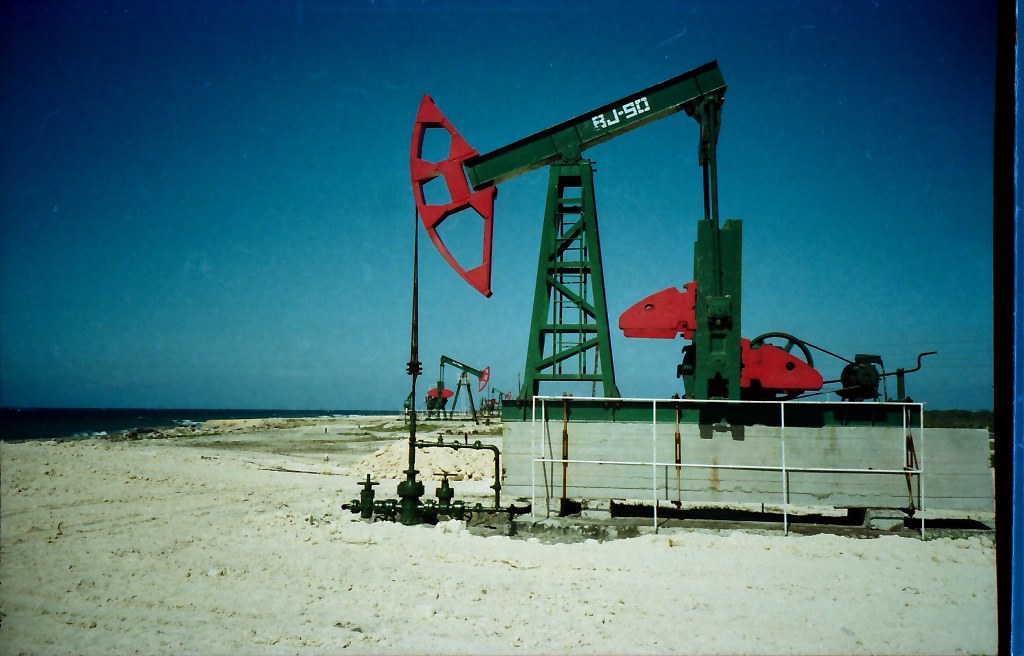
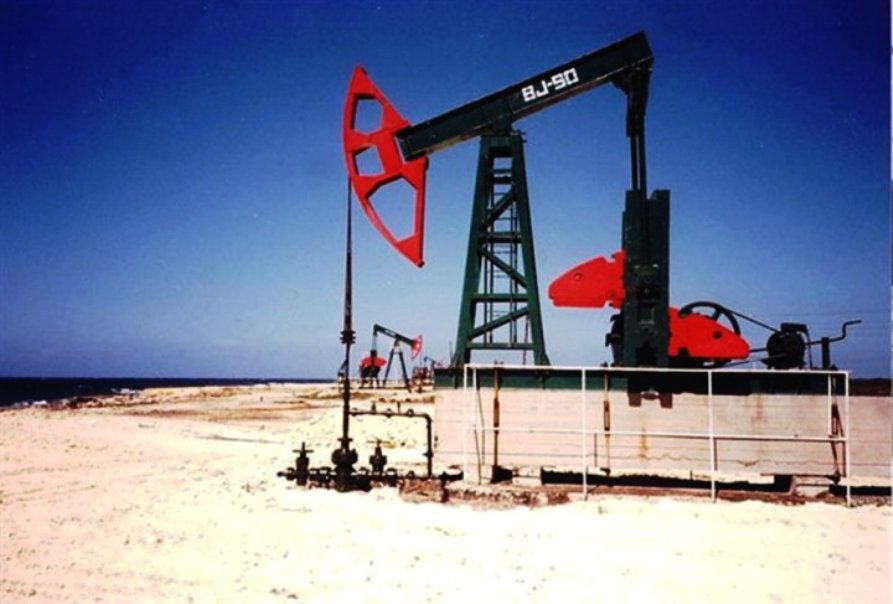
OilWells, just off the Via Blanca, the road from Havana to Matanzas, 1999

Posted in Blog | Tagged , , , | Leave a comment

As Cuba plans to drill in the Gulf of Mexico, U.S. policy poses needless risks to our national interest

The Center for Democracy in the Americas’ Cuba Program has published a thorough exploration of Cuba’s petroleum exploration plans and prospects and the implications for United Sates” policy towards Cuba generally and in the oil sector more specifically.It is the most thorough and well-balanced assessment of this issue that I have seen. (Apologies for not getting some publicity out on this work earlier.)

Here is a hyperlink to the study. The Preface and the last coupleof Concluding comments are als presented beliw.

As Cuba plans to drill in the Gulf of Mexico, U.S. policy poses needless risks to our national interest

The Center for Democracy in the Americas’ Cuba Program; February 2011

PREFACE

This year Cuba and its foreign partners will begin drilling for oil in the
Gulf of Mexico. Drilling will take place as close as 50 miles from Florida
and in sites deeper than BP’s Macondo well, where an explosion in April 2010
killed 11 workers and created the largest oil spill ever in American waters.
Undiscovered reserves of approximately 5 billion barrels of oil and 9 trillion
cubic feet of natural gas lie beneath the Gulf of Mexico in land belonging
to Cuba, according to the U.S. Geological Survey, although Cuba’s estimates
contain higher figures. The amount actually recoverable remains to be seen.
Finding oil in commercially viable amounts would be transformative for
Cuba. Revenues from natural resource wealth have the potential to provide
long-sought stability for Cuba’s economy and are likely to significantly alter
its relations with Venezuela and the rest of Latin America, Asia and other
leading energy producing and consuming nations. Discoveries of commercially
viable resources would also have an enormous impact upon the Gulf
environment shared by Cuba and the United States.
The U.S. embargo against Cuba, a remnant of the Cold War, is an obstacle
to realizing and protecting our interests in the region. Not only does it prohibit
U.S. firms from joining Cuba in efforts to extract its offshore resources, thus
giving the competitive advantage to other foreign firms, but it also denies
Cuba access to U.S. equipment for drilling and environmental protection—an
especially troubling outcome in the wake of the disastrous BP spill. The embargo compels Cuba’s foreign partners to go through contortions—such
as ordering a state of the art drilling rig built in China and sailing it roughly
10,000 miles to Cuban waters—to avoid violating the content limitations
imposed by U.S. law.
Most important, due to the failed policy of isolating Cuba, the United
States cannot engage in meaningful environmental cooperation with Cuba
while it develops its own energy resources. Our government cannot even
address the threat of potential spills in advance from the frequent hurricane
activity in the Gulf or from technological failures, either of which could put
precious and environmentally sensitive U.S. coastal assets—our waters, our
fisheries, our beaches—at great peril.
The risks begin the moment the first drill bit pierces the seabed, and
increase from there. Yet, our policy leaves the Obama administration with
limited options:
• It could do nothing.
• It could try to stop Cuba from developing its oil and natural gas, an alternative
most likely to fail in an energy-hungry world, or
• It could agree to dialogue and cooperation with Cuba to ensure that drilling
in the Gulf protects our mutual interests.
Since the 1990s, Cuba has demonstrated a serious commitment to protecting
the environment, building an array of environmental policies, some based
on U.S. and Spanish law. But it has no experience responding to major
marine-based spills and, like our country, Cuba has to balance economic
and environmental interests. In this contest, the environmental side will
not always prevail.
Against this backdrop, cooperation and engagement between Cuba and
the United States is the right approach, and there is already precedent for it.
During the BP crisis, the U.S. shared information with Cuba about the
spill. The administration publicly declared its willingness to provide limited
licenses for U.S. firms to respond to a catastrophe that threatened Cuba. It also
provided visas for Cuban scientists and environmental officials to attend an
important environmental conference in Florida. For its part, Cuba permitted
a vessel from the National Oceanic and Atmospheric Administration to look for damage in Cuban waters. But these modest measures, however welcome,
are not sufficient, especially in light of Cuba’s imminent plans to drill.
Under the guise of environmental protection, Reps. Ileana Ros-Lehtinen
and Vern Buchanan, Members of the U.S. Congress from Florida, introduced
bills to impose sanctions on foreign oil companies and U.S. firms that help
Cuba drill for oil, and to punish those foreign firms by denying them the right
to drill in U.S. waters. This legislation would penalize U.S. firms and anger
our allies, but not stop Cuba from drilling, and will make the cooperation to
protect our mutual coastal environment more difficult should problems occur.
Energy policy and environmental protection are classic examples of
how the embargo is an abiding threat to U.S. interests. It should no longer
be acceptable to base U.S. foreign policy on the illusion that sanctions will
cause Cuba’s government to collapse, or to try to stop Cuba from developing
its oil resources. Nor should this policy or the political dynamic that sustains
it prevent the U.S. from addressing both the challenges and benefits of Cuba
finding meaningful amounts of oil in the Gulf of Mexico.
The path forward is clear. The Obama administration should use its
executive authority to guarantee that firms with the best equipment and
greatest expertise are licensed in advance to fight the effects of an oil spill.
The Treasury Department, which enforces Cuba sanctions, should make clear
to the private sector that efforts to protect drilling safety will not be met with
adverse regulatory actions. The U.S. government should commit to vigorous
information sharing with Cuba, and open direct negotiations with the Cuban
government for environmental agreements modeled on cooperation that
already exists with our Canadian and Mexican neighbors.
Most of all, the administration should replace a policy predicated on Cuba
failing with a diplomatic approach that recognizes Cuba’s sovereignty. Only
then will our nation be able to respond effectively to what could become a
new chapter in Cuba’s history and ours.
There is little time and much to do before the drilling begins.
Sarah Stephens; Executive Director


RECOMMENDATIONS (7 to 9)

Accept the Reality of Cuba’s Oil Program
7. The United States is served by an economically stable Cuba.
Cuba is currently undertaking significant economic reforms. It has announced
layoffs for 500,000 state workers and proposed economic reforms to enable
Cuba’s nascent private sector to absorb them. More Cubans working in the
private economy will provide more Cubans with greater personal autonomy.
If Cuba is able to develop its hydrocarbon reserves in a manner that places
the Cuban economy on a more sustainable footing, this could lessen the
possibility of another migration crisis or other forms of instability.
Cuba’s economic plans include its vision for oil. As Lisa Margonelli said at
the National Foreign Trade Council, “Cuba has an elaborate plan to be a port,
to be a source for refined products, to serve as a bonded warehouse for the
distribution of goods throughout the region. Despite being a small country,
they are thinking about energy and their economic future in a big way.”
Economies dependent on the extraction of natural resources are often
unsuccessful. Finding oil can be a double-edged sword. Cuba having foreign partners will help them guide the process of incorporating these resources
into its economy over time. Given the time required to monetize the oil,
Cuba should aim for having healthier economic and political institutions
operating before the oil money starts to flow.
8. Cuba’s potential contribution to the regional energy market could be valuable to the U.S.
Professor Soligo cites several benefits to the United States if Cuba is able to
realize the potential of its oil resources in the Gulf of Mexico. In his remarks
at the National Foreign Trade Council, Professor Soligo said, “Whoever
develops these resources it would be good for the United States.”
For example, Professor Soligo observed that Cuba has the potential to
develop an ethanol industry, and the U.S. cannot meet its ethanol targets
without imports. Policy changes would be required to allow Cuba access
to the U.S. market, and would provide substantial environment and energy
policy benefits were they to be made. While Cuba has opposed using corn
for ethanol, it has the resources to produce cellulosic material in its place.
Lisa Margonelli observes, “It is in U.S. interests to create fair price
competition for Cuban oil rather than forcing them into one-buyer fixed
price contracts with China. Securing the flow of more oil into the world
spot market has been one of the few effective American responses to OPEC’s
pricing power since 1979.”
9. U.S. policy should welcome the geo-political changes oil could
usher in.
Cuba is unlikely to disassociate itself from Venezuela or China regardless of
what the U.S. does. Still, Cuba’s post-revolutionary history is defined, in part,
by its dependence on the former Soviet Union and later on Venezuela, and
the development of its offshore resources could give the island’s economy
greater independence than it has enjoyed to date.
If Cuba were no longer dependent on Venezuela, and the U.S. engaged
in cooperative efforts on oil and the environment, we would be establishing
deeper and more positive ties with Cuba’s government and signal to its citizens
that we have a stake in their success.
as c uba p lans t o dr ill, u.s. p olicy p uts our nat ional interest at r isk
10. U.S. policy toward Cuba should no longer be predicated on Cuba failing.
For more than 50 years, U.S. policy toward Cuba has been predicated on
regime change; the Cuban government being overthrown, or being strangled
into submission by U.S. sanctions or the pressure of diplomatic isolation.
It should no longer be acceptable to base U.S. foreign policy on the illusion
that sanctions will cause Cuba’s government to collapse, or even stop
Cuba from developing its oil resources. Nor should the inertia exhibited by
this policy or the political dynamic that sustains it prevent the U.S. from
addressing both the challenges and benefits of Cuba finding meaningful
amounts of oil in the Gulf of Mexico.
The embargo imposes real constraints on the government’s ability to
protect our nation against the potentially grave consequences of an environmental
disaster linked to drilling for oil in the Gulf of Mexico by Cuba
and its foreign partners.
As one expert told us, “Cuba is a country with whom we have virtually
no diplomatic or commercial relations. If a well gets out of control, we have
no genuinely effective recourse if we’re waiting for a transition in Cuba’s
government to occur.”
If Cuba brings commercially viable amounts of oil out of the Gulf, the
embargo becomes even more irrelevant than it is today. How should the U.S.
respond, especially now that drilling in 2011 is a fait accompli and will take
place approximately 50 miles from our shores?
The U.S. should respond by changing the policy, in the ways we describe
here, so the national interest of the United States can be realized and protected.

Posted in Blog | Tagged , , , | Leave a comment