Tag Archives: Human Rights

Cuba Calls for “Cyberdefence” of the Revolution

Original here: Cuba calls for “cyberdefence” of the revolution

By Isaac Risco Dec 2, 2011, December 2, 2011

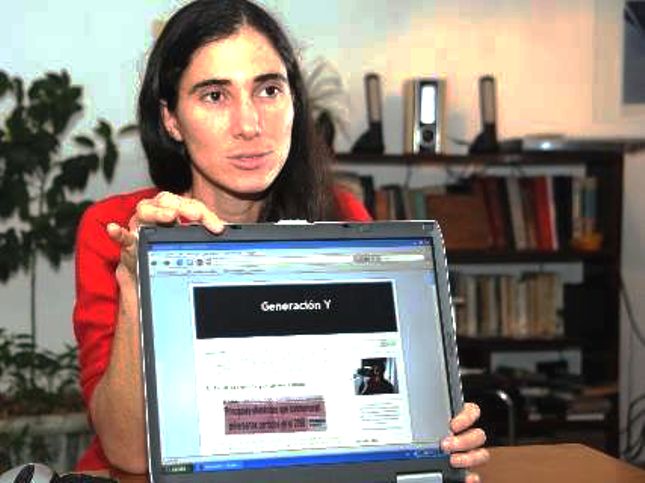
HAVANA: Just days after Cuban dissident blogger Yoani Sanchez was named one of the world’s 100 “most influential global thinkers” by US magazine Foreign Policy, the Cuban government is

preparing for “active cyberdefence”.

Despite poor Internet access for the average Cuban, which the authorities in Havana blame on the US embargo, Cuba is now stressing the importance of “occupying the web”. The website Cubadebate, the main pro-government online news outlet, has called for a move “from cyberwarfare to active cyberdefence”.

Cuban Foreign Minister Bruno Rodriguez on Wednesday urged more active involvement in the web and for greater defence mechanisms to fight what the island regards as the hostile attitude of major media outlets. “Euphoria over social networks co-exists with the risk of regime change operations, which has increased, as has the threat to peace. But these dangerous conditions make it necessary and urgent for us to make those platforms our own,” he said. “It is essential to have a political strategy in cyberspace.”

Rodriguez was addressing a workshop on “Alternative Media and Social Networks” with participants from 12 countries, to which Sanchez complained she and other bloggers critical of the government had not been invited. The authorities continue “to exclude the alternative part of (Cuba’s) blogosphere and twittosphere,” Sanchez wrote on Twitter. On her Twitter feed, @yoanisanchez, the 36-year-old regularly criticises Cuban authorities for their attitude to the Internet, among other things. Her campaign to denounce what she termed “political apartheid” at the event reached her more than 180,000 Twitter followers.

Indeed, on Wednesday, Foreign Policy said Sanchez’s influence shows “that the Internet really does go everywhere, even Castro’s Cuba”.

Sanchez, in turn, wrote on Twitter of the limitations of online stardom in communist Cuba. “Beautiful paradoxes of life. My name on FP’s list of 100 thinkers, and me now ‘thinking’ how to stretch the rice so as to get to the end of the month,” she wrote in a post.

Such “cyberwarfare” has been waged for some time. Blogs like Vision desde Cuba, which openly support the government, seek to counter the influence of those like Sanchez’s.

Despite “the limitations inherent to narrow bandwidth” and the “archaic and extremely slow dial-up connections”, Vision desde Cuba writes that “revolutionary bloggers” like himself back the government against those who, they argue, are being financed from abroad. Havana has traditionally accused dissidents of accepting funds from the United States.

Cubadebate has carried out a broad campaign to promote the use of social networks. Editor Rosa Miriam Elizalde asked in an article that readers “accept the technological challenge”. “I do not have the slightest doubt that if (Cuban national hero) Jose Marti were alive today he would be on Facebook and Twitter,” she said.

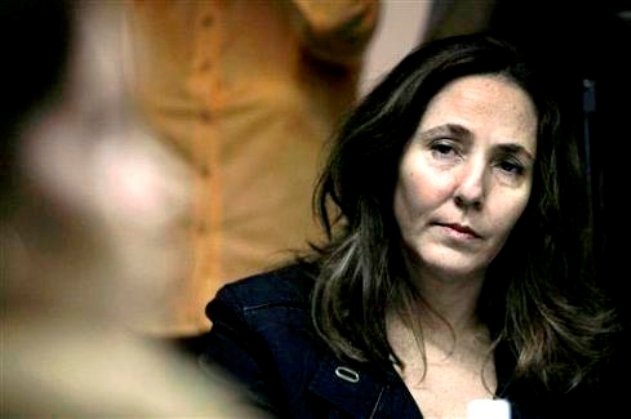
Mariela Castro, daughter of the Cuban leader as well as head of Cuba’s National Centre for Sex Education, also recently entered the world of Twitter. She openly confronted Sanchez, among others, in defence of the Cuban government.

Protagonists:

Mariela Castro, Daughter of the Regime

Yoani Sanchez, Daughter of the Revolution

Posted in Blog | Tagged , , | Leave a comment

Juan Tamayo: Espacio Laical Urges Communist Party to Embrace Significant Reforms

From Juan Tamayo, Miami Herald, Wednesday, 11.16.11

Espacio Laical Article Here: Espacio Laical, November 2011 Rectificar el Rumbo

A Catholic magazine in Havana has  complained that a plan for an upcoming Communist Party conference shows the party is tied to “failed dogmas” and called for profound changes in Cuba’s economy, its tightly controlled news media and its rubberstamp legislature.

The editorial in the magazine, Espacio Laical, used unusually direct wording to argue that the published agenda for the National Conference of Cuba’s ruling and only legal political party on Jan. 28 falls far short of what is so desperately needed. While any changes must be well-considered, it noted, “we do not have the luxury of confusing gradualism with a lack of clarity or speed” because “it would be painful if the current generations of Cubans must suffer the pain of seeing their aspirations truncated.”

Yet, the agenda for the conference shows the party remains “attached to failed dogmas and obstinately holding on to a very vertical relationship with society,” added Espacio Laical, published by and for lay Catholics in the archdiocese of Havana.

The most important reform needed would be to give common Cubans more opportunities to run their own lives and truly influence government decisions, the magazine argued, calling it a “re-founding of citizenship.”

For its part, the magazine added, it favors allowing small and medium private enterprises as well as all types of cooperatives, and freedom for professionals such as doctors and lawyers, who can now exercise their professions only in government jobs. Cuba also must promote the growth of civil society — that part of a country’s life not controlled by the government — by allowing independent social organizations and opening the heavily censured mass media “to the diversity of criteria in the nation,” it argued.

Reforms also are needed within the Communist Party, the magazine added, as well as “the mechanisms of people’s power, so that the institutions of public power can have the authority they need.” Cuba’s rubberstamp legislature is the National Assembly of People’s Power.

Espacio Laical’s arguments coincided on many points with recent columns by Pedro Campos, a well-known Havana historian and former diplomat sometimes described as the voice of Cuba’s democratic communists. Campos has argued that the party must end its “neo-Stalinist” ways and develop a version of socialism that includes more direct citizen participation in government decisions as well as the productive sector, through workers’ cooperatives.

The Raúl Castro government has launched a string of reforms designed to improve the economy, by slashing public spending and allowing an increase in private enterprise. It also has legalized the sale of dwellings and expanded the legal sale of cars and trucks. But some of the reforms remain in the planning stages, and there’s been no sign that the government would agree to any political changes that could endanger the Communist Party’s hold on power.

The Espacio Laical editorial acknowledged the Castro reforms so far and noted that others no doubt will follow, but added that Cubans “feel that there’s nothing big, capable of renovating life and driving away the hopelessness.”
The announcement that the party would hold a conference in January sparked “great expectations” for change, added the editorial. But the recent publication of the agenda “worried many who had hoped for renovation.”

With most of Cuba’s revolutionary rulers in their 80s, the editorial called the conference “the last moment for the so-called historical generation” and urged it to “propose substantial changes and convene the people to carry them out. Don’t lose this opportunity.”


Posted in Blog | Tagged , , | Leave a comment

Fidel Castro: The Cowardice of Autocracy

By Arch Ritter

Note: This commentary is more political than economic in character. It is an attempt to get some ideas “off my chest”.
.

Fidel Castro’s attack on the Moncada Barracks in Santiago in 1953 and his subsequent crossing of the Florida Straits in the Granma to attack the Batista regime with a small armed force certainly appear courageous – though some observers question the personal courage of Castro during these events. But once in power, he quickly moved to suppress all opposition and alternate visions of Cuba’s future in order to minimize or eliminate any risk of rejection, criticism, or challenge to his power and his view of the world. Such a “stacking of the deck” in his own favor and the denial of freedom of expression and assembly to all who disagreed with him does look cowardly.

The Courage Phase: Fidel Castro (far Right) and followers arrested after the attack on the Moncada Barracks,  8/1/53

But what is cowardice and what is courage? In searching the literature via Google and Google Scholar, little analysis turned up for me, with the exception of an old essay by Joe K. Adams entitled “The Neglected Psychology of Cowardice” [Journal of Humanistic Psychology, 1965, 5; 57-69]. Adams begins his analysis with a lament that little had been written prior to 1965 on this topic. The Adams essay is the only reasonable and relevant analysis that I was able to locate, though there may be – and I hope that there would be – a substantial literature that I have not found.

Adams defines courage and cowardice in terms of the consequences that a person expects will follow from a particular course of action. The consequences may be physical, moral or intellectual and Adams (p. 58) defines them as follows:

  1. “Physical courage-cowardice: the relative willingness to risk or undergo anticipated physical pain or injury;
  2. Moral courage-cowardice: the relative willingness to risk or undergo undesired social consequences such as disapproval, contempt, loss of status or power, ostracism…
  3. Intellectual courage-cowardice: the relative willingness to risk or undergo a serious disturbance of one’s cognitive structure.”

On the courage side, one willingly confronts anticipated injury or risk while on the cowardice side, one minimizes expected injury and risk.  How does one minimize risks of personal pain, injury, disapproval, loss of status or power, or “disturbance of cognitive structure”? In Adams words (p. 59)

“….. by rendering harmless those who might bring about (these negative consequences …. ) by destroying them, censoring them, controlling them, or changing them. Destruction, censorship, control or change must itself be brought about with a minimum of risk i.e. in such a way that one’s opponents are unable to fight back. In addition to the possession of a complex and mystifying ideology, methods which are especially useful are secrecy, intrigue, deception, labeling, anonymity, entrapment, monopoly and getting others to do whatever open or fair fighting is necessary.”

This indeed sounds a lot like the Regime of Fidel Castro. However, Adams was not discussing Cuba or Eastern Europe. His case studies focused on the Catholic Church, the Inquisition, John Calvin’s Geneva, and political and academic ideologues (especially psychologists) circa the 1960s.

Why then did Fidel Castro shift from early courage pre-1959 to later cowardice when he found it desirable to deny people’s basic political and civil rights as these are interpreted by the United Nations Universal Declaration of Human Rights, the International Covenant on Civil and Political Rights,  and the International Labour Organization Declaration on Fundamental Principles and Rights at Work? I am not in a position to give a good answer to this question, being neither a psychologist nor a connoisseur of Fidel Castro’s biography. However, perhaps Lord Acton’s maxim is relevant: “Power Corrupts and Absolute Power Corrupts Absolutely.”  Once tasting the fruits of power, Fidel became launched on a spiral, requiring more and more control of people’s lives, more and more adulation and influence. No amount of publicity and adulation ever seemed to be enough towards the end of his reign. The marches along the Malecon with him at the head became frequent and the political rallies occurred every weekend – non-stop mass mobilization to demonstrate loyalty and support for the Commandante.

Where does one see physical, moral and intellectual courage in Cuba at this time? Clearly it is with the dissidents, the Damas en Blanco, the independent journalists and economists, the Bloggers, and the labor or human rights activists who stand up to the autocratic regime – though with still small voice – at great personal risk.

Will President Raul Castro break from the political system established set by his older brother and demonstrate authentic intellectual courage?  If Raul really wanted to establish an independent legacy and an honorable place in the history books, he would return to authentic representative democracy will full practice of political pluralism and independent expression and assembly. Unfortunately such a courageous move though desirable is also improbable.

NOTE: For additional articles on various aspects of Fidel Castro’s presidency, see:

Cuba’s Achievements under the Presidency of Fidel Castro: The Top Ten

Fidel’s Phenomenal Economic Fiascoes: the Top Ten

Fidel’s No-Good Very Bad Day

The “FIDEL” Models Never Worked; Soviet and Venezuelan Subsidization Did

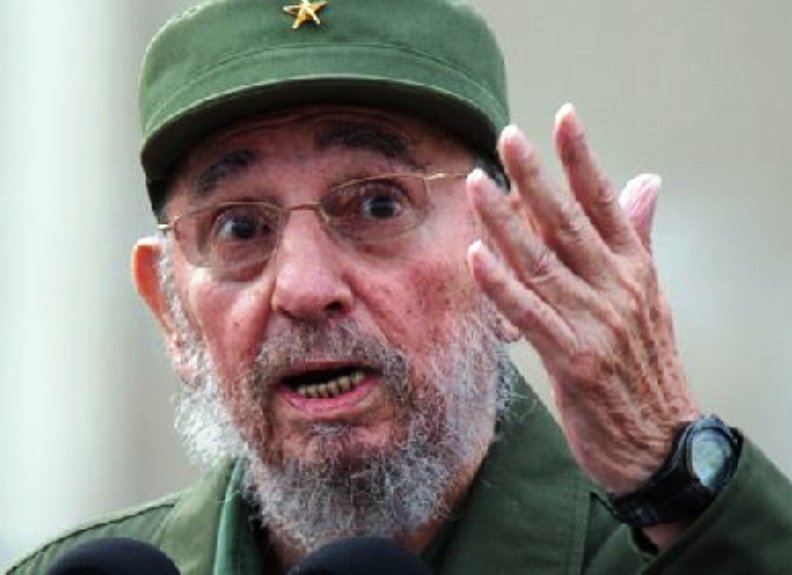
Fidel Castro, circa 2010 or 2011

Posted in Blog, Featured | Tagged , , | 2 Comments

Cubans Test Official Limits on Criticism

By THE ASSOCIATED PRESS
PINAR DEL RIO, Cuba (AP) — Pedro Pablo Oliva was the kind of model citizen the Cuban government wants to show the world.

Oliva proclaimed his loyalty to Fidel Castro’s revolution, his support for its goal of social equality and his gratitude for cultural largesse that nurtured his
development into an internationally celebrated painter and sculptor. He even
did a turn as a delegate in the regional assembly of the western province of
P nar del Rio. But when Oliva criticized harassment of dissidents and suggested there might be room for a party other than the Communists, he was abruptly expelled from the assembly, accused of counterrevolutionary behavior. He found himself with no choice but to shutter his home-based community workshop after the government withdrew its support.

President Raul Castro has called on Cubans to openly air their opinions as his government tries to revive the struggling economy with economic reforms. But officials have sent mixed signals about where it draws the invisible frontier between loyal criticism and what they consider to be dangerous attacks on the system.

A prominent socialist intellectual who made a sharp attack on corruption at high levels found himself booted out of the Communist Party for months. But in another case, officials just seemed to shrug when two state economists
criticized the country’s economic reforms as insufficient.

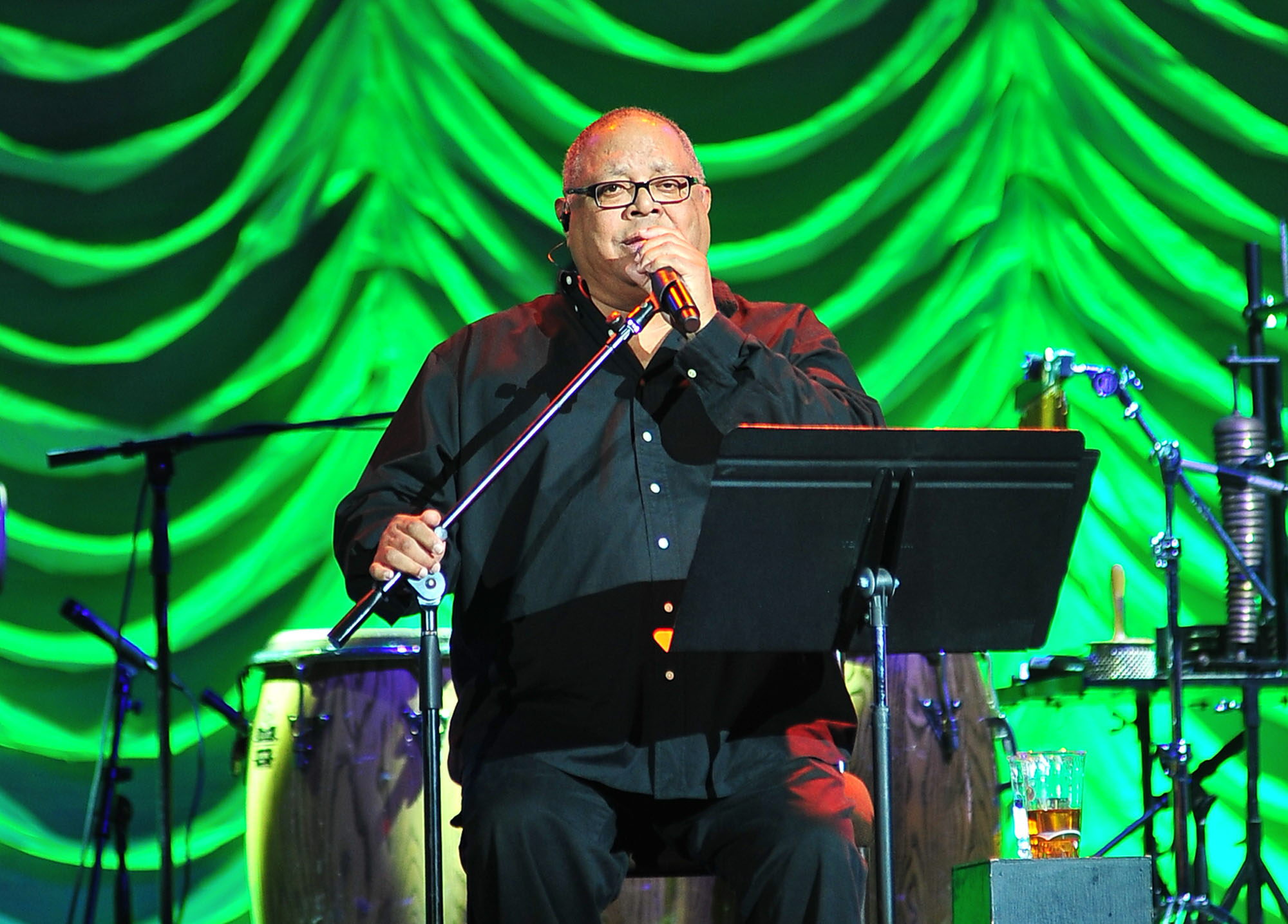
And while Oliva was punished for denouncing attacks on dissidents, when famous singers Pablo Milanes and Silvio Rodriguez did the same, their comments prompted debate in official media but no reprisals.

“It’s a very difficult question to know where the line is, because the line depends on the moment,” said Arturo Lopez Levy, a Cuban-born economist who lectures at the University of Denver.

Read the Rest of the Article: Cubans Test Official Limits on Criticism

Pablo Milanes: Testing the Limits?

Posted in Blog | Tagged , , | Leave a comment

New Publication: The Cuban Diaspora in the 21st Century

A new analysis of the potential role for the Cuban diaspora was made public today – October 7, 2011 – in Washington and will be presented in Miami on October 10. It was produced under the auspices of the Cuban Research Institute of Florida International University and more specifically, the Project entitled “The Cuban Diaspora and the Development of the Entrepreneurial Sector” of the Cuban Research Institute in cooperation with the Cuba Study Group.

As can be seen from the Table of Contents below, the Report, while concise, is wide ranging in scope and constructive in orientation. It may prove to be an important catalyst in generating changes in attitudes and eventually policy on both sides of the Florida Straits. At least, I hope that this is the case.

A distinguished group of scholars produced this Report, including Uva de Aragón (Florida International University), Jorge Domínguez (Harvard University), Jorge Duany (the University of Puerto Rico), and Carmelo Mesa-Lago (University of Pittsburgh).  Orlando Márquez, director of Palabra Nueva, a journal of the Havana Catholic Archdiocese, joined the committee in March. The coordinator for the project is Juan Antonio Blanco (Florida International University), who also coauthored the report.

The complete study is available here:

The Cuban Diaspora in the 21st Century, FIU, October 2011

From the Preface by Juan Antonio Blanco:

The authors have analyzed relations between several states and their diasporas and studied the problems and potentials associated with the Cuban diaspora’s potential role in Cuba’s national development. While this document does not attempt to evaluate the measures adopted by the Cuban government in August 2006, it suggests that Cuba’s so-called economic update would have a better chance of success were it accompanied by a parallel update of the island’s migratory policy.
The authors have reviewed the tensions, conflicts, and traumas in the history of Cuban state’s relationship with its diaspora, but their emphasis is always on the future. Without glossing over problems, they prefer to scan the horizon for possibilities that could bring about a genuine normalization of relations between the diaspora and its country of origin; in particular, changes in existing migratory policy to bring it in line with universally recognized standards. Their analysis also includes the obstacles posed by United States policy toward Cuba, especially for the Cuban diaspora, and the need for their removal.
The members of the committee—who volunteered their services to produce this report—have formulated a series of recommendations for respectful submission to the governments of Cuba and the United States, as well as to the Cuban diaspora and Cuban civil society.
As the authors note in the conclusion to this document, “Many of the observations, conclusions, and suggestions expressed in this report are aimed at tomorrow, with the hope that they will eventually be implemented in whole or in part. Tomorrow can begin today, however, if the actors with decision-making power in this area so choose, as Cuba so urgently needs.”

Table of Contents

Preface 5
Summary 7
Introduction 11

A Better, Shared Future 11
Points of Departure  12
Advantages of a Shared Future 13

State-Diaspora Relations 16

Haiti: A strategically selective state 18
The Dominican Republic: A Transnational Nation-State 20
Cuba: Between Disinterest and Denunciation 23
Policies for Improving State-Diaspora Relations 28
The Role of Government Institutions 33
Relations with Non-Governmental actors 34
Dual Citizenship Laws 34
External Voting 35
Investment Incentives  35
“Brain Circulation” 35
Ethnic Tourism 36
Nostalgic trade 36
Relations with Charitable and Voluntary Organizations 37

The Cuban Diaspora: Possibilities and Challenges 38

The Cuban Diaspora in the United States 38
New Policies and the Diaspora  45

The Diaspora: Resources and Possibilities 47

Economic Capital  48
Social Capita 50
Human Capital 50
Symbolic Capital 51
Possible Diaspora Support for the Non-State Sector  52
Venture Capital or Joint Investment in Small Enterprises  53
Using Symbolic and Social Capital to Attract Financial Capital  55
Access to Foreign Markets, Marketing, and Outsourcing 56
Tools, Inputs, and Technology 57
Training and Consulting 58
Obstacles and Challenges 59
Policy Framework: Updating Cuba’s Migration Laws 61
The Subjective Context  63

Conclusions and Recommendations .65

Conclusions 65
Recommendations 68
To the Government of Cuba  69
To the Government of the United States70
To the Cuban Diaspora 72
To Cuban Society. 72
Epilogue 73


Posted in Blog | Tagged , , , , , , , | Leave a comment

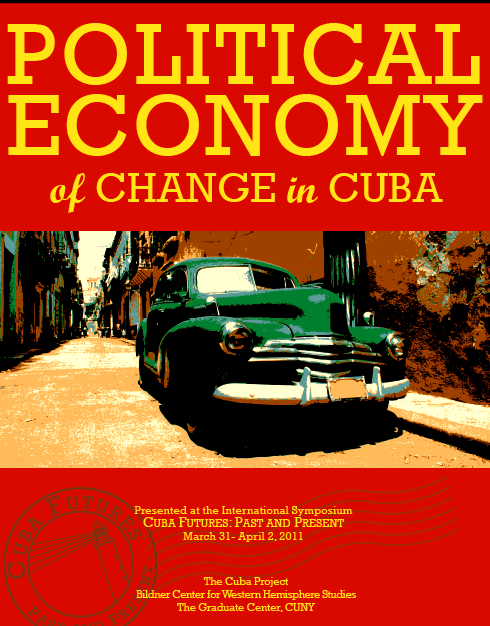
POLITICAL ECONOMY OF CHANGE IN CUBA

A three-day international symposium held under the auspices of the Bildner Center at City University of New York. and spearheaded by its Director Mauricio Font, was held in March 2011. It was entitled Cuba Futures: Past and Present, and focused on the dynamics of change in contemporary Cuba—the politics, culture, economy.

A selection of the papers on the Cuban economy have been published on the web by the Bildner Centre.  The are all hyperlinked here: Political Economy of Change in Cuba, Bildner Center, CUNY New York. A Table of Contents is presented below. Of special interest are the essays by the analysts from the Centro de Estudios sobre la Economia Cubana, Armando Nova, Camila Piñeiro, Pavel Vidal Alejandro and Omar Everleny Pérez .

Table of Contents

Preface                                                                                                                                   xi

1 La actualización del modelo económico cubano, Omar Everleny Pérez Villanueva

2 Forecasting Cuba’s Economy: 2, 5, and 20 Years, Emily Morris*    10

3 Las restricciones de divisas en la economía cubana, 2010, Pavel Vidal Alejandro 19

4 New Forms of Enterprise in Cuba’s Changing Economy, Camila Piñeiro Harnecker    43

5 Valoración del impacto de las medidas más recientes en los resultados de la agricultura en Cuba, Armando Nova González     63

6 Las nuevas transformaciones en la agricultura cubana: éxitos y desafíos, Reynaldo Jiménez Guethón           81

7 Cuba y el turismo norteamericano. Analisis de potencialidades y de impactos en la región caribeña, Gerardo González Núñez and Roberto Orro Fernández         9

78 Tourism in Cuba: Barriers to Economic Growth and Development Hilary Becker     117

9 Cuba: A Services-Centered Survival and Development Pattern, Alberto Gabriele        133

10 Theoretical Foundations of a Future Privatization in Cuba: The Property and Ownership Paradigm, Frank-Christian Hansel   155

11 Globalization and the Socialist Multinational: Cuba and ALBA’s Grannacional Projects at the Intersection of Business and Human Rights, Larry Catá Backer         183

Posted in Blog | Tagged , , , , , , , , , | Leave a comment

Cuba: A Half-Century of Monetary Pathology and Citizen’s Freedom of Movement

By Arch Ritter

UNIVERSAL DECLARATION OF HUMAN RIGHTS

Article 13. (1) Everyone has the right to freedom of movement and residence within the borders of each state.  (2) Everyone has the right to leave any country, including his own, and to return to his country.
Article 30. Nothing in this Declaration may be interpreted as implying for any State, group or person any right to engage in any activity or to perform any act aimed at the destruction of any of the rights and freedoms set forth herein.

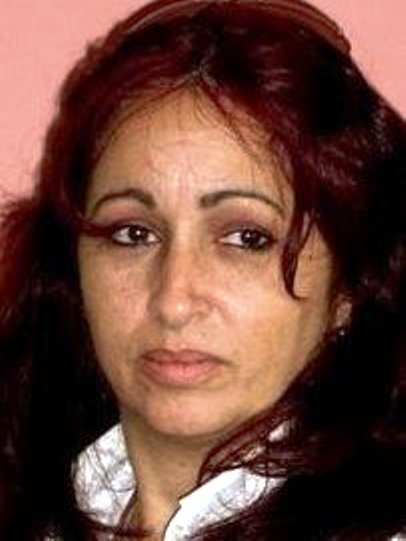
In December 2009, I made a formal invitation to two Cuban citizens to visit Canada, following the official “Procedure for Inviting a Cuban National to Visit Canada” as laid out by the Cuba’s Ministry of Foreign Affairs (MINREX). I paid the required Consular Fee of $CDN 256.00 for each invitation. The two Cuban citizens invited were Yoani Sanchez and Miriam Celaya. I thought naively and foolishly that while Yoani Sanchez had been denied the right to leave Cuba a number of times before December 2009 when she had been invited by official institutions, perhaps a personal invitation would be successful. I of course was wrong. The Exit Permits of course were refused. The Consulate of Cuba in Ottawa of course refused to return the $512.00.

Yoani Sanchez

Miriam Celaya

The lack of freedom of movement of Cuban citizens is well known. The case of Yoani Sanchez is a cause célèbre and also a public relations disaster for the Government of Cuba. A number of analysts have written eloquently on the practice of the Cuban Government to dishonor its commitment to Article 13 of the United Nations Universal Declaration of Human Rights cited above. (See Ana Julia Faya: Nosotros tampoco viajamos libremente a Cuba, “Los permisos de entrada y salida del país son una violación de los derechos de los cubanos” and Haroldo Dilla Alfonso, “The (Non) Right of Cubans to Travel, Havana Times, February 01, 2011”

Sergio Diaz-Briquets has presented a comprehensive and comparative analysis of the Consular Fees charged by the Governmemt of Cuba for the acquisition of a passport, its renewal while abroad, and various other consular services (ASCE Conference 2010). He concluded that the Consular Fees are simply abusive. (See  S. Diaz-Briquets, Government-Controlled Travel Costs to Cuba and Costs of Related Consular Services: Analysis and International Comparisons )

However, the most egregious violation of the freedom of movement of Cuban citizens lies less in the exorbitant consular fees that are routinely charged to Cubans abroad for consular services and the Exit Permit controls over Cuban citizens and more in Cuba’s monetary and exchange rate system.  Cuba’s currency has been inconvertible for 50 years and the dual monetary and exchange rate system has prevailed for the last 20 years. Currency inconvertibility means that citizens can not routinely change their earnings for foreign currencies in order to travel freely. Instead, from 1961 to 1992 they have had to get permission from the Government to exchange their earnings in Moneda Nacional into a foreign currency. On the other hand, anyone on official government business or activities sanctioned by the Government could get access to foreign exchange. This meant that for the average citizen travel was highly restricted unless one could find a foreign sponsor to pay the bills.

With the dual monetary system coming into play in the early 1990s, the economic powerlessness of most Cuban citizens was further intensified. With the collapse of the value of the “old peso” (Moneda Nacional) vis-a-vis the US dollar (and then the convertible peso CUC) the purchasing power of earnings in the official economy also collapsed. At the exchange rate for Moneda Nacional to the US dollar at around 26 to 1, the average monthly income is somewhere around US$ 20.00. Cuba’s monetary system impoverishes Cuban citizens in terms of the international transferability of their earnings from work.

In order to travel abroad, Cuban citizens now have three options. First, they can work for some branch of the government, mixed or state enterprises or organizations such as Universities for which travel abroad on official business can occur. Second, they can marry a foreigner for convenience or in sincerity – Spaniards and Ecuadoreans have been predominant recently – who then provides hard currency funding for travel abroad. Or third, they can now convert their Moneda Nacional earnings into Convertible pesos at the ratio of 26 to 1 and then acquire foreign currency through various channels with the convertible pesos. For most citizens, travel abroad is essentially blocked by the monetary and exchange rate systems.

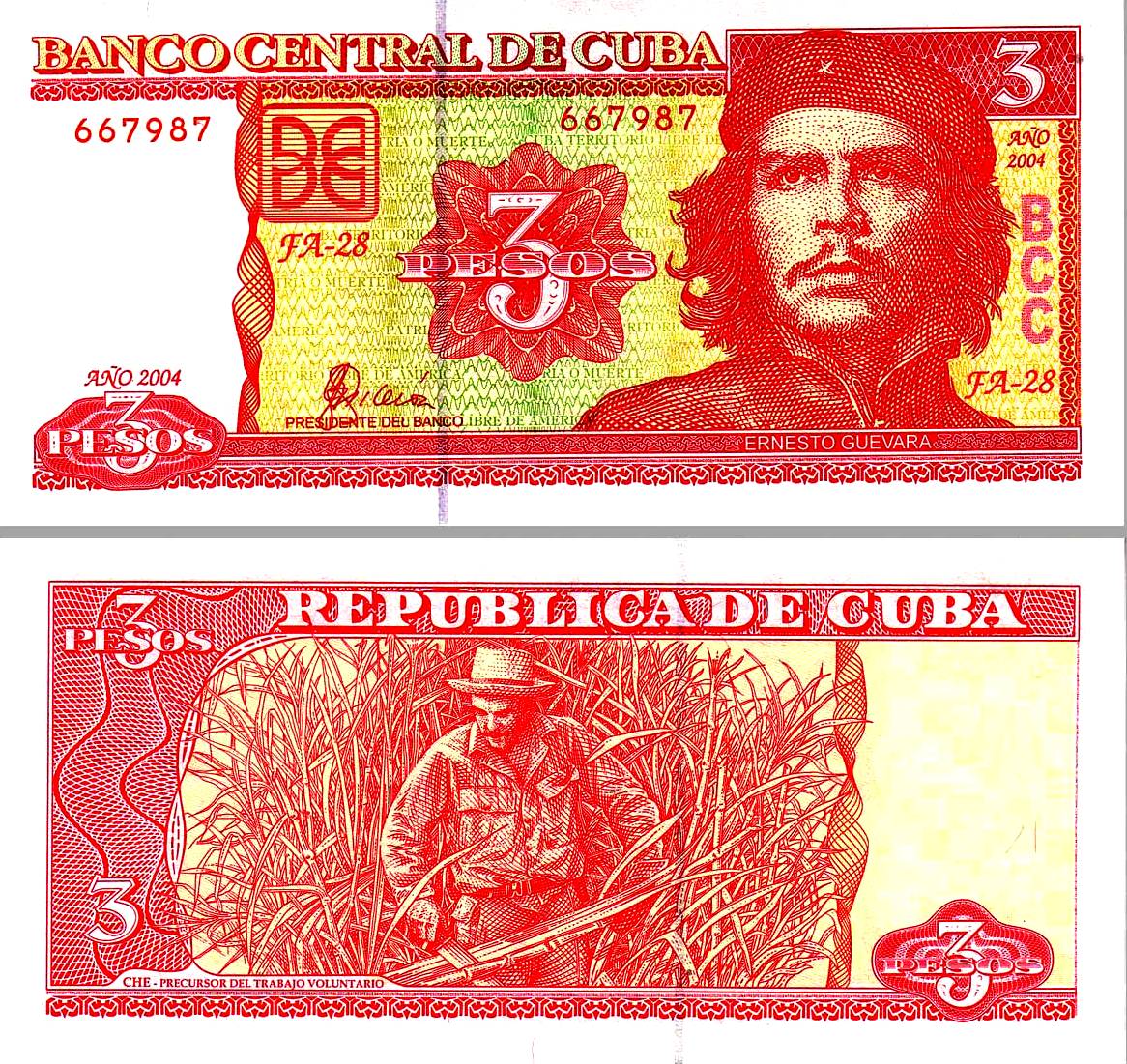
The central planning system and the generalized controls on the economy adopted in 1960-61 meant that inconvertibility would have happened in any case. However, inconvertibility occurred under the watch of Che Guevara, who at the time was President of the National Bank and Minister of Finance as well as Minister of Industries (which included Basic Industry, Light Industry, Mining, Petroleum, and the sugar mills. Guevera was the indisputable “czar” of the Cuban economy.

Monetary inconvertibility and the accompanying loss of freedom of movement is one of Che Guevara’s gifts to the Cuban people. This has been compounded by the monetary and exchange rate policies of the Fidel and Raul Castro Presidencies after about 1990, which generated the dual system and which have so far been unable to come to grips with it and establish a unified and convertible currency.

Posted in Blog, Featured | Tagged , , , , , | Leave a comment

Larry Catá Backer, GLOBALIZATION AND THE SOCIALIST MULTINATIONAL: CUBA AND ALBA’S GRANNACIONAL PROJECTS AT THE INTERSECTION OF BUSINESS AND HUMAN RIGHTS

At the 2010 Conference of the Association for the Study of the Cuban Economy, Larry Catá Backer  presented a challenging and insightful  analysis of the new forms of socialist multinational enterprise being used by Cuba and Venezuela from the perspective of how practices of state bartering of labor may run counter to emerging global frameworks for human rights and economic activity.

” That collision is examined against (1) recent litigation in which Cuba has been accused  (directly or indirectly) of violating international law by operating enterprises based on forced labor, (2) the possibility of conforming to the OECD’s Guidelines on Corporate Governance of State Owned Enterprises, and (3) the possibility that these enterprises will not be able to conform to the United Nation’s developing business and Human Rights project.”

Larry Catá Backer is the W. Richard and Mary Eshelman Faculty Scholar
and Professor of Law, Professor of International Affairs, Pennsylvania State University. He is the author of the  legal Blog Law at the End of the Day,
The complete Essay is available here:

GLOBALIZATION AND THE SOCIALIST MULTINATIONAL CUBA AND ALBA’S GRANNACIONAL PROJECTS AT THE INTERSECTION OF BUSINESS AND HUMAN RIGHTS

Larry Catá Backer

INTRODUCTION

This paper considers Cuba’s new efforts at global engagements through the device of the grannacional in its ALBA framework. The paper starts by examining the basic theory and objectives of the grannacional generally as articulated in ALBA publications as the
“concepto grannacional” that serves as the organizing framework of these multi-state socialist enterprises. It considers distinctions and implications for the division of grannacional efforts between proyectos grannacionales and empresas grannacionales. It then focuses on a specific grannacional-related project—the Misión Barrio Adentro (MBA), a socio-political barter project in which Cuba exchanges doctors and other health field related goods and services under its control for Venezuelan goods, principally petroleum.
(Convenio 2000). MBA is analyzed as an example of the application of Cuban-Venezuelan approach to economic and social organization through the state. The MBA is also useful as an illustration of the difficulties of translating that approach into forms that might conform with emerging global expectations of economic conduct by private and state actors. The recent litigation  in which Cuba has been accused (directly or indirectly) of violating international law by operating enterprises based on forced labor by both laborers and doctors, and soft law systems of governing  business conduct (Galliot 2010) serve as a backdrop against which this analysis is undertaken. For Cuba programs like MBA have served as a means
of engaging in economic globalization and of leveraging its political intervention in the service of its ideological programs in receptive states like Venezuela. (Bustamante & Sweig 2008; Kirk & Erisman 2009). It has also provided a basis for expanding Cuba’s commercial power by permitting large scale state-directed barter transactions. But when bartering involves labor as well as capital, the fundamental premises of the ALBA system—and Cuban ideological notions of the fungibility of labor and capital in the service of the state—may collide with emerging global frameworks for human rights and economic activity. That collision is examined against (1) recent litigation in which Cuba has been accused  (directly or indirectly) of violating international law by operating enterprises based on forced labor, (2) the possibility of conforming to the OECD’s Guidelines on Corporate Governance of State Owned Enterprises, and (3) the possibility that these enterprises will not be able to conform to the United Nation’s developing business and Human Rights project. MBA serves as a template both to  understand the character of the operationalization of social sector  grannacionales and also to illustrate the way in which these projects raise significant questions of international law compliance, especially the ability of these enterprises to comply with emerging standards of business conduct.

CONCLUSION
Cuba has begun the process of seriously integrating itself within an international economic architecture. It is seeking to engage in globalization on its own terms. It means to use global engagement to open another front in its great ideological campaigns against the emerging conventional system private markets driven economic globalization in favor of a more state directed and controlled system of commercial activity among states. An important venue for that
engagement has been through ALBA. ALBA has served as a vehicle for regional integration through which the ideology driving the  Cuban state is leveraged, applied and furthered by others, principally Venezuela. In the form of ALBA’s grannacional projects
and enterprises, ALBA states seek to mimic, and by mimicking to subvert, the conventional framework for economic globalization.
It is one thing to describe the ideological and functional framework for the grannacional project. It is quite another matter to consider the way these enterprises might operate on a day-to-day basis. And more importantly, it is necessary to consider the implications
of such operation of these supra-national corporations under standards of international soft and hard law. This paper has suggested the contours of the violation exposure of grannacional projects under these international norms. The very ideological foundation of the grannacional projects serves as the basis
for conflict with normative standards in effect elsewhere.
In a command economy in which there is no distinction between the political and economic sphere and where the line between obligations of citizens and of workers is blurred, the difference between a citizen’s duty to the state and involuntary servitude can be quite thin. It is unlikely that international standards will bend to accommodate substantial deviations where the functional effect of state action appears to substantially impede recognized human rights, as those are generally understood. It suggests that while Cuba and the ALBA states may avoid the consequences of breach within their own territories, their assets elsewhere may be exposed to actions based on those breaches. And, perhaps more importantly, private and public enterprises of other states will also be exposed to liability for complicity Cuba in Transition in the violations of grannacional enterprises with which they might partner. That can have significant effects on the ability of grannacional enterprises to
forge significant business relationships outside the ALBA area. Global human rights norms, then, might confine grannacional activity to the territory of the sponsoring states more effectively than any sort of politically motivated embargo. The possible exposure of Cuba for human rights violations in connection
with its labor barter transactions illustrates the nature of the problem. Cuba (and ALBA) may well have to pay a price for the choice of their collective form of economic global engagement as it collides with the emerging legal and normative framework for international human rights applies to economic activity that, ironically enough, Cuba has helped to construct.

Posted in Blog | Tagged , , , , , | Leave a comment

Oscar Chepe Espinosa, “PERIODISMO OFICIAL EN CRISIS”

La falta de credibilidad de la prensa oficial ha llegado a niveles insospechados. Hasta el General Raúl Castro, actual Primer Secretario del PCC,  en el Informe Central al VI Congreso   admitió  que “en este frente  [el periodismo] se requiere dejar atrás, definitivamente, el hábito del triunfalismo, la estridencia y el formalismo al abordar la actualidad nacional…”.

En realidad el Presidente al hacer esta acertada afirmación sobre el periodismo cubano solo se refería a lo que puede observarse en la superficie, pero dejó un lado la génesis del problema, la cual es la permanencia por decenios de un régimen totalitario basado en la mentira y la más grosera manipulación de los hechos, a través de un estricto control de toda la prensa, convertida en un dócil instrumento  para servir  loas a los dirigentes y engañar a la población. Los ciudadanos dignos que se han revelado han sido represaliados con saña, convertidos en personas sin derechos y en ocasiones condenados a largas penas de cárcel por querer expresarse pacíficamente y denunciar la  situación en que malvive la mayoría abrumadora de los cubanos.

En este entorno, los periodistas oficiales han sido escogidos por sus dotes de servilismo al estado-partido y no por el talento o dedicación a la hermosa tarea de informar y analizar los problemas de forma honesta. Ha sido la creación de un ejército de propagandistas, personas –salvo contadas excepciones-  mediocres y carentes de ética; formadas para distorsionar la realidad, y actuar en la prensa escrita, televisiva y radial como verdaderos mercenarios. Hasta el  intelectual marxista Alfredo Guevara, al parecer asqueado por este escenario, reconoció hace unos meses en una reunión con estudiantes de periodismo que la prensa cubana “es muy pobre, no es convincente”, y se preguntó “dónde están esos paradigmas en nuestro periodismo; no sé los profesores que estén aquí cuanto trabajo pasarán para citar un paradigma contemporáneo en el periodismo.”

Criterios semejantes han sido vertidos por otros reconocidos intelectuales cubanos, como es el caso del cineasta y escritor Eduardo del Llano, quien llamó a un cambio en la prensa, empezando por la Mesa Redonda a la que critico como el ejemplo “más escandaloso”   de la falta de debate e ideologización de  los medios.  Incluso hasta el periódico Granma se ha tenido que hacer eco del clamor popular por un cambio radical en la prensa cubana, con la publicación de cartas criticas fundamentalmente hacia el mismo programa de televisión abordado por del Llano.

Realmente es escandalosa la utilización de los medios en Cuba.  Se ha perdido la tradición de hacer buen periodismo. La nación en el pasado tuvo órganos de prensa que desde variadas concepciones  eran referencia de magnífico periodismo para todo el continente.  Entre ellos podría mencionarse los periódicos Información, El Mundo, Prensa Libre, Diario de la Marina y Noticias de Hoy, así como las revistas Bohemia, Carteles, Vanidades, Orígenes, Revista de Avance y otras.   No pueden olvidarse plumas tan sobresalientes como las de José Martí, Juan Gualberto Gómez, Don Fernando Ortiz, Manuel Márquez Sterling, Alejo Carpentier, Jorge  Mañach, Enrique José Varona, Ramiro Guerra, Sergio Carbó, Guillermo Cabrera Infante, Ramón Vasconcelos, sin soslayar a los comunistas Carlos Rafael Rodríguez, Juan Marínello, Salvador García Agüero, Nicolás Guillén, Jacinto Torras, Mirta Aguirre y otros.


Hoy la prensa sin credibilidad alguna, de forma manipuladora, busca en el exterior cuantos problemas existen para magnificarlos y examinarlos de forma casi siempre superficial, mientras se obvian los problemas de un país que está al borde del precipicio, como ha calificado el General Raúl Castro.  La Mesa Redonda es el ejemplo más prominente de la estafa informativa, con supuestos periodistas y académicos usualmente sumergidos en análisis torcidos y parcializados. No por gusto, este programa a nivel popular es objeto de burlas de toda clase, al mismo tiempo que se bromea con que los noticieros de la televisión nacional y el periódico Granma son los “únicos verdaderos productores agrícolas” en Cuba.

Incluso los sucesos internacionales están sujetos a análisis caprichosos y se ocultan hechos trascendentales, como la matanza de miles de oficiales polacos en el bosque de Katyn por el ejército soviético -horripilantes sucesos reconocidos hoy hasta por Rusia-, los genocidios en el Kurdistán iraquí por Sadam Husein, y el de Bosnia por los serbiobosnios.  La matanza de Srebrenica,  donde  se  ejecutó   8 000 personas en una noche, no existió en la prensa cubana. Los actos terroristas cometidos por Gadafi, como el derribo del avión en Lockhead, Escocia, nunca han sido analizados en la Mesa Redonda ni otros medios.  Pero los terroristas afganos, fieles aliados de Al Qaeda,  con sus manos manchadas de sangre inocente y salvajes opresores de las mujeres, se les llama “insurgentes” y prácticamente se aplauden sus criminales hechos; mientras,  se mantienen “fraternales” relaciones con los despóticos gobiernos de Corea del Norte, Irán y Siria, entre otros por el estilo, conocidos verdugos de sus pueblos.

En realidad es difícil encontrar en el mundo una prensa tan mendaz y periodistas tan oportunistas.  Las palabras del General Raúl Castro, sobre la difusión en la prensa cubana de materiales aburridos, improvisados y superficiales  son ciertas, pero no resolverán el problema, si al mismo tiempo no se avanza en la tolerancia y el respeto a las opiniones diversas, renunciándose al absurdo monopolio de la supuesta verdad por el Partido Comunista.  Un paso indispensable es que los cubanos podamos utilizar Internet libremente, y que puedan surgir otros órganos de prensa con libertad para reflejar con responsabilidad la variedad de opiniones existente en la sociedad cubana.

El Presidente en variadas ocasiones ha expresado estar en desacuerdo con la falsa unanimidad y  favorecer el debate y el libre intercambio de opiniones.  No obstante,  no se ha avanzado en ese sentido.  Incluso se han producido recientemente preocupantes casos de intolerancia y hechos reprobables, como las presiones sobre el renombrado pintor Pedro Pablo Oliva, solo por expresar pacíficamente sus criterios.

El Primer Secretario del PCC también ha manifestado la disposición de realizar cambios económicos para sortear la crisis.  Resulta imposible lograrlos sin una apertura a las libertades y la democracia, lo cual implica abrirse a una prensa dispuesta a analizar y proponer soluciones, de manera plural y seria sobre la implementación de las transformaciones urgentemente demandadas por la nación. Una prensa maniatada y servil como la actual poco podrá contribuir a que Cuba pueda enrumbarse hacia el progreso y el bienestar de su pueblo.

La Habana, 30 de mayo de 2011

Oscar Chepe and Miriam Leiva, February 2010. Photo by Arch Ritter


Posted in Blog | Tagged , | Leave a comment

Esteban Morales Domínguez, “FRENTE A LOS RETOS DEL COLOR COMO PARTE DEL DEBATE POR EL SOCIALISMO” and Commentary by Juan Tamayo

In his personal Blog, http://estebanmoralesdominguez.blogspot.com/, Esteban Morales presents an analysis of the place of Afro-Cubans in Cuban society entitled .”FRENTE A LOS RETOS DEL COLOR COMO PARTE DEL DEBATE POR  EL SOCIALISMO.”

Though his position and presentation seem to be well within the confines of acceptable discourse in Cuba, his argumentation is challenging. He calls for open analysis of the race issue at all levels, including the National Assembly and the Party Congress. He advocates “Affirmative Action” to rebalance the historic wrongs and injustices faced by Afro-Cuban citizens.

A.R.

Esteban Morales Domínguez

By Juan O. Tamayo

Black Cubans, already with the worst jobs and lowest salaries, will need “affirmative action” as the government tries to slash its inflated payrolls, a black Havana economist and former Communist Party member wrote Wednesday.

Esteban Morales, 68, made it clear in his lengthy essay that he supports Cuba’s “extraordinarily humanist” revolution and believes it took great pains to outlaw racism and provide equal opportunities for blacks over the past 52 years.

An economist who has written previously on race, he also attacked black Cubans who criticize the revolution as racist, saying they have embraced a U.S. strategy for sparking a “political confrontation” that would change the island’s regime.

In unusually direct language, however, Morales also complains that blacks rank at the bottom of several economic measurements, that Cuban schools do not teach courses on race, and that government socio-economic statistics should be broken down by skin color.

He was “separated” from the Communist Party last year for a similarly harsh essay in which he warned that a burgeoning string of corruption scandals was a bigger threat to the country’s stability than “the counterrevolution.”

Morales’ latest essay essentially argues that questions about race must be a priority for the Raul Castro government as it tries to fix the stagnant economy by slashing state spending – on jobs and subsidies — and allowing more private enterprise.

Blacks and mestizos “have always historically been the least qualified, the most disadvantaged in the workplace, with the worst jobs, the lowest salaries and the lowest retirement benefits,” Morales wrote in his 4,311-word essay, published in his eponymous blog.

Castro himself spoke of the need to increase the number of blacks and women in leadership positions during a speech last month to a Communist Party congress last month. The 2002 census shows 65 percent of Cubans identify themselves as white, and 35 percent as black or mestizo.

Morales went well beyond that, noting that fewer blacks than whites have relatives abroad who can send them cash remittances. He added that black Cubans in Florida also earn less – and therefore can send less to the island – because of U.S. racism.

Blacks and mestizos on the island also have a harder time finding well-paying jobs and tend to “take refuge … in illegal activities, prostitution and pimping, the illegal re-sale of products,” he noted. They make up 57 percent of the prison population, he added.

Morales’ essay notes that Cuba faces many challenges in race relations but adds that he would focus only on four, — starting with the need to create an array of school courses on modern-day racism.

“How is it possible that in a multicolor nation like Cuba … there’s no scientific treatment of those problems” he wrote . University-level education is “especially plagued by prejudices on the racial issue, weak institutional attention to it, ignorance and even fear of studying it.”

Cuba’s National Statistics Office (ONE) should include racial breakdowns when it reports economic and social data such as unemployment, salaries, housing conditions, education levels and life expectancy, Morales noted in his second challenge.

In his third, he urged Cubans to demand equal racial representation in all fields, and in his last he urged Cuba to embrace “the so-called affirmative action” as a way “to balance out the different historical points of departure for the racial groups that today make up our society.”

Cuban government officials have long cringed at the possibility of using affirmative action on the island, arguing that it would explicity admit that the revolution had failed to eradicate race-based discrimination.

Morales’ harshest criticism went to Carlos Moore, a black exile who has attacked Cuba’s leadership as almost exclusively white and argued that blacks were denied the most visible jobs when Cuba opened its doors to foreign tourism in the 1990s.

Morales alleged that some of Moore’s publications were financed by groups that received CIA money. Moore, a black rights activist now living and teaching at a university in Brazil, could not be reached immediately for comment.

Read more: http://www.miamiherald.com/2011/05/12/2213836/black-economist-says-cuba-needs.html#ixzz1MFkcZZ00

Posted in Blog | Tagged , | 2 Comments