Monthly Archives: March 2011

Recuperation and Development of the Bahi ́a de la Habana

By Arch Ritter

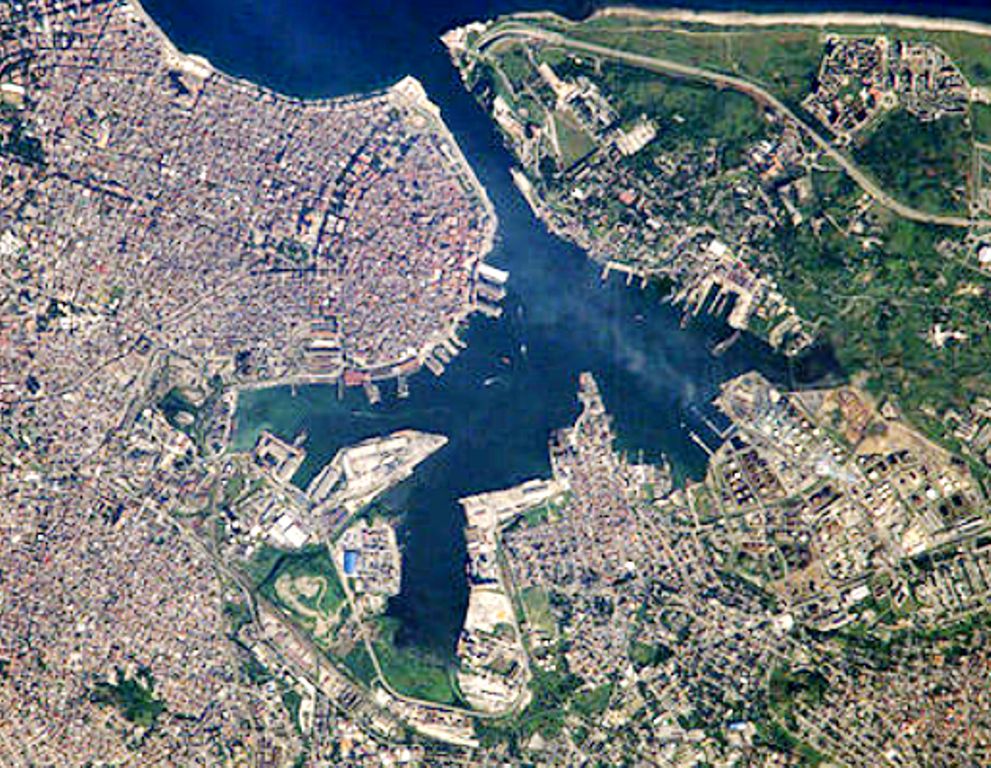
The Bahia de la Habana has been a centre for international shipping and trade since the early 1500s. It served as a haven from storms and pirates, a fortification against the British, a provisioning center and a gathering point for the Spanish fleet sailing between Seville and Cadiz and the ports of the New World. It is still a hard-working port, handling much of Cuba’s container and bulk shipping, as well as naval installations, cruise ship facilities and industry. After almost 500 years as a working port, however, it appears to be in the process of transformation to a modified and redeveloped tourist and transport center.

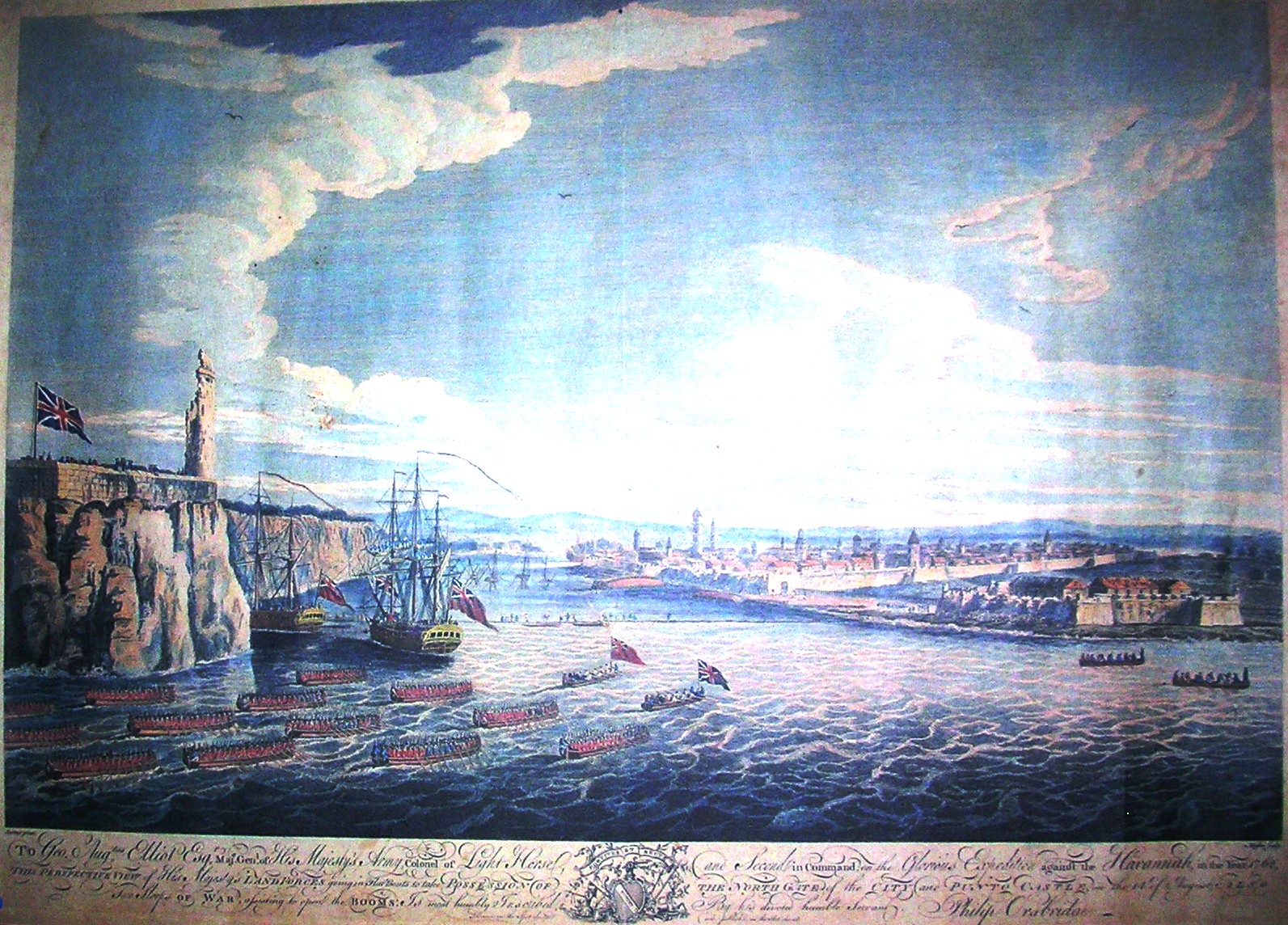
“His Britannic Majesty’s Land Forces Taking Possession of Havannah (sic.), August 14, 1762 and Sloops of War Assisting to Open the Booms” Artist: Philip Orsbridge.    Less than a year after Havana was captured by the British in the Seven Years War it was returned to Spain in exchange for Florida by the Treaty of Paris. By the same treaty, France chose to retain Guadalupe and Martinique in exchange for Quebec which went to the British.

The Oficina del Historiador de La Habana, established in 1938 by Dr. Emilio Roig de Leuchsenring for the restoration of historic Havana has played a vital role in restoring Old Havana under the leadership of Eusebio Leal Spengler in 1967. His work has been exemplary, and the historical quarter certainly deserves its UNESCO designation of “World Heritage Site”, awarded in 1982. The restoration and preservation of historic Havana continues to radiate out from the Cathedral quarter and now includes the Plaza Vieja and various locales alongside the Avenida del Puerto to the Iglesia San Francisco de Paula.

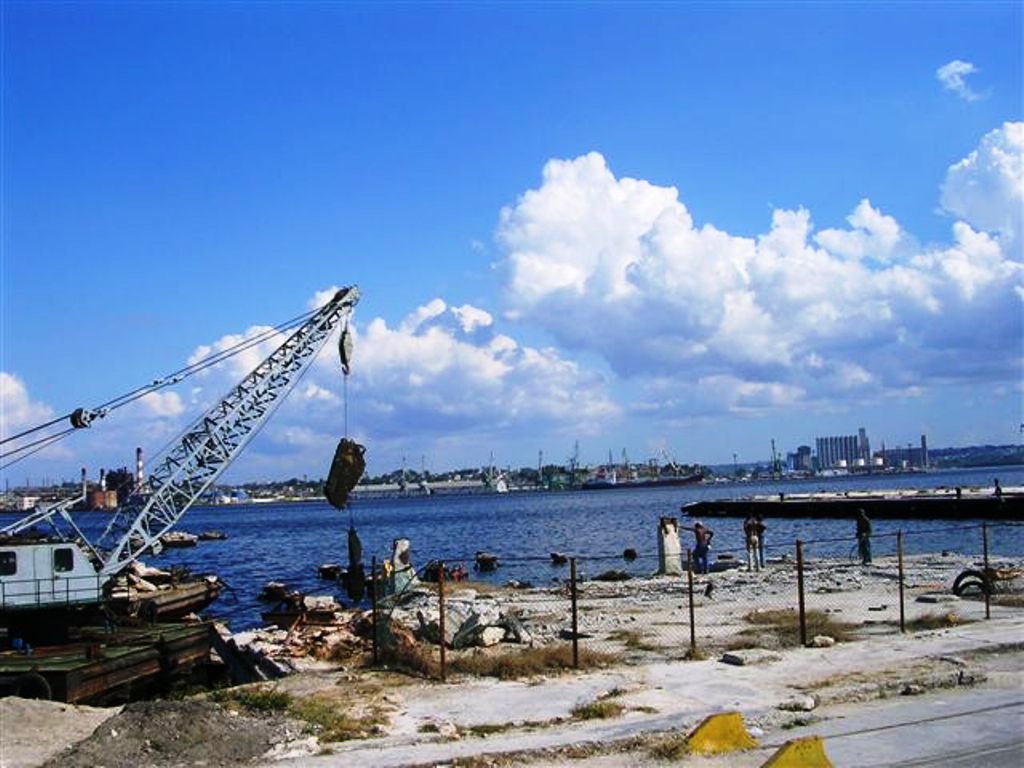
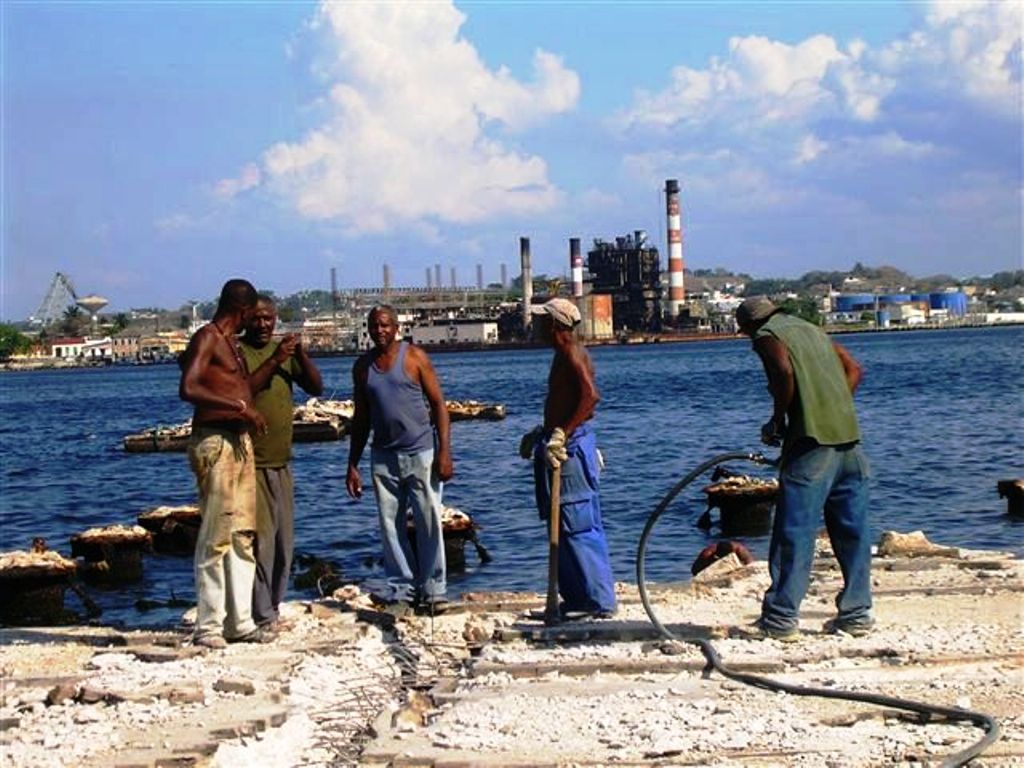
It now appears that the whole port area has been designated as a development zone. The old derelict wharves and warehouses are being dismantled and removed. The Arts and Crafts Market has been transferred from close to the Cathedral to the old Almacenes San José into the interior of the port, which have been restored and renovated.  New hotels such as the Armadores de Santander have opened. The new Russian Orthodox Church is in this areas as well

Bahia de La Habana

Removing Derelict Wharves, February 2011, Photos by Arch Ritter

Furthermore, the container port and much of the bulk shipment port will be moved to a new facility in the excellent harbor at Mariel, 50 kilometers west of Havana, which will also generate some regional development impulses in that region. The old Havana petroleum refinery, formerly owned by Esso and Shell, will shut down when to the new refinery in Cienfuegos opens. And the electrical generation plant at the edge of the port, a heavy air polluter for the capital, will relocate to Matanzas. In time, the serious pollution of the port will be reduced, and one hopes cleaned up definitively. [For a glance at current pollution in the harbor, check this web site: Pollution from the Oil Refinery]. This will be an expensive process taking many years. It is also likely that there are significant toxic residues in much of the land used for industrial purposes for past decades. Cleaning this up also will be costly and time-consuming.

At this time, there seems to be no master-plan for the development of the harbor region available to the public. However, there was some talk in February 2011 of such a plan becoming available in May of 2011.

In time, it is expected that new hotels will ring part of the harbor. With normalization of relations with the United States, the port of Havana also will become a key destination for virtually all of the cruise ships entering the Caribbean region. Quick access to Casablanca and the fortifications on the east side of the harbor will likely be provided with transit by improved cross-harbor ferryboat. One could imagine as well circum-harbor excursion ferry boats plying a vigorous trade. With normalization of travel between the United States and Cuba, high-speed hydrofoil passenger transportation and normal traditional ferry boat service from Key West and Miami to Havana will likely be established, providing further stimulus to the port area. A good deal more of the area around the port thus will become an attractive tourist, commercial and perhaps residential zone. It may also be possible that office complexes are eventually developed in the area as well, shifting part of the commercial center of gravity of Havana from the far west back to the harbor zone.

If the redevelopment of the harbor area proceeds with the same deliberativeness as the restoration of Old Havana, we can anticipate a fine citizen- and tourist-friendly extension of the Old Havana zone southwards into the Baha de La Habana and across the harbor to Casablanca, Regla and the Fortaleza San Carlos de la Cabana area.

[Note: The basic idea for this note came from Omar Everley Perez, Centro de Estudios sobre la Economa Cubana on March 8, 2011]

New Artisanal Center at the restored  Almacenes San José, Avenida del Puerto, Photo by Arch Ritter, February 2011

Russian Orthodox Church, Avenida del Puerto, Photo by Arch Ritter, March 2008

Posted in Blog, Featured | Tagged , , , , , , | 1 Comment

News and Articles, March 28 – April 3, 2011

Generation Y, April 3: Oiled Mechanism http://www.desdecuba.com/generationy/?p=2414

The Miami Herald, April 2: Price of cooking oil rises, without warning http://miamiherald.typepad.com/cuban_colada/2011/04/price-of-cooking-oil-rises-without-warning.html

Diario de Cuba, 2 de abril: Destituidos varios dirigentes en Sancti Spiritus acusados de corrupción http://www.diariodecuba.com/cuba/3923-destituidos-varios-dirigentes-en-sancti-spiritus-acusados-de-corrupcion

Granma, 2 de abril: Erosión bajo pesquisa http://www.granma.cubaweb.cu/secciones/cienciaytec/ambiente/ambiente46.htm

Cubanet, 1 de abril: ¿Finalizará la zafra en abril? http://www.cubanet.org/articulos/%c2%bffinalizara-la-zafra-en-abril/

El Nuevo Herald, 1 de abril: Observadores: Raúl Castro sabe que tiene ‘tiempo limitado’ para reformas http://www.elnuevoherald.com/2011/03/31/913486/observadores-raul-castro-sabe.html

IPS, 1 de abril: Sequía agobia provincia cubana http://cubaalamano.net/sitio/client/brief.php?id=8939

El Nuevo Herald, 1 de abril: Anuncian nueva política bancaria de créditos http://www.elnuevoherald.com/2011/03/31/914044/anuncian-nueva-politica-bancaria.html

Cuba Standard, March 31: Slow rail rehab project  with Cuban participation facing more delays http://www.cubastandard.com/2011/03/31/slow-rail-rehab-project-with-cuban-participation-facing-more-delays/

Diario de Cuba, 31 de marzo: Cuentapropistas: ‘Lo que queremos es un mercado mayorista’ http://www.diariodecuba.com/cuba/3899-cuentapropistas-lo-que-queremos-es-un-mercado-mayorista

Palabra Nueva, 31 de marzo: Reformas: También en salud pública  http://www.palabranueva.net/contens/pag_opinion1.html

Café Fuerte, 31 de marzo: Washington autoriza nuevas agencias para viajes y remesas a Cuba http://cafefuerte.com/2011/03/30/washington-autoriza-nuevas-agencias-para-viajes-y-remesas-a-cuba-2/

Europa Press, 30 de marzo: Pernod y Corporación Cuba Ron pedirán una nueva vista sobre el uso de la marca ‘Havana Club’ en EEUU http://es.noticias.yahoo.com/5/20110330/tbs-pernod-y-corporacin-cuba-ron-pedirn-5056f3e.html

Notimex, 30 de marzo: México y Cuba fortalecen relaciones económicas http://www.aztecanoticias.com.mx/notas/mexico/48067/mexico-y-cuba-fortalecen-relaciones-economicas

Cubadebate, 30 de marzo: Intentan sofocar incendio forestal en Pinar del Río http://www.cubadebate.cu/noticias/2011/03/30/intentan-sofocar-incendio-forestal-en-pinar-del-rio/

AP, March 30:  Cuba approves loans to help prívate entrepreneurs launch small businesses http://www.google.com/hostednews/canadianpress/article/ALeqM5iSE8yXDu2I6y4mnkYXEnUU3VuOhA?docId=6409730

Granma, 30 de marzo: Aboga Raúl por continuar rescatando la disciplina http://www.granma.cubaweb.cu/2011/03/30/nacional/artic07.html

People’s Daily, March 30: Cuba to show oil potential at Earth Science Convention http://english.peopledaily.com.cn/90001/90777/90852/7335388.html

Bloomberg, March 29: Court rules against Pernod in rum dispute http://www.businessweek.com/ap/financialnews/D9M93HHG0.htm

Cuba Standard, March 29: India to expand IT cooperation with Cuba http://www.cubastandard.com/2011/03/29/india-to-expand-it-cooperation-with-cuba/

Cuba Headlines, March 29: Cruise veteran to launch Tampa-Havana ferry http://www.cubaheadlines.com/2011/03/29/30398/cruise_veteran_to_launch_tampa_havana_ferry.html

El Heraldo, 29 de marzo: Cuba le apuesta a la apertura económica http://www.elheraldo.hn/Ediciones/2011/03/29/Noticias/Cuba-le-apuesta-a-la-apertura-economica

Cubanet, 29 de marzo: Las tarifas que vienen http://www.cubanet.org/articulos/las-tarifas-que-vienen/

Café Fuerte, 29 de marzo: Informe: Cuba con el peor nivel de telefonía cellular en América Latina http://cafefuerte.com/2011/03/29/informe-cuba-con-el-peor-nivel-de-telefonia-celular-en-america-latina/?utm_source=twitterfeed&utm_medium=twitter

Cubanet, 29 de marzo: Redada policial en Centro Habana http://www.cubanet.org/noticias/redada-policial-en-centro-habana/

Cuba Standard, March 28: Maquimport buying supplies for ferronickel plant http://www.cubastandard.com/2011/03/28/maquimport-buying-supplies-for-ferronickel-plant/

Gaceta de Cuba, 28 de abril: La llegada de Murillo y la militarización extrema del regimen http://www.gacetadecuba.com/2011/03/27/la-llegada-de-murillo-y-la-militarizacion-extrema-del-regimen/

Posted in News on the Cuban Economy | Leave a comment

New Publication: Oscar Chepe, Cambios en Cuba: Pocos, Limitados y Tardíos

Oscar Chepe’s recent  work on Cuba’s economic situation and the reform process has just been published and is available on the web site: Reconciliación Cubana, or here: Oscar Chepe, Cambios Cuba: Pocos, Limitados y Tardíos

Oscar continues to be a courageous and  outspoken analyst of Cuba’s economic policies. In this past, this earned for him a period of forced labor in the 1960s and incarceration in March 2003 along with 75 others. Despite this, he continues to express his views openly and honestly. Although his voice is heard easily outside his own country, within Cuba, his views unfortunately are blocked rather effectively by state control of the publications media, the electronic media and by the continuous violation of the right to freedom of assembly.

Below is a Table of Contents followed by an Executive Summary by Rolando Castaneda.

Table of Contents:

Prologo por Carmelo Mesa Lago 1
Resume Ejecutivo por Rolando Castañeda 6
I. Introducción 11
II. Pequeñas y medianas empresas 14
III. Actualización del modelo económico cubano 16
IV. Problemas de orden externo e interno 19
V. La empresa estatal socialista 22
VI. Mercados mayoristas, precios 24
VII. Cooperativas 27
VIII. Política fiscal 29
IX. Políticas macroeconómicas 31
X. Política monetaria 34
XI. Política económica externa 37
XII. Inversión extranjera 40
XIII. Política inversionista 43
XIV. Ciencia, tecnología e innovación 45
XV. Política social 47
XVI. Salud 51
XVII. Deporte 54
XVIII. Cultura 56
XIX. Seguridad social 59
XX. Empleo y salarios 61
XXI. Política agroindustrial 64
XXII. Política industrial y energética 68
XXIII. Política energética 71
XXIV. Turismo 74
XXV. Política de transporte 77
XXVI. Construcciones, las viviendas y los recursos hidráulicos 79
XXVII. Comercio 82
XXVIII. Conclusiones 84
A 20 años de Primer Informe de Desarrollo Humano de ONU 87
Cuba Bordeando el Precipicio 90
La Economía Cubana en 2010 93
Cuba: Un Principio Espeluznante 100

Oscar Chepe and Miriam Leiva, February 2010. Photo by Arch Ritter

Resumen Ejecutivo, por Rolando Castañeda

Planteamiento general
Los instrumentos aprobados por el gobierno para la implementación del trabajo por cuenta propia, el proceso de la reducción de las plantillas infladas, el recorte de los gastos sociales y el Proyecto de Lineamientos de la Política Económica y Social, revelan pocos, parciales e insuficientes cambios, que no solucionarán la crisis socioeconómica existente.
El gobierno sólo actualiza (“le pone parches”) a las fuentes principales de los problemas actuales: el sistema socioeconómico, que no ha funcionado, es irreparable y está mal gestionado, así como el régimen político totalitario carente de libertades civiles fundamentales. Ellos han llevado al desastre, la dependencia externa e impiden la sustentabilidad económica.
La baja eficiencia, la descapitalización de la base productiva y de la infraestructura, el envejecimiento y estancamiento en el crecimiento poblacional, entre otros muchos males, son consecuencias de ese modelo.
El gobierno elude medidas indispensables mientras propone unas pocas medidas insuficientes, llenas de limitaciones y prohibiciones. También reitera sin corregir apropiadamente medidas anteriores que han sido implementadas con muchas limitaciones y sin tener una concepción integral de la economía, tales como: la entrega de tierras en usufructo, el pago por resultado a los trabajadores y los recortes fiscales.
Los Lineamientos definen que primará la planificación y no el mercado, o sea continuará la burocratización de la sociedad, bajo rígidas normas centralizadoras, que imposibilitan la flexibilidad requerida por la actividad económica y la vida en general de la nación. No se reconoce la propiedad privada y se subraya la política de no permitir el crecimiento de la actividad individual.
La seria contradicción de una política con ribetes neoliberales de drásticos recortes, sin que se brinde a los ciudadanos posibilidades reales de ganarse el sustento decentemente, e incluso aportar de forma racional a los gastos del Estado, podría determinar convulsiones sociales, en un ambiente ya permeado por la desilusión y la falta de esperanza.

El despido de trabajadores y el trabajo por cuenta propia
El vital proceso de racionalización laboral, con el despido hasta abril de 2011 de 500.000 trabajadores considerados innecesarios, el 10% de la fuerza de trabajo ocupada, para continuar haciéndolo posteriormente con otros 800.000, que fue postergado por tantos años, ahora se pretende realizar de forma muy rápida. No se ha contado con la preparación apropiada ni la organización para que tenga éxito en un plazo tan breve y se pueda reubicar una cantidad tan grande de despedidos. Ni siquiera se han modificado los artículos de la Constitución Política (i.e. el 21 y el 45) que se contraponen a lo propuesto.
Al desestimulo por los bajos salarios, la carencia de información técnica, el vacío de reconocimiento social y las generalizadas malas condiciones laborables, a las nuevas generaciones de estudiantes se une ahora la incertidumbre de hallar empleo futuro por el despido masivo de trabajadores.
El trabajo por cuenta propia en sólo 178 actividades permitidas que deberá absorber el despedido masivo de trabajadores, enfrenta graves limitaciones, más severas que las existentes para las empresas estatales y las mixtas con capital extranjero. Incluyen los impuestos por seguridad social del 25% que el trabajador por cuenta propia deberá contribuir, así como los trabajadores que se contraten con base en un salario fijado por el gobierno, a un nivel 50% mayor que el salario medio prevaleciente. También están los elevados impuestos sobre los ingresos personales que pueden llegar hasta el 50% cuando excedan de $50,000 anuales, y las restricciones a los gastos de operación que se permiten deducir de los ingresos brutos para fines tributarios, en algunos oficios de sólo hasta el 10% de los ingresos anuales.
A ello hay que añadir algunas prohibiciones arbitrarias, tal como las sobre el número de sillas de los restaurantes (20) y las barberías (3), así como la ausencia de un mercado mayorista de abastecimiento de insumos. Hasta tanto ese mercado no aparezca, continuará desarrollándose la ilegalidad y, sobre todo, el robo de los recursos estatales, estimulado por el extendido descontrol existente y el miserable salario de los trabajadores. ‘
De esta forma el Estado reduce la actividad individual a iniciativas arbolitos bonsái e impide el crecimiento del trabajo por cuenta propia y el surgimiento de pequeñas y medianas empresa. Un mecanismo configurado para mantener el estrecho control del Estado-Partido sobre la sociedad, temeroso de que el fortalecimiento y desarrollo de la actividad privada pueda convertirse posteriormente en un peligro.

Aspectos generales y macroeconómicos

La mayoría de los Lineamientos sobre aspectos generales, macroeconómicos y sectoriales son enunciativos, generalidades que soslayan la grave situación con la continuada acumulación de graves problemas y sin proponer soluciones reales para los mismos. Desafortunadamente, los cambios requeridos no se avizoran. Este conjunto de 28 artículos se refiere a estos temas y por qué considera que su tratamiento es insuficiente para una sociedad estatizada, llena de distorsiones y carente de racionalidad económica
El problema de la descapitalización física es sumamente serio. Desde inicios de los años 1990 se mantienen tasas de formación bruta de capital fijo en relación con el PIB usualmente inferiores al 10%, menores a las tasas de amortización de los medios de producción y la infraestructura, aceleradas por la falta de reposición, actualización tecnológica y mantenimiento adecuado.
Desprovisto el país de la “ayuda” a inicios de 1990, empezó el deterioro paulatino de la salud pública, la educación, la seguridad social, el deporte y la cultura, con una incidencia muy negativa en los salarios, que como indicara el presidente Raúl Castro el 26 de julio de 2007 son insuficientes para vivir. La permanencia de los esquemas sociales con oportunidades de acceso para todos está en peligro debido a la falta de sustentación económica.
Resulta indispensable introducir tasas de cambio reales. Las tasas actuales, recargadas por gravámenes absurdos, que pueden conducir a análisis distorsionados y por consecuencia a decisiones equivocadas. En especial respecto a la política de inversiones, el comercio exterior y otros aspectos vitales para el desarrollo nacional. Una moneda sobredimensionada representa un serio obstáculo para el crecimiento de la llegada de turistas, al reducir arbitrariamente la competitividad del mercado cubano.
Cuba paga intereses bancarios muy altos a los prestamistas extranjeros; sin embargo, a los nacionales se les abonan intereses sumamente bajos, incluso por debajo de las tasas de inflación reales. Es necesario motivar a la población a depositar sus ahorros en los bancos, en especial aquellos en moneda convertible, dándosele las debidas garantías y el pago de intereses estimulantes y acordes con la situación financiera del país.
El gobierno no contempla la participación de la comunidad cubana en el exterior en la reconstrucción nacional. Un sector de nuestro pueblo que, con el otorgamiento de las garantías necesarias, podría ser fuente de importantes recursos financieros, tecnologías avanzadas, conocimiento y experiencia en la gestión de negocios y posibles nuevos mercados. Habría que adoptar una política pragmática e inteligente de acercamiento a nuestros hermanos en el extranjero, muy en especial hacia la comunidad afincada en EEUU, que además podría ser un puente para mejorar las relaciones con ese país, con enormes beneficios para nuestra economía.

Aspectos sectoriales
En los aspectos sectoriales de los Lineamientos se habla mucho acerca de ejecutar proyectos e inversiones, de potenciar capacidades de diseño y proyección, y fortalecer determinadas capacidades, pero no se define como hacerlo ni como financiarlo.

La esencia de los problemas nacionales, pueden hallarse en la destrucción de la agricultura que ha provocado una extraordinaria dependencia de alimentos importados, incluido azúcar, café y otros muchos que antes Cuba exportaba, mientras, los Lineamientos, reconocen que “ …las tierras todavía ociosas,.. constituyen el 50%…”. El sector está afectado por los precios fijados por el Estado unilateralmente por debajo del mercado, con frecuentes largas demoras en los pagos y las tradicionales deficiencias en la gestión de las empresas acopiadoras oficiales. Las tiendas abiertas para la venta de herramientas e insumos tampoco constituyen una solución, los precios son demasiado altos.
Las Cooperativas de Crédito y Servicios (CCS), donde los productores con muchas dificultades mantienen sus tierras individualmente, con sólo el 18% de la superficie agrícola total (cierre de 2007) han generado tradicionalmente más del 60% de la producción agrícola nacional, así como el más bajo por ciento de tierras ociosas, a pesar de la crónica falta de recursos, el permanente hostigamiento, las prohibiciones y la obligatoriedad de entregar las cosechas total o parcialmente al Estado en las condiciones y a los precios arbitrarios fijados por él.
En este escenario si se continúa con la mentalidad de ejercer estrictos controles sobre los posibles cooperativistas y negando la voluntariedad como concepto básico para la formación de las cooperativas, por muchos “buenos deseos” e indefinidos planteamientos que existan, el movimiento cooperativo no avanzará.
En la industria se refleja con mayor fuerza el proceso de descapitalización generalizado desde principios de la década de 1990. Por ello se requiere con urgencia su modernización y reequipamiento para poder detener la tendencia al actual atraso tecnológico, e incluso la paralización del sector. En 2009 se alcanzó una producción correspondiente al 45% de 1989, incluida la industria azucarera. Si se excluyera esta industria, el indicador sería del 51%. La producción nacional de materiales de construcción es muy baja, con un índice de volumen físico, al cierre de 2009, solo del 27% del nivel de 1989.
El gobierno cubano no publica los ingresos netos por concepto de turismo, por lo cual es difícil evaluar con precisión sus beneficios. Debido al pobre desarrollo de la economía cubana, se importa muchos productos consumidos por los visitantes. Esta actividad podría ser una de las locomotoras que impulse las demás ramas de la economía, pero para ello habría que realizar reformas estructurales, que reduzcan radicalmente la dependencia del exterior.
Conclusión

El aniquilamiento de los sueños de un futuro más justo y próspero para Cuba, podría detenerse si se propiciara un proceso de reconstrucción radical, con el abandono de los dogmas que tanto daño han hecho. Cuba posee significativas reservas productivas inexplotadas y un pueblo que debidamente estimulado, con libertad para crear, podría sacar a la nación de la crisis. Para ello resulta indispensable un nuevo modelo económico, político y social en el cual participarían en paridad de derechos y deberes las iniciativas públicas y privadas, estableciéndose un círculo virtuoso propiciador de desarrollo, que en la medida en que progresen ambas iniciativas se beneficie el país con mayores niveles de eficiencia, así como más y mejores productos, y el incremento del pago de impuestos que haga sostenible la financiación de la educación, salud pública, seguridad y asistencia social, y otros.

Posted in Blog | Tagged , , , , , , , , , , , , , | 2 Comments

News and Articles, March 21 – 27, 2011

BBC, March 27: Cuba inches towards market socialism http://www.bbc.co.uk/news/business-12565417

CNN, March 27: Carter coming back to Cuba, raising expectations http://edition.cnn.com/2011/WORLD/americas/03/26/cuba.carter.visit/?hpt=T2

People’s Daily, March 26: Cuba to carry out economic reforms while keeping socialism http://english.peopledaily.com.cn/90001/90777/90852/7332053.html

Café Fuerte, 26 de marzo: Marino Murillo nombrado zar de las reformas económicas en Cuba http://cafefuerte.com/2011/03/25/marino-murillo-nombrado-zar-de-la-economia-cubana-2/?utm_source=twitterfeed&utm_medium=twitter

Granma, 26 de marzo: Nota Oficial http://www.granma.cubaweb.cu/2011/03/26/nacional/artic01.html

Diario de Cuba, 26 de marzo: ¿De dónde sale la corrupción? http://www.diariodecuba.com/cuba/3806-de-donde-sale-la-corrupcion

Reuters, March 25: Cuba economy minister replaced, to focus on reform http://news.yahoo.com/s/nm/20110326/wl_nm/us_cuba_economy_minister_1

Cuba Standard, March 25: Castro makes Murillo ‘superminister’ of economic reform http://www.cubastandard.com/2011/03/25/castro-makes-murillo-superminister-of-economic-reform/

Diario de Cuba, 25 de marzo: ‘Granma’ culpa al ‘comercio ilegal’ de la debacle cafetalera http://www.diariodecuba.com/cuba/3799-granma-culpa-al-comercio-ilegal-de-la-debacle-cafetalera

Havana Times, March 25: On Cuba’s Devaluation and Further Proposals http://www.havanatimes.org/?p=40287

Granma, 25 de marzo: Le cuestan al país los centrales críticos http://www.granma.cubaweb.cu/2011/03/25/nacional/artic06.html

Granma, 25 de marzo: Ajustará Cuba normas jurídicas http://www.granma.cubaweb.cu/2011/03/25/nacional/artic04.html

Cuba Standard, March 24: Prosecutor seeking long prison sentences on corruption case http://www.cubastandard.com/2011/03/24/prosecutor-seeking-long-prison-sentences-in-corruption-case/

BBC Mundo, 24 de marzo: La carreta y los bueyes http://www.bbc.co.uk/blogs/mundo/cartas_desde_cuba/2011/03/la_carreta_y_los_bueyes.html#more

Cubanet, 24 de marzo: Tierras en usufructo http://www.cubanet.org/articulos/tierras-en-usufructo/

Canadian Business, March 24: Cuban officials seek 20-year sentence for Chilean businessman who was former Castro confidant http://www.canadianbusiness.com/markets/market_news/article.jsp?content=D9M5MPA80

Havana Times, March 24: Cuba Tourism Spikes 15% in 2011 http://www.havanatimes.org/?p=40235

Granma, 24 de marzo: Constituyen Comisión Nacional del Censo de Población 2012 http://www.granma.cubaweb.cu/2011/03/24/nacional/artic05.html

Diario de Cuba, 23 de marzo: Ex ministro: La Habana no quiere nuevos socios en ETECSA http://www.diariodecuba.com/cuba/3751-ex-ministro-la-habana-no-quiere-nuevos-socios-en-etecsa

BBC, March 23: Red tape in Cuba: A struggle to change hotels in Havana http://news.bbc.co.uk/2/hi/programmes/from_our_own_correspondent/9431462.stm

Cubaverdad, March 23: Fidel Castro says he’s not in charge of the Communist Party http://www.cubaverdad.net/weblog/2011/03/fidel-castro-says-hes-not-in-charge-of-the-communist-party/

Martí Noticias, 22 de marzo: Crecen los microcréditos para la agricultura en Cuba http://www.martinoticias.com/noticias/cuba/Crecen-los-microcredito-en-Cuba-118472514.html?commentSubmitted=y&field=

Business Wire, March 22: Research and Markets: Cuba – Telecoms, Mobile and Broadband Report 2011 http://www.businesswire.com/news/home/20110322006031/en/Research-Markets-Cuba—Telecoms-Mobile-Broadband

The Miami Herald, March 22: Remittances and Cuba http://www.miamiherald.com/2011/03/19/2128051/remittances-and-cuba.html

Diario de Cuba, 22 de marzo: Eusebio Leal: ‘Cuba no quiere ni el capitalismo del que venimos ni el que nos ofrecen’ http://www.diariodecuba.com/cuba/3720-eusebio-leal-cuba-no-quiere-ni-el-capitalismo-del-que-venimos-ni-el-que-nos-ofrecen

Reuters, March 22: Castro says he quit Communist Party post in 2006 http://www.reuters.com/article/2011/03/22/us-cuba-castro-idUSTRE72L1ND20110322

AP, 21 de marzo: Legisladores de EEUU buscan impedir exploración petrolera en Cuba http://es.noticias.yahoo.com/11/20110321/tbs-amn-eco-eeuu-cuba-petroleo-f8250da.html

Cuba Standard.Com, March 21: Utilities investing in electrical substations http://www.cubastandard.com/2011/03/21/utility-investing-in-electrical-substations/

Cuba Standard.Com, March 21: Venezuela-Cuba cooperation going through adjustment http://www.cubastandard.com/2011/03/21/venezuela-cuba-cooperation-going-through-adjustment/

El Nuevo Herald, 21 de marzo: Otorgan en Cuba 171,000 nuevas licencias http://www.elnuevoherald.com/2011/03/21/906874/otorgan-en-cuba-171000-nuevas.html

BBC Mundo, 21 de marzo : Cuba quiere revolucionar su sistema educativo http://www.bbc.co.uk/mundo/noticias/2011/03/110321_cuba_sistema_educativo_cr.shtml

Granma, 21 de marzo: Nueva controversia entre oferta y demanda http://www.granma.cubaweb.cu/2011/03/21/nacional/artic02.html

IPS, 21 de marzo: Trabajo privado impulsa inversions en sector alimentario http://cubaalamano.net/sitio/client/brief.php?id=8906

Posted in News on the Cuban Economy | Leave a comment

An Overview Evaluation of Economic Policy in Cuba circa 2010

By Arch Ritter

The essay attached and summarized briefly here was presented at a conference at CIAPA, in San Jose, Costa Rica, February 3 and 4, 2009 organized by Paolo Spadonu of Tulane University.

The full essay is entitled An Overview Evaluation of Economic Policy in Cuba, circa 2010, June 30, 2010 and can be seen “HERE”. The Introduction and Conclusion are presented below.

Hopefully, this evaluation will change considerably for the better after the Sixth Congress of the Communist party of Cuba in April.

I. Introduction

The economic development of Cuba has been characterized by high levels of investment in people with successful results, but with weak performance in terms of the production of goods and services generally. Cuba’s achievements regarding human development are well known and are epitomized by the United Nations Development Program’s “Human Development Index” (HDI). On the one hand, this index ranks Cuba at #1 in the world for the Education component (somewhat surprisingly) and #31for the Life Expectancy component. On the other hand, Cuba’s world ranking is for GDP per capita in purchasing power parity terms is #94 with an overall world HDI ranking of #51(UNDP, HDR, 2009, 271.) These rankings underline the inconsistency between the Cuba’s high level of human development on the one hand and its economic underperformance on the other. The strong economic performance of the 2004 to 2008 period appeared to constitute a rapid recovery in terms of Cuban GDP statistics. However, this recovery, while perhaps not illusory, was fragile and unsustainable, based on factors such as support from Venezuela and high nickel export prices, and indeed it has been reversed in 2009-2010.

Given the quality of Cuba’s human resources, the economic performance for the last 15 years should have been excellent. The central argument of this essay is that Cuba’s weak economic performance has been the result of counter-productive public policy. The objective of this essay is to analyze and evaluate a number of central policy areas that shape Cuba’s economic performance, including monetary and exchange rate policy, policy towards micro-enterprise; agricultural policy, labor policy, foreign investment policy, policies towards infrastructure renewal, and the policy approach to self-correction and self-renewal.

In order to present a brief overview of the evaluations, an academic style of grading is employed, with an “A+” being excellent through to an “F” representing “failure”.

This evaluation schema is of course subjective, impressionistic and suggestive rather than rigorous. It is based on brief analyses of the various policy areas. However, the schema is similar to the scoring systems widely used in academia, and is used here with no more apology than is normally the case in the academic world.

Before proceeding with the policy analysis and evaluation, a brief overview of economic performance in the decade of the 2000s is presented to provide the context for the examinations of economic policy.

II. General Economic Performance

III.  Evaluation of Some Central Policy Areas

IV.   Summary and Conclusion:

A summary of the evaluations of the various assessment areas yields an overall evaluation of   “D +”. This is not a strong assessment of Cuban economic policies.

1. Monetary & Exchange Rate Policy                  C-

2. Micro-Enterprise Policy                                    F

3. Policy towards Agriculture                              C-

4. Labor Policy                                                        D+

5. Foreign Investment Policy D+

6. Infrastructure Renewal                                   D

7. Capacity for Self Correction                            D

Overall Grade: D +

The result of such weak policies in these areas is weak economic performance. Badly conceived economic policies nullify the potential efforts of the Cuban citizenry. The major investments in human capital, while fine in their own right, are not yielding strong economic performance. Indeed, misguided policies are undermining, sabotaging and wasting the economic energies and initiatives of Cuba’s citizens.

Major policy reforms amounting to a strategic reorientation of Cuban economic management are likely necessary to achieve a sustained economic recovery and future economic trajectory. So far, writing in June 2010, the Government of Raul Castro has made some modest moves, principally in agriculture, as mentioned earlier. Other policy areas such as those relating to micro-enterprise are reported to be under discussion at high levels in the government. On the other hand, the replacement of the reputed pragmatists Carlos Lage, (Secretary of the Council of Ministers) and Jose Luis Rodriguez, (Vice President of the Council of Ministers and Minister of Economy and Planning) and the replacement of Lage by Major General José Amado Ricardo Guerra of the Armed Forces seems to suggest that the Raul Castro Government may be moving towards a less reformist approach to economic management ( Granma International, 2009.)

The types of policy reforms that would be necessary to strengthen the policy areas discussed above would include the following:

  1. Monetary & Exchange Rate Policy: movement towards realistic and unified monetary and exchange rate systems;
  2. Micro-Enterprise Policy: establishment of an enabling and supportive policy environment rather than a punitive policy of containment;
  3. Policy towards Agriculture: further support for small-scale farmers plus a reinvigoration of the abandoned sugar fields with cane for ethanol, among other policies;
  4. Labor Policy: implement the International Labour Organization approach to fundamental labor rights;
  5. Foreign Investment Policy: establish a clearer and more unequivocal rules-based policy framework;
  6. Infrastructure Renewal: strengthening resource flows towards maintenance, especially for housing, water, and sanitation, and facilitating self-managed and do-it-yourself maintenance on the housing stock by liberalizing the trades and making repair supplies available at reasonable cost;
  7. Capacity for Self Correction: permit an authentic implementation of freedom of expression and freedom of association thereby permitting economic analysis and criticism through a free press and media and the formation of alternate “teams” of potential economic managers – some within political parties.

In sum, effective economic management requires new ideas, transparency and criticism, and, indeed, a major policy reform process in order to reverse the current wastage of human energies, talents and resources. Policy reorientations in the directions noted above are unlikely to be forthcoming from the Government of Raul Castro, which appears to be deeply conservative as well as “gerontocratic”. Cuba will likely have to wait for a “New Team” or more likely a “generational change” in its overall economic management before such major reforms can be implemented.


Posted in Blog, Featured | Tagged , , , , , , , , , , , , , , , , , | Leave a comment

News and Articles, March 14 – 20, 2011

Business Area, March 20: Indonesia Invites Cuba Cigar Industry Develop http://businessarea.org/indonesia-invites-cuba-cigar-industry-develop-27930.html

Cuba Standard.Com, March 19: Piñón on Energy: Petrobras pullout not a final verdict on Cuba’s oil http://www.cubastandard.com/2011/03/19/pinon-on-energy-petrobras-pullout-not-a-final-verdict-on-cubas-oil/

Juventud Rebelde, 19 de marzo: Negocio propio en la economía de todos http://www.juventudrebelde.cu/cuba/2011-03-19/negocio-propio-en-la-economia-de-todos/

Cuba Standard.Com, March 19: Cuba taking climate-change measures http://www.cubastandard.com/2011/03/19/cuba-taking-climate-change-measures/

Diario de Cuba, 19 de marzo: ¿Cuánto pagar por los servicios médicos? http://www.diariodecuba.com/cuba/3560-cuanto-pagar-por-los-servicios-medicos

Europa Press, 18 de marzo: La Unión Eléctrica de Cuba prevé un ahorro de casi 8.000 toneladas de combustible gracias al ahorro de verano http://www.europapress.es/latam/economia/noticia-cuba-union-electrica-cuba-preve-ahorro-casi-8000-toneladas-combustible-gracias-horario-verano-20110318201251.html

Havana Times, March 18: No Grass for the Family Cow http://www.havanatimes.org/?p=39954

The Telegraph, March 18: Offshore finance: Cuba devalues the peso http://www.telegraph.co.uk/finance/personalfinance/offshorefinance/8383945/Offshore-finance-Cuba-devalues-the-peso.html

Europa Press, 17 de marzo: El embajador de Cuba muestra el interés de su país en “incrementar las relaciones comerciales” con Navarra http://es.noticias.yahoo.com/5/20110317/tlc-el-embajador-de-cuba-muestra-el-inte-7995c21.html

Cuba Standard.Com, March 17: Labiofam to build larvicide plant in Ghana http://www.cubastandard.com/2011/03/17/labiofam-to-build-larvicide-plant-in-ghana/

Europa Press, 17 de marzo: Más de 145.000 cubanos se han dado de alta en la Seguridad Social http://www.europapress.es/latam/cuba/noticia-cuba-mas-145000-cubanos-dado-alta-seguridad-social-20110317170103.html

Convivencia: Economía con libertad y responsabilidad http://convivenciacuba.es/content/view/585/59/

Reuters, March 17: Cubans vent frustrations as party congress nears http://www.reuters.com/article/2011/03/17/us-cuba-congress-complaints-idUSTRE72G4LB20110317

El Nuevo Herald, 17 de marzo: Congreso del escepticismo http://www.elnuevoherald.com/2011/03/17/904435/oscar-espinosa-chepe-congreso.html

Cubaencuentro, 17 de marzo: ¿Sensibilidad o instinto de conservación? http://www.cubaencuentro.com/cuba/articulos/sensibilidad-o-instinto-de-conservacion-258432

IPS, 16 de marzo: En materia de cambio, dos y dos no siempre son cuatro http://ipsnoticias.net/nota.asp?idnews=97786

Cubaencuentro, 16 de marzo: Reformas e impedimentos http://www.cubaencuentro.com/entrevistas/articulos/reformas-e-impedimentos-258330

Cubaencuentro, 16 de marzo: Un difícil primer paso http://www.cubaencuentro.com/opinion/articulos/un-dificil-primer-paso-258329

Cubanet, 16 de marzo: Escasez de profesionales http://www.cubanet.org/articulos/escasez-de-profesionales/

Tampa Bay, March 16: Tampa hopes for ferry service to Yucatan, Cuba http://www.tampabay.com/news/business/tampa-hopes-for-ferry-service-to-yucatan-cuba/1157412

ACN, March 15: Cuba: Almost 80% of Lands Granted in Usufruct Already Being Exploited http://www.ain.cubaweb.cu/idioma/ingles/2011/0315Almost-80-of-Lands-Granted-in-Usufruct-Already-Being-Exploited.htm

Sun Herald, March 15: Bacardi Continues Legal Actions to Protect Its Havana Club Rum Trademark Rights in Spain http://www.sunherald.com/2011/03/15/2942370/bacardi-continues-legal-actions.html

BBC, March 15: Q&A: Cuba’s economic changes http://www.bbc.co.uk/news/business-12706588

Diario de Cuba, 15 de marzo: Resucitan las ‘posadas’ http://www.diariodecuba.com/cuba/3596-resucitan-las-posadas

Havana Times, March 15: Disrespecting Workers http://www.havanatimes.org/?p=39711

Cubaencuentro, 15 de marzo: Expertos consideran positiva devaluación del peso convertible http://www.cubaencuentro.com/cuba/noticias/expertos-consideran-positiva-devaluacion-del-peso-convertible-258265

Cuba Standard.Com, March 14: Canadian company teams up with PGA on Cuba golf resorts http://www.cubastandard.com/2011/03/14/canadian-company-teams-up-with-pga-on-cuba-resorts/

Diario de Cuba, 14 de marzo: Las claves de la devaluación del CUC: un camino de vuelta sin retorno http://www.diariodecuba.com/cuba/3591-las-claves-de-la-devaluacion-del-cuc-un-camino-de-vuelta-sin-retorno

Reuters, March 14: Cuba devalues convertible peso by 8 percent http://www.reuters.com/article/2011/03/14/businesspro-us-cuba-money-devalue-idUSTRE72D5T720110314

AP, March 14: Cuba cuts hard currency peso to par with dollar http://www.google.com/hostednews/ap/article/ALeqM5hEzawLn6zpYwhIn_SOk4GKrQSAzw?docId=9ffff65045fb42ffb70e0837c2580e81

Granma, 14 de marzo: Acuerdo No. 30/11 del Comité de Política Monetaria del Banco Central de Cuba http://www.granma.cubaweb.cu/2011/03/14/nacional/artic07.html

Posted in News on the Cuban Economy | Leave a comment

Cuba in Transition: Volume 20 Proceedings of the Twentieth Annual Meeting of the Association for the Study of the Cuban Economy

The papers from the 2010 meetings of the Association for the Study of the Cuban Economy have just been posted on the ASCE Web Site and can be found at Papers and Proceedings of the Twentieth Annual Meeting of ASCE.

As usual, a wide range of excellent papers are presented at ASCE’s annual meetings Many essays include valuable, original and ground-breaking analyses on a wide range of economic as well as socio-economic and politico-economic issues..

A Table of Contents with hyperlinked titles of the papers is included below.

Preface

Conference Program

Table of Contents

The Cuban Economy in 2010 as Seen by Economists Within the Island and Other Observers

Joaquín P. Pujol

La Economía Cubana: ¿Tiempos de Esperanza?

Oscar Espinosa Chepe

Crisis Management of Cuban International Liquidity

Luis R. Luis

If It Were Just the Marabú… Cuba’s Agriculture 2009-10

G.B. Hagelberg

The Numbers Diet: Food Imports as Economic Indicators

Lauren Gifford

Government-Controlled Travel Costs to Cuba and Costs of Related Consular Services: Analysis and International Comparisons

Sergio Díaz-Briquets

Envios de Remesas a Cuba: Desarrollo, Evolución e Impacto

Emilio Morales Dopico

Dashed Expectations: Raúl Castro’s Management of The Cuban Economy, 2006–2010

Jorge F. Pérez-López

Cuba: ¿Hacia otro “Periodo Especial”?

Mario A. González-Corzo

Cuban Education and Human Capital Formation

Enrique S. Pumar

La Masonería Cubana y su Contribución a la Sociedad Civil

Jorge Luis Romeu

The Internet and Emergent Blogosphere in Cuba: Downloading Democracy, Booting Up Development, or Planting the Virus of Dissidence and Destabilization?

Ted Henken

El Insostenible Apoyo Económico de Venezuela a Cuba y sus Implicaciones

Rolando H. Castañeda

Cuba-Venezuela Health Diplomacy: The Politics of Humanitarianism

Maria C. Werlau

British Policy-Making and Our Leyland in Havana (1963–1964)

Maria Carla Chicuén

La Desigualdad en Cuba: El Color Cuenta

Natalie Kitroeff

A Macroeconomic Approach to Foreign Direct Investment (FDI) Inflow from the People’s Republic of China to Cuba

Orlando R. Villaverde

A Survey of the Relationship between Cuba and China: A Chinese Perspective

Pin Zuo

The Evolution of the Cuban Military: A Comparative Look at the FAR with the
Bureaucratic-Authoritarian Model of South America

Michael Aranda

Empowering the Cuban People Through Access to Technology

Cuba Study Group

The Global Economic and Financial Crisis and Cuba’s Healthcare and Biotechnology Sector: Prospects For Survivorship and Longer-term Sustainability

Elaine Scheye

Globalization and the Socialist Multinational: Cuba and ALBA’s Grannacional Projects at the Intersection of Business and Human Rights

Larry Catá Backer

Racismo Estructural en Cuba y Disidencia Política: Breves Antecedentes

Ramón Humberto Colás

Arbitration and Mediation: Impartial Forums to Resolve International Commercial Disputes in Cuba

Rolando Anillo-Badia

Gazing at the Green Light: The Legal and Business Aspects of Real Property Investment in Cuba

Richard M. David

The Creation and Evolution of the Legal Black Hole at Guantánamo Bay

Michael J. Strauss

Las Relaciones Cuba-Israel: A la Espera de una Nueva Etapa

Arturo López-Levy

Revolutionary Cuba’s GDP: A Survey of Methods and Estimates

Jorge F. Pérez-López

A Dynamic Factor Model of Quarterly Real Gross Domestic Product Growth in the Caribbean: The Case of Cuba and the Bahamas

Philip Liu and Rafael Romeu

Cuba’s Attempts at Democracy: The Colony

Roger R. Betancourt

Lessons Learned from 20 Years of Privatization: Albania, Estonia and Russia

Jorge A. Sanguinetty and Tania Mastrapa

The Cuban Tourism Sector: A Note On Performance in the first Decade of the 21st Century

María Dolores Espino

Prospects for Tourism in Cuba: Report on the Residential Sales/Leases in Golf and Marina Developments

Antonio R. Zamora

Posted in Blog | Tagged , , , , , , , , | Leave a comment

News and Articles, March 7 – 13, 2011

Cuba Standard.Com, March 13: Brazil supporting Cuban Banks http://www.cubastandard.com/2011/03/13/brazil-to-support-cuban-banks/

Havana Times, March 12: Soy Meat, but Transgenic? http://www.havanatimes.org/?p=39535

The Baltimore Sun, March 12: Senate amendment threatens BWI flights to Cuba http://www.baltimoresun.com/news/opinion/readersrespond/bs-ed-cuba-flights-letters-20110312,0,1667121.story

The Miami Herald, March 12: Travel to Cuba is the talk of DC http://miamiherald.typepad.com/cuban_colada/2011/03/travel-to-cuba-is-the-talk-of-dc.html

Diario de Cuba, 12 de marzo: Cuba ficción http://www.diariodecuba.com/opinion/3563-cuba-ficcion

El Nuevo Herald, 11 de marzo: Cuba crea un nuevo sistema de información estadístico http://www.elnuevoherald.com/2011/03/11/901555/cuba-crea-un-nuevo-sistema-de.html

El Nuevo Herald, 11 de marzo: Cuba: Puerto financiado por Brasil estará listo en 2014 http://www.elnuevoherald.com/2011/03/10/900675/cuba-puerto-financiado-por-brasil.html

Granma, 11 de marzo: Electos los 1,000 delegados http://www.granma.cubaweb.cu/2011/03/11/nacional/artic09.html

Europa Press, 11 de marzo: Petróleos de Venezuela crea una empresa mixta con Cuba y Angola http://www.europapress.es/latam/economia/noticia-venezuela-petroleos-venezuela-crea-empresa-mixta-homologas-cubana-angolena-20110311075508.html

The Miami Herald, 11 de marzo: Too many vendors spreading too fast http://miamiherald.typepad.com/cuban_colada/2011/03/too-many-vendors-spreading-too-fast.html

Diario de Cuba, 11 de marzo: Carroza fúnebre http://www.diariodecuba.com/opinion/3545-carroza-funebre

Havana Times, March 10: Neoliberal Strategy Failing in Cuba http://www.havanatimes.org/?p=39436

Sun Sentinel, March 10: Government Oks charter flights to Cuba from Fort Lauderdale http://articles.sun-sentinel.com/2011-03-10/business/fl-cuba-flights-lauderdale-20110310_1_charter-companies-cuban-americans-charter-flights

Cuba Standard.Com, March 10: Big U. S. travel provider wading into Cuba http://www.cubastandard.com/2011/03/10/qa-big-u-s-travel-provider-wading-into-cuba/

Reuters, March 10: Petrobras has relinquished Cuba oil block, official http://www.reuters.com/article/2011/03/10/cuba-oil-petrobras-idUSN1010561820110310

The Sealy News, March 10: Cuba a viable market for Texas agriculture http://www.sealynews.com/news/article_2cc16354-4b19-11e0-a9e3-001cc4c03286.html

Diario de Cuba, 10 de marzo: El Gobierno prepara el terreno para nuevas “medidas de ahorro” energético http://www.diariodecuba.com/cuba/3526-el-gobierno-prepara-el-terreno-para-nuevas-medidas-de-ahorro-energetico

IPS, 10 de marzo: Socialismo a debate en Cuba http://cubaalamano.net/sitio/client/report.php?id=1256

Diario de Cuba, 10 de marzo: La más popular tienda virtual http://www.diariodecuba.com/cuba/3522-la-mas-popular-tienda-virtual-cubana

The Ledger, March 9: Port Officials Want to Run Slow Boats to Cuba http://www.theledger.com/article/20110309/NEWS/103095029/1002/sports?Title=Port-Officials-Want-to-Run-Slow-Boats-To-Cuba

Cuba Standard.Com, March 9: Cuba to switch to daylight saving time http://www.cubastandard.com/2011/03/09/cuba-to-switch-to-daylight-savings-time/

Havana Times, March 9: Fear of the Void http://www.havanatimes.org/?p=39276

Inside Costa Rica, March 9: Cuba, El Salvador to Hold Trade Talks http://www.insidecostarica.com/dailynews/2011/march/09/centralamerica1103000902.htm

The Washington Post, March 9: BWI, 7 Other Airports Cleared for Charter Flights to Cuba http://www.washingtonpost.com/wp-dyn/content/article/2011/03/08/AR2011030806126.html

Reuters, March 8:  Cuba state layoffs move slowly, workers uneasy http://www.reuters.com/article/2011/03/08/us-cuba-reform-idUSTRE7275PC20110308

Havana Journal, March 8: US Cuba Travel from Atlanta, Tampa, Chicago and more airports http://havanajournal.com/travel/entry/us-cuba-travel-from-atlanta-tampa-chicago-and-more-airports-922/

Europa Press, 8 de marzo: KLM lanza una nueva ruta a La Habana (Cuba) a partir del 31 de octubre http://es.noticias.yahoo.com/5/20110308/tbs-klm-lanza-una-nueva-ruta-a-la-habana-5056f3e.html

AP, 7 de marzo: Cuba impulsa producción de café http://es.noticias.yahoo.com/11/20110307/tbs-car-eco-cuba-cafe-f8250da.html

Cuba Standard.Com, March 7: Washington opens eight new U.S. airports to Cuba travel http://www.cubastandard.com/2011/03/07/washington-opens-eight-new-u-s-airports-to-cuba-travel/

Cubaencuentro, 7 de marzo: La producción de petróleo cayó un 3,5% en 2010 http://www.cubaencuentro.com/cuba/noticias/la-produccion-de-petroleo-cayo-un-3-5-en-2010-257618

North Texas e-News, March 7: Cuba a viable market for Texas agriculture http://www.ntxe-news.com/artman/publish/article_68198.shtml

UPI, March 7: Cuba cuts jobs to embrace market economy, but still holds 100 dissidents http://www.upi.com/Top_News/Special/2011/03/07/Cuba-cuts-jobs-to-embrace-market-economy-but-still-holds-100-dissidents/UPI-59861299499620/

El Nuevo Herald, 7 de marzo: Crece el número de trabajadores privados en la isla http://www.elnuevoherald.com/2011/03/06/898217/crece-el-numero-de-trabajadores.html

Posted in News on the Cuban Economy | Leave a comment

A Major Slow-Down for the Public Sector Layoff / Private Sector Job Creation Strategy

Raul Castro and the Council of Ministers, Granma, March 1, 2011

By Arch Ritter I had been looking in vain for any concrete information on public sector redundancies and the granting of self-employment licenses since December 2010.  After some searching in the Cuban press, the foreign press and various blogs, I came up empty handed. I was starting to think that the program had been aborted. Then yesterday, Raul announced in a publicized meeting of the Council of Ministers a major slow-down of the program, noting, in the words of the journalists, that “the up-dating of our model is not the work of a day or even a year but because of its complexity, it will require not less than a five year period to unfold its implementation” (Granma, 1 de Marzo de 2011) As far as I can determine, there have in fact been virtually no lay-offs yet in the public sector, although the original March 31 target for 500,000 fired workers is close at hand. Or at least, none have been clearly reported. The latest numbers for license-granting for the end of December 2010 indicated that some 75,000 new licenses had been issued with another 8,340 still in process – a slow start towards the March 1 target date. Granma, 7 de enero de 2011 The slow-down and delay in implementation is understandable.  Although the original proposal was in the right direction, it was seriously flawed and excessively hurried. The most obvious weakness of the strategy was that it called for lay-offs first, followed by or concurrently with job creation in the micro-enterprise sector which was only slightly liberalized in October 2010. As various critics quickly observed, this was placing the “cart before the horse”. The original time frame for the lay-off process – from July 20, 2010 to March 31, 2011 – became even more condensed as months of inactivity followed months. If implemented, this approach would have amounted to a draconian type of shock therapy. The process of firing workers is not easy under any circumstances. Though the Government stressed repeatedly that those made redundant would be supported by the state, the prospects of being laid off and having to establish one’s own micro-enterprise in a policy environment that is still difficult if not hostile must be unnerving for many people. It was to be implemented during the Cuban recession – (though Cuba is now appears to be in a process of recovery, due to higher nickel prices, increased tourism including US tourism, higher remittances.) Moreover, workers have no independent Unions to defend their rights during such a process of redundancies. (It was the Central de Trabajadores de Cuba that announced the lay-off strategy.) There was a potential for irregularities and perversions in the firing process as well, with redundancy being determined by factors such as Party faithfulness, personality issues,  or friendship with the relevant officials, rather than labor effectiveness, which is usually difficult to determine in any case. Moreover, the strategy, which was to be a defining component of economic reform and structural change, was adopted before the public discussions around the Proyecto de Lineamientos de la Política Económica y Social del Partido y la Revolución,” There had been no public input or discussion in the media or public forums before this strategywas sprung on the Cuban people. Furthermore, it was clear from the start that the liberalization of self-employment was insufficient for the necessary level of job creation. (See Perez and Vidal, Ritter and Mesa-Lago for example.) There are some measures that are supportive of micro-enterprise expansion. These include a small increase in the permitted range of activities, minor relaxation of regulations and a small modification of the tax regime. More significant and positive are the liberalization of licensing and the “de-stigmatization” of the self-employed by the media and politicians. However, a variety of policies continues to constrain the activities of micro-enterprises and will prevent it from expanding as envisioned by the Government: –        Exceedingly onerous taxation continues. –        The tax on hiring workers will discourage job creation. –        A narrow definition of legal activities will limit enterprise and job creation. –        Exclusion of virtually all high-tech and professional activities blocks development of knowledge-intensive enterprises and wastes the training of the highly educated. –        Bizarre restrictions remain (such as a 20 chair limit on restaurant chairs). –        Restrictions and prohibitions on hiring workers remain. –        Taxes and regulations result in the stunting of enterprises which prolong inefficiencies and promote the underground economy. –        Unreasonable restrictions and heavy taxes breed contempt and non-compliance for the law. Under these circumstances, the necessary expansion of Small Enterprise will be slow and in fact probably would not occur. In this case, the Government will have two basic choices: either it can abort the structural change process or it can further liberalize the micro-enterprise sector in order to permit it to generate jobs for redundant state workers. In order to establish an “enabling environment” for micro-enterprise, here are some of the types of policy modification that would be necessary:

  1. Modify the tax regime: Eliminate the tax on hiring workers and permit all costs to be deductible from gross revenues for calculating taxable income;
  2. Broaden of permitted activities, including professional and high-tech activities;
  3. Relax vexatious regulations;
  4. Liberalize hiring restrictions;
  5. Establish microcredit institutions (international assistance is available for this)
  6. Improve access to wholesale input purchase – not done yet;
  7. Legalize “intermediaries” (permitting specialization between producers and venders)
  8. Permit Advertising
  9. Establish a “Ministry for Small Enterprise”!!!


Posted in Blog, Featured | Tagged , , , , , , , , | 2 Comments