With the
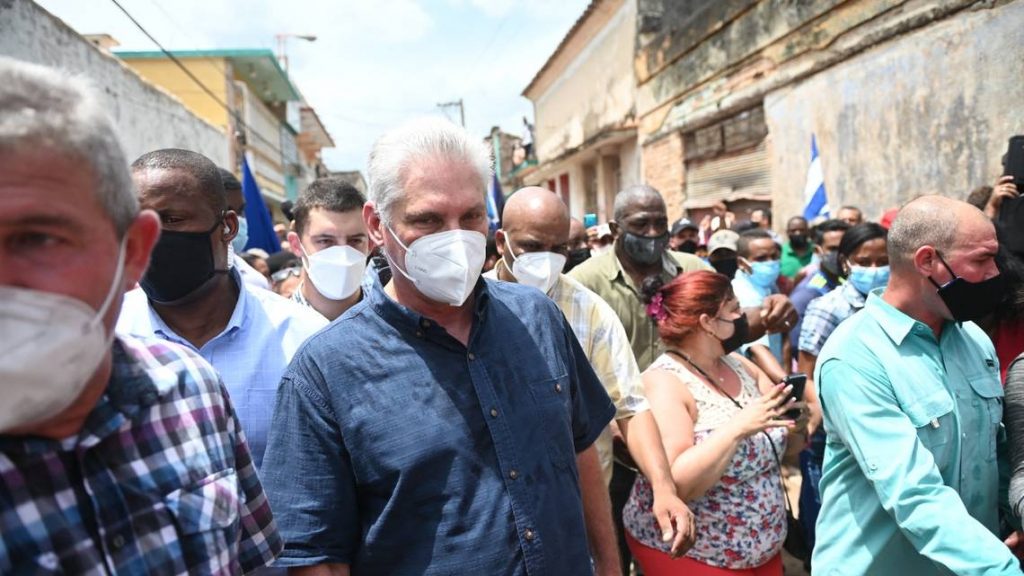
world watching as Cubans protested on the streets all over the island on July
11, Cuban leader Miguel Díaz-Canel took what some experts believe was a
decision that will come back to haunt him: He gave a “combat order” to fellow
revolutionaries to squash those calling for freedom and the “end of the
dictatorship.”
In the
aftermath of images of police repression and pro-government mobs hitting
protesters with clubs going viral, there has been a rare wave of criticism from
government insiders, state journalists, and prominent figures in the arts,
pointing to a crisis of governance in the communist island that no other leader
has faced in six decades.
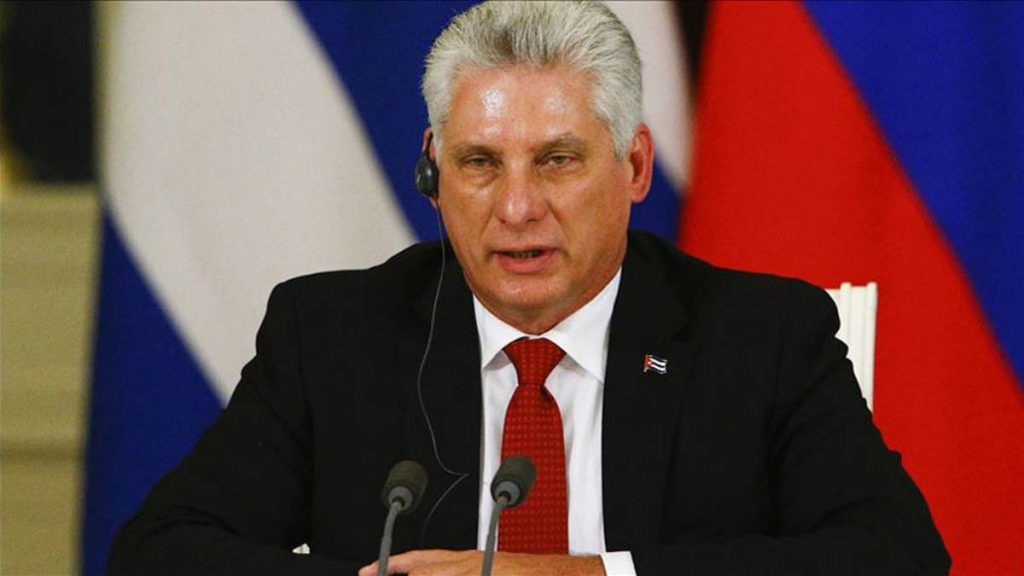
Diaz-Canel
recently told journalists working for state-sanctioned outlets that he doesn’t
regret the order to crack down on anti-government demonstrators. But the fact
that he felt the need to gather the journalists at a meeting Saturday to
justify his decision is the latest example of a damage-control campaign to
restore his dwindling popularity and political standing.
“I made a
call to the people that day because it seemed to me that it was the right thing
to do and that I do not regret or will not regret,” he said in a video of the
meeting that was later edited and televised this week. “We had to defend
against demonstrations that were not peaceful at all. And that is a false story
that they have also put out there.”
But even
in the controlled setting of the Palace of the Revolution, and among some of
his more staunch defenders, he could not avoid criticism.
A young
journalist who works on Editorial de la Mujer, or Women’s Publishing, stood up
and told him that political troubles call for “political solutions… not only,
or not police actions.”
“President,
you acknowledged that apologies should be given wherever an excess was
committed,” said Lirians Gordillo. “We also need to tell those stories because
nothing can harm this country more than an injustice or an excess that is not recognized
out loud.”
A day
after his controversial statement on July 11, Diaz-Canel appeared on television
to walk back his words and strike a more conciliatory tone. But a month later,
his “combat order” and the violent repression that followed, including hundreds of documented detentions
and summary trials, are still
causing him trouble.
Sweating
despite the air conditioning at the Palace of the Revolution and stumbling over
his words a couple of times, the leader acknowledged Saturday that there might
have been “some excesses.” He said those cases would be investigated but denied
that there are protesters who are “disappeared or have been tortured.”
Amnesty
International, Human Rights Watch and Cubalex, all human-rights organizations
tracking the arrests, have documented cases of mistreatment and protesters
whose whereabouts are still unknown.
“Díaz-Canel
has lost all credibility,” said a source close to the Cuban government who
asked not to be identified for fear of retaliation. “That day he appeared on TV
and said what he said, all hopes among the younger generations that he would be
a reformer were destroyed in 20 minutes. And from then on, he has continued to
screw up.”
Shortly
after images of the violence spread on social media, prominent Cuban musicians
and other members of the island’s artistic community, including Leo Brouwer,
Adalberto Alvarez, Elito Reve and members of the legendary band Los Van Van,
posted candid criticism on social media.
Brouwer
said he never imagined that security forces would attack peaceful Cubans.
“Impossible
to be silent,” said Alvarez. “The beatings and the images I see of the violence
against a people that took to the streets to peacefully express what they feel
hurt me.”
“The
streets in Cuba belong to the Cubans. I can not do less than be by your side in
difficult times,” he wrote on Facebook.
In a
stunning rebuke of Díaz-Canel’s response to the crisis, a former Cuban
ambassador who frequently defends the government’s views on foreign media said
Cuban authorities could not ignore its citizens’ legitimate demands.
Carlos
Alzugaray, a former ambassador to the European Union, wrote an opinion column
criticizing the government’s “clampdown” on protesters “so repressively, while
pursuing the same endless propaganda communication strategy as ever despite its
demonstrably diminishing returns.”
While he
repeated the government line that the U.S. embargo is the source of Cuba’s
economic troubles, he added they were “in no small part also the result of
governmental inadequacy and poor policy.” And, he added, the Cuban government
was “proclaiming that ‘the embargo is the problem’ and talking down the
protests as ‘interference from outside’ in an effort to cover up its own
errors.”
The
message, however, does not appear to be getting through at the top levels of
the Cuban government.
Last
week, the government published a draconian law to
criminalize expressing dissenting opinions on the internet. Diaz-Canel seems to
be on a personal crusade against social media, which he called a “colonial
tool” that promotes hate.
The Cuban
leader has not been treated kindly by his fellow Cubans on social media, where
he is constantly derided, when not made the butt of jokes and memes. A vulgar
insult repeated by thousands of people during the demonstrations has now become
attached to his name on Google search.
After
Raúl Castro picked him to succeed him in 2018, Diaz-Canel has faced one crisis
after another. Widespread shortages and blackouts, and controversial decisions
like selling food in U.S. dollars that the population does not earn, have made
him an unpopular figure and the target of the demonstrators’ anger.
From the
beginning, his position has been tenuous. As a non-Castro, he doesn’t have the
credibility of the so called históricos, those who fought for the
revolution in the 1950s in the Sierra Maestra mountains. But he still needs to
cater to Communist Party hardliners. And he is expected to carry out
long-delayed reforms like the currency unification that has angered ordinary
Cubans even more.
“He might
as well become a one-term president, since he was left all the ugly stuff to
make the country survivable” in financial terms, said John Kavulich, the
president of the US-Cuba Trade and Economic Council.
Still,
Diaz-Canel was named the Party’s First Secretary in April this year, after Raul
Castro’s official retirement, a powerful position he could have used to stop
the repression of protesters “if he had the will,” the source close to the
island’s government said.
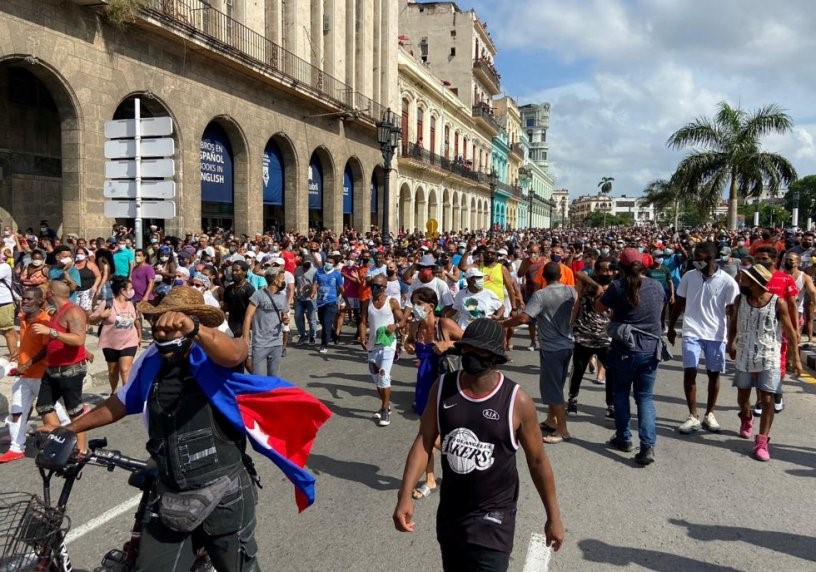
On july 11th thousands of
protesters took to the streets spontaneously in more than 50 Cuban towns and
cities. They had a long litany of grievances: recurring electricity shortages,
empty grocery shops, a failing economy, a repressive government and an
increasingly desperate situation regarding covid-19. In a display of discontent
not seen on the communist island for perhaps six decades, people of all ages chanted
and marched, some of them to the tune of clanging spoons and frying pans. They
shouted “Patria y Vida!” (Fatherland and Life)—a riff on the revolutionary
slogan “Patria o Muerte” (Fatherland or Death), and the name of a rap song
which criticises the government—along with “Libertad!” (Freedom) and “Abajo la
dictadura!” (Down with the dictatorship).
Although protests continue, by the
next day cities were quieter as the police went from house to house, rounding
up the demonstration leaders. Riot police spread out across cities,
plainclothes officers took to the streets and pro-government mobs brandishing
images of Fidel Castro were called in to chant revolutionary slogans and wave
Cuban flags. Miguel Díaz-Canel, the president and first secretary of the Communist Party,
appeared on television to declare: “Cuba belongs to its revolutionaries.” Around
150 people have gone missing, and one protester has been killed. There are
rumours that young men are being forcibly conscripted into the army.
The big question is how much staying
power the protests will have. The coming weeks will show whether the regime’s
stock response of swatting down any signs of dissent will work again. The
government has little leeway to buy social peace. Cuba has been badly hit by
covid-19 and by a precipitous drop in tourism, on which it heavily depends. A
lack of foreign currency with which to buy imports has led to acute food shortages and blackouts. Under
the administration of Donald Trump, the United States tightened sanctions on
Cuba. These have added a little to the island’s longstanding economic troubles.
Cuba’s reluctance to buy foreign
vaccines, born of a mix of autarky and a shortage of cash, means that only 16%
of the population is fully inoculated. Home-grown vaccines are being developed, but
have not yet been fully rolled out; meanwhile, pharmacies are short even of
basics like aspirin. Whereas tourism has resumed in nearby places where
covid-19 has receded, such as Jamaica and the Dominican Republic, Cuba is
suffering from rising infections. Even the official data show the number of new
cases doubling every seven days. In a video posted to Facebook, Lisveilys
Echenique, who lives in the city of Ciego de Ávila, described how her brother
spent 11 days battling covid-19 without treatment because he could get neither
medicine nor a hospital bed. After he died, his corpse remained in her home for
seven hours before an ambulance arrived.
The Cuban economy came close to
collapse in the early 1990s, after the fall of the Soviet Union brought foreign
aid to an abrupt halt. There were public protests then, too, which were quickly
dispersed. But Cubans now have access to the internet and are adept at using it
to mobilise. Videos of police violence and arbitrary arrests have been
circulating rapidly in recent days. At one point in the afternoon of July 11th,
as the protests reached their height, the authorities appeared to block all
internet access. Some social-messaging sites have also been suspended.
But much as the government may wish
to turn the internet off, it cannot afford to: the exorbitant access fees
charged by the state telecoms monopoly are an important source of foreign
exchange. The internet is also a vital conduit for remittances from Cubans
abroad. Mobile data and Wi-Fi charges bring in perhaps $80m a month for the
government, estimates Emilio Morales of Havana Consulting Group in Miami.
“The government has closed itself up
like an oyster,” says José Jasán Nieves Cárdenas, editor of El Toque, a Cuban magazine mostly published online.
“Instead of acknowledging that it has to come out and establish a dialogue with
its people, it has chosen repression.” Tear gas and rubber bullets were used
against crowds, although in some instances security officers were so
outnumbered by protesters that they were forced to retreat. As things
escalated, police cars were overturned and some dollar stores, symbols of the
regime’s economic incompetence, were ransacked.
Mr Díaz-Canel blames Cuba’s troubles
on the embargo imposed by the United States, as the government always does. He
has ignored the complaints of the protesters, dismissing them as mercenaries,
and offered excuses rather than plans for reform. After the president gave a
speech on July 12th more protesters gathered outside the Capitol building in
Havana. Other than stepping down, there is not much Mr Díaz-Canel could do to
make amends to his people, says the owner of a small business. “You can’t cover
the sun with one finger,” she says. Rumours are circulating that even members
of the police are starting to defy their orders, as some think the protesters
have a point.
Alfred Martínez Ramírez, a member of 27n, a group of activists, artists and intellectuals campaigning for greater freedom of expression, joined a protest outside the Ministry of Culture in November. Some 300 people were present, which at the time seemed a huge number. Cubans rarely protest, not least because unauthorised public gatherings are illegal. Seeing thousands of people on the streets of Havana and elsewhere in Cuba gives Mr Martínez Ramírez hope that his group is not alone, and that they may have even helped many others overcome their fear of dissent. “There has been an awakening,” he says.
En días pasados estallaron protestas sociales en diversas localidades de Cuba. Para los dirigentes cubanos y los medios oficiales de prensa que responden al gobierno cubano, se trata de “disturbios, desorden, causados por una operación comunicacional que se prepara desde hace tiempo”, propiciados por “mercenarios al servicio del imperialismo”. Sin embargo, más allá de una retórica que se basa en el no reconocimiento de la realidad política, económica y social que vive el país y en achacar la responsabilidad de las protestas, denominadas desórdenes -aunque los hubo como en todas las protestas-, a agentes al servicio de intereses extranjeros, Cuba enfrenta desde hace muchos años una crisis económica y social de graves proporciones que se ha transformado en una crisis política. Es imprescindible debatir acerca de las causas pero también abrir un debate sobre las alternativas y posibles soluciones, con el objeto de evitar que el país llegue a un callejón sin salida.
Las
razones económicas.
La
situación económica actual de Cuba es la más terrible desde el llamado Período
Especial de los años noventa del pasado siglo. En 2020, el Producto Interior
Bruto (PIB) cayó un 11,3% pero ya en 2019 se había producido una caída del 0,2%
y el crecimiento promedio anual entre 2015 y 2019 fue de solo 1,7%, lo cual es
insuficiente para asegurar una senda de desarrollo económico. El gobierno
cubano ha insistido en responsabilizar al bloqueo estadounidense y a los
efectos de la pandemia con la situación económica del país. El recrudecimiento
de las sanciones económicas durante la administración de Trump y la aparición y
ahora el empeoramiento de la pandemia han tenido efectos nocivos indudables en
la economía cubana, sin embargo, no son los responsables de los graves
problemas estructurales que ésta padece.
A lo
largo de más de seis décadas se han ido acumulando serios problemas que
dependen, principalmente, de los sucesivos errores de política económica
cometidos por la dirección del país, que han conducido a un incremento de la
vulnerabilidad externa de la economía cubana y han dificultado el desarrollo de
la producción nacional, debido a la excesiva centralización de las decisiones
económicas, a la incapacidad para generar suficientes estímulos al desarrollo
productivo y a los frenos que se han impuesto al emprendimiento.
Las
reformas económicas que se han realizado desde los años noventa han sido
parciales e insuficientes, no han abordado los cambios estructurales de forma
sistémica y no han apuntado a la promoción del emprendimiento empresarial. La
mayor parte de las ramas de la industria nacional y varias de las más
importantes producciones agropecuarias en 2019 tenían niveles inferiores a los
de 1989. A partir de la crisis de los noventa el gobierno optó por el
desarrollo del turismo. Fue una decisión parcialmente correcta pero lo que no
debió ocurrir es que ese desarrollo obviara las necesidades del desarrollo
industrial y agrícola del país.
La
excesiva dependencia respecto al turismo es una causa estructural fundamental
en la debacle actual de una economía que prácticamente carece de reservas y de
alternativas productivas, con una industria azucarera que está produciendo a
niveles de principios del siglo XX, con el resto de la industria prácticamente
colapsada y con una agricultura afectada por una estructura de precios y
excesivos controles que desestimulan el desarrollo de la producción de
alimentos y de materias primas.
Con
campañas políticas no se resuelven los problemas de la producción. El país está
importando gran parte de los alimentos que podría producir y carece de las
divisas necesarias para importarlos. Para colmo, se insiste en el control
monopólico estatal del comercio exterior. Sigue sin dar los pasos necesarios
para promover la legalización de pequeñas y medianas empresas privadas que
promuevan el emprendimiento y canalicen el empleo superfluo que es una excesiva
carga al presupuesto del Estado. Persisten en la planificación centralizada en
condiciones de una inmensa escasez y no generan otras alternativas. En los años
noventa el turismo fue una alternativa y a comienzos del siglo XXI, la
exportación de servicios profesionales, principalmente a Venezuela, se
convirtió en otra opción muy importante de ingresos en divisas. Estos junto a
las remesas, aseguraron la subsistencia económica del país.
En la
actualidad, el turismo está en niveles mínimos, las remesas afectadas por las
limitaciones de sus fuentes debido a problemas económicos de los remitentes y
al endurecimiento de las sanciones durante la era de Trump, mientras que los
ingresos por exportaciones de servicios están afectados por su cierre en
ciertos países pero sobre todo por la terrible crisis económica venezolana.
Entonces, el gobierno no ha querido salirse del guión que ha determinado la
política económica, ha actuado con muchísima lentitud y ha adoptado medidas
económicas equivocadas.
Los
errores más recientes de política económica.
A lo
largo de estas décadas se han acumulado una serie de errores de política
económica, pero en las condiciones actuales quisiera concentrarme en dos: 1) la
llamada Tarea Ordenamiento y 2) la apertura de tiendas en monedas libremente
convertibles (MLC) para la venta de productos que originalmente se describían
como “suntuarios” pero que en realidad resultaron de primera necesidad, no solo
para las condiciones de la vida moderna sino incluso para la subsistencia.
El
llamado Ordenamiento monetario no fue tal. Desde hace tiempo muchos economistas
hemos destacado la necesidad de abolir la dualidad monetaria por el desorden en
los sistemas de costos, en el funcionamiento de las empresas y en el
establecimiento de precios relativos respecto a la economía internacional.
Adoptaron la unificación monetaria y cambiaria como un lineamiento del 6º
Congreso del PCC en 2011 y finalmente en 2021 decidieron unificar los tipos de
cambio a una tasa sobrevaluada, a la cual el Banco Central no puede asegurar la
venta de la divisa extranjera, con lo que, inmediatamente, se desarrolló el
mercado negro de divisas en el que el dólar se cotiza a varias veces por encima
del valor oficial.
En lugar
de establecer la soberanía del peso cubano como moneda nacional, crearon
tiendas en MLC, re-dolarizando parcialmente la economía y vendiendo en ese
mercado bienes a los cuales no tiene acceso la población que carece de remesas
o de opciones de ingresos en divisas, generando un grave problema social debido
a la marginación de un sector considerable de la población en la capacidad de
adquirir dichos bienes.
La
unificación cambiaria llegó acompañada de un incremento de salarios en el
sector estatal y de pensiones en niveles claramente inferiores a los
incrementos reales en los precios, producidos por una estampida inflacionaria,
lo cual ha causado gran insatisfacción en una parte considerable de la
ciudadanía que continúa sin asegurar sus necesidades básicas a partir de sus
ingresos debidos al trabajo.
Los
problemas sociales.
La
insatisfacción creada por los errores de política económica y la persistencia
de los mismos a veces ha podido canalizarse por los mecanismos controlados por
el poder pero ni esas ni aquellas que ni siquiera han podido ser planteadas
oficialmente sino que se expresan en redes sociales, han tenido una respuesta
creíble más allá de achacar al bloqueo de todo cuanto no funciona. No se trata
de anexionistas, ni de delincuentes, ni de agentes de alguna potencia
extranjera. Se trata simplemente de ciudadanos cubanos que necesitan satisfacer
aspiraciones en la única vida probada que tienen y que sienten que el gobierno
del país no está siendo capaz de ofrecer las alternativas de solución
necesarias.
La
sociedad cubana de hoy es claramente diferente a la que decidió permanecer en
el país tras el triunfo revolucionario. Existe un porcentaje creciente de
jóvenes, que están a dos o tres generaciones de la que hizo la Revolución y que
tiene esperanzas de vida, intereses, aspiraciones y proyecciones políticas y
sociales propias y muy probablemente diferentes y a las que incluso la
Constitución actual les priva del derecho a definir el tipo de Estado y de
sociedad que prefiere. Y dentro de este grupo, existe una parte considerable de
personas que viven en condiciones de subsistencia y no ve opciones de
mejoramiento de las mismas.
En otras
oportunidades, la emigración, incluso con cierto nivel de masividad, como
ocurrió en los primeros años sesenta, en 1980 y en 1994, ha actuado como
válvula de escape para solucionar las insatisfacciones individuales, pero
también para reducir el factor de oposición social interna. En esta ocasión
esta posibilidad está claramente muy limitada.
La
emigración carece de derechos políticos, pero a ella se ha apelado, una y otra
vez, para que haga valer sus derechos al envío de remesas familiares pero sin
reconocerla socialmente como un factor importante para la solución de los
problemas económicos del país y sin integrarla políticamente en un sistema
democrático. La emigración es un factor decisivo en la solución de muchos de
los problemas económicos del país y también debería ser un importante actor
político a partir de su experiencia en otras realidades.
En la
sociedad cubana existe una parte considerable que carece de opciones y de
perspectivas, que vive en una situación de pobreza que no es reconocida
públicamente por las autoridades cubanas. En consecuencia, gran parte de esa
población salió a las calles como explosión de una situación de hastío. Sin
embargo, hay que tener en cuenta que antes de eso ya se habían producido una
serie de indicios de protesta pacífica en diversos sectores sociales, incluidos
los artistas, reclamando espacios de diálogo que solo han encontrado la
intolerancia y el rechazo como respuesta.
Los
problemas políticos.
Todo este
conjunto de cuestiones ha llevado a una crisis política de la cual estas
protestas públicas han sido solo un primer momento, si consideramos su
capacidad de difusión y su masividad. Sin embargo, existe una parte de la
sociedad cubana inconforme con la situación del país que no se expresa por
miedo a las consecuencias negativas que pueden sufrir debido a una cultura
arraigada de exclusión de las opciones políticas diferentes a las defendidas
desde las estructuras de poder. El gobierno cubano debería considerar esta
realidad política y actuar en consecuencia si realmente quiere evitar que la
fractura social y política en la sociedad cubana se profundice y supere el nivel
de polarización que ya es gravísimo.
En 2019
se adoptó una nueva Constitución que establece en su artículo 1 que “Cuba es un
Estado socialista de derecho y justicia social, democrático, independiente y
soberano, organizado con todos y para el bien de todos como república unitaria
e indivisible, fundada en el trabajo, la dignidad, el humanismo y la ética de
sus ciudadanos para el disfrute de la libertad, la equidad, la igualdad, la
solidaridad, el bienestar y la prosperidad individual y colectiva”. Sin
embargo, existen ejemplos que demuestran que muchos de esos preceptos no
reflejan la realidad política del país.
El
artículo 5 de la carta magna le otorga al Partido Comunista de Cuba, la
condición de “fuerza política superior de la sociedad y del Estado”, lo cual,
en la práctica, coloca al Partido por encima de la sociedad. Esta realidad no
tiene nada de democrática, toda vez que tampoco el Partido Comunista es una
organización democrática en su vida interna.
En esa
misma Constitución se garantizan el derecho a la vida, la integridad física y
moral, la libertad, la justicia y la seguridad …. (artículo 46); el derecho a
que se respete su intimidad personal y familiar … (artículo 48); a la
inviolabilidad de su domicilio (artículo 49); a la inviolabilidad de la correspondencia
y demás formas de comunicación (artículo 50); las personas no puede ser
sometidas a desaparición forzada, torturas ni tratos o penas crueles inhumanas
o degradantes (artículo 51); el Estado reconoce, respeta y garantiza a las
personas la libertad de pensamiento, conciencia y expresión (artículo 54); se
reconoce la libertad de prensa (artículo 55); los derechos de reunión,
manifestación y asociación, con fines lícitos y pacíficos, se reconocen por el
Estado siempre que se ejerzan con respeto al orden público y el acatamiento a
las preceptivas establecidas en la ley (artículo 56); se reconocen a las
personas los derechos derivados de la creación intelectual (artículo 62); los
ciudadanos cubanos tienen derecho a participar en la conformación, ejercicio y
control del poder del Estado, lo cual implica: estar inscriptos en el registro
electoral, proponer y nominar candidatos, elegir y ser elegidos, participar en
las elecciones, plebiscitos, referendos, consultas populares y otras formas de
participación democrática, pronunciarse sobre la rendición de cuenta que le
presentan los elegidos, ejercer la iniciativa legislativa y de reforma de la
Constitución, desempeñar cargos públicos y estar informados de la gestión de
los órganos y autoridades del Estado (artículo 80).
La mayor
parte de estos artículos, relacionados con derechos humanos y políticos está
sin reglamentar, pero al margen de esto, la propia Constitución contradice
algunos de esos derechos. Por ejemplo, la libertad de elegir y ser elegidos,
mediante el voto de los ciudadanos es restringida por el inciso “c” del
artículo 205 que establece como excepción a “los que no cumplan el requisito de
residencia en el país previstos en la ley”. Es decir, a los cubanos residentes
en el exterior, que constituyen más de un 20% de la población actual del país y
cuyas remesas han contribuido a la subsistencia del país, se les niega ese
derecho elemental que está consagrado en la mayor parte de las constituciones
de las repúblicas latinoamericanas. De igual forma, la iniciativa legislativa y
la reforma de la Constitución, contenidas también en el artículo 80 son
restringidas por el artículo 227 que trata sobre la iniciativa para promover
reformas a la Constitución, porque la iniciativa de los ciudadanos debe ser “mediante
petición dirigida a la Asamblea Nacional, firmada por un mínimo de 50.000
electores”, además de que la Constitución solo puede ser reformada por la
Asamblea Nacional en una “votación nominal no menor a dos terceras partes del
número total de sus integrantes”, es decir, que no permite que la Constitución
sea reformada o elaborada por una Asamblea Constituyente, elegida libremente
por la ciudadanía, tal y como ocurrió en 1940. Si la Asamblea Nacional es
elegida con base a una lista única que responde a las orientaciones del Partido
Comunista, es fácil intuir que sería imposible contar con ella para reformar
una constitución hecha a la medida de los intereses de la dirigencia de dicho
partido, que no necesariamente se corresponde con los intereses reales de parte
de su membresía.
A
diferencia de la mayor parte de los países latinoamericanos, los ciudadanos
cubanos carecen del derecho a elegir, mediante sufragio universal y directo,
entre varias alternativas, al Presidente y Vicepresidente de la República, a
los diputados a la Asamblea Nacional, y a las autoridades de gobierno
provinciales y municipales.
Las leyes
cubanas posteriores a 1959 no han permitido el derecho a la huelga, ni a la
formación de asociaciones sociales, profesionales o políticas que estén por
fuera del control del poder político, con lo cual se conculcan los derechos
proclamados en los artículos 54 y 56 de la Constitución.
Así, en
las cuestiones relativas a los derechos políticos, la Constitución de 2019, al igual
que la de 1976, retroceden respecto a la de 1940 que, dicho sea de paso, fue el
resultado de una Asamblea Constituyente, elegida democráticamente, en la que
también participaron delegados comunistas junto a otros del amplio espectro de
fuerzas políticas que caracterizaba a la sociedad cubana de entonces.
La
Constitución de 2019 fue aprobada en referendo nacional por una mayoría
significativa de la población, pero en su proceso de discusión y debate, solo
tuvo cabida la pedagogía del SI y en dicho referendo no se permitió votar a la
población cubana residente en el exterior que aun ostenta un pasaporte cubano.
Hasta en el régimen pinochetista en Chile se permitió la pedagogía del NO.
En los
tiempos recientes han ocurrido varios episodios en los que autoridades cubanas
han violado la Constitución aprobada por esa inmensa mayoría alcanzada entre
aquellos que tuvieron la oportunidad de ejercer su derecho al voto. Se han
producido detenciones de ciudadanos por el simple hecho de caminar por una
calle portando un cartel que exige la libertad para alguna persona detenida;
han sido detenidas personas por expresar su inconformidad y rechazo al sistema
político; fuerzas de la policía han obligado, de forma ilegal, a ciudadanos que
no están condenados judicialmente, a permanecer en sus casas en contra de su
voluntad y cuando éstos se han negado alegando su derecho a la libre movilidad,
han sido detenidos; no se han atendido solicitudes de hábeas corpus, a pesar de
que esta figura jurídica está presente en la nueva Constitución y es un derecho
universalmente reconocido en las sociedades civilizadas; se mantiene la
práctica de expulsar de ciertos centros de trabajo a personas que expresan
opiniones contrarias a las que se sostienen desde el poder político, incluso cuando
en algunos casos esas opiniones ni siquiera han cuestionado la esencia del
sistema político y social; se ha promovido y en otros casos, permitido
situaciones de hostigamiento a personas identificadas como desafectas al
gobierno del país; para solo mencionar algunos ejemplos de violaciones de la
ley suprema de la República, generadas desde las estructuras de poder, que
deberían ser sus garantes ante la sociedad.
Desde las
estructuras de poder se ha dicho que las manifestaciones del 11-J han sido
orquestadas desde el exterior. Es cierto y además público que algunos llamados
“influencer” de ciertas redes sociales ha realizado llamados a la desobediencia
civil y a la insurrección. Sin embargo, si fuera cierto que estas protestas
fueron el resultado de estos llamados y de la labor de zapa del gobierno de los
Estados Unidos, esto podría significar que el Partido Comunista carece del
liderazgo y la influencia que en Cuba que se establece como precepto
constitucional. Argumentar que las protestas fueron orquestadas desde el
exterior es un insulto a la ciudadanía y a su derecho a expresar un descontento
que antes no ha encontrado otras vías de canalización, debido a la soberbia, al
autismo y al escaso espíritu autocrítico de muchos de los que ejercen
responsabilidades de dirección en el país y que mantienen un discurso alejado
de la realidad del país.
Las
protestas sociales, a diferencia de lo que se sostiene desde el discurso
oficial, fueron el resultado de la combinación de todos esos factores a los que
se suma el hastío de muchos ciudadanos que no encuentran una salida
esperanzadora a una situación de crisis que persiste en la sociedad cubana
desde hace varias décadas pero que en las circunstancias actuales ha cobrado
una gravedad extraordinaria.
En las protestas hubo saqueos y destrucción de propiedad pública y privada, que no fueron masivos. ¿En cuáles protestas no ocurren? Es lamentable y condenable. Sin embargo, vale la pena llamar la atención sobre cuales han sido los objetos de estos actos deplorables. En unos casos, fueron algunas tiendas en MLC, que son un símbolo evidente de la diferenciación social establecida en Cuba entre los que tienen acceso a ellas y los que no, por el solo hecho de no disponer de cuentas en una moneda que no se obtiene como resultado del trabajo sino que proviene de remesas desde el exterior. Se produjo el volcamiento y destrucción de algunos automóviles de la policía y de instituciones oficiales. También se produjeron enfrentamientos entre fuerzas antimotines y de policía, tanto uniformados como vestidos de civil y los ciudadanos que protestaban. Las imágenes de supuestos civiles, perfectamente organizados, transportados en vehículos públicos y armados de palos y bates de béisbol para golpear a quienes protestaban son una muestra del insulto que ese día se profirió contra el ideario de la Revolución Cubana. Y la orden fue proferida desde el más alto nivel de dirección del país. No es la primera vez que esto ocurre, sin embargo, si es la ocasión en la que alcanzó las mayores proporciones.
Las
opciones.
A pesar
de la profundidad de la fractura social y política del 11-J y del nivel de
polarización que ha alcanzado la sociedad cubana, para bien del país, la
política debería imponerse a la golpiza.
Me opongo
a los llamados a una intervención militar extranjera que solo causaría sangre y
dolor a las familias cubanas y también en las de quienes, eventualmente,
pudieran intervenir. Y me opongo a la represión militar, policial y paramilitar
ejercida por quienes tienen el deber de proteger la seguridad del pueblo y no
mancillarlo. La vida y la dignidad deben ser preservadas.
Siento un
profundo compromiso con la idea original que inspiró la Revolución Cubana, es
decir, la democracia y la justicia social. La democracia nos ha sido confiscada
y la justicia social se despedaza en cada medida que crea excluidos en nuestra
Nación.
Una
opción que parece imponerse en el discurso oficial es la de reprimir a quienes
han sido identificados como participantes de las protestas y hacer caer sobre
ellos el peso de cuestionables figuras jurídicas, y de paso, amedrentar a
quienes pudieran protagonizar eventos similares en el futuro con medidas
ejemplarizantes. Esta opción solo profundizará la fractura de la sociedad y
solo postergaría una futura crisis política y social que podría tener
gravísimas consecuencias.
Otra
opción, que considero necesaria, sería liberar a todas las personas que han
sido detenidas por las protestas y antes de las mismas, por expresar su
desacuerdo con el gobierno o con el sistema político actualmente vigente. A fin
de cuentas, ellos no realizaron un asalto armado a un cuartel del ejército. No
hay que reprimir al descontento sino crear las condiciones para que el
descontento pueda ser convertido en satisfacción y esperanza o que al menos ese
descontento tenga vías legítimas de expresión, y ello pasa necesariamente por
una reconfiguración pacífica de nuestro sistema político.
La
Constitución actual no satisface las aspiraciones democráticas de todo el
pueblo, precisamente porque excluye a una parte del mismo en el derecho a
ejercer su soberanía por lo cual debe ser enmendada, aunque en mi opinión
debería ser elaborada una nueva que garantice el establecimiento de un sistema
democrático. Para esta enmienda, el elemento inicial debería ser la reforma de
los artículos 205, 226 y 227.
En el 205
debería eliminarse la excepción en el derecho al voto de los ciudadanos cubanos
residentes fuera del país. En el 226 debería permitirse que la Constitución sea
reformada por una Asamblea Constituyente, elegida libremente por la ciudadanía,
mediante sufragio universal, además de la actual facultad de la Asamblea
Nacional. En el 227 debería modificarse el inciso f que le otorga iniciativa a
la ciudadanía para la reforma constitucional solo como petición a la Asamblea
Nacional, mediante la recolección de 50.000 firmas, y permitir que estas firmas
puedan ser válidas para la convocatoria de una Asamblea Constituyente.
En tales
circunstancias y para hacer valer el carácter democrático del Estado que define
el artículo 1 de la Constitución, debería convocarse a una consulta nacional
vinculante, en la que puedan participar todos los ciudadanos cubanos sin
distinción de lugar de residencia e identificados con un pasaporte cubano
válido vigente y en la que los electores puedan escoger una de dos alternativas
que podrían ser: a) Desea Usted que la Constitución vigente se mantenga como
está y que su posible reforma posterior solo sea una facultad de la Asamblea
Nacional del Poder Popular; y b) Desea Usted que se convoque a una Asamblea
Constituyente, elegida mediante sufragio universal directo y secreto con
candidatos nominados o auto-nominados libremente, que elabore una nueva
Constitución.
Lo
verdaderamente revolucionario, lo verdaderamente progresista, no solo es la
urgente necesidad de liberar las fuerzas productivas y el emprendimiento
productivo que pueda iniciar la recuperación de la economía y encauzar el
proceso de desarrollo, sino también resulta urgente la construcción de un nuevo
consenso político, sobre la base del establecimiento de una sociedad
verdaderamente democrática en la que tengan cabida las diferencias políticas y
el imperio de la ley y de la justicia social.
mauriciodemiranda
La
Habana, 1 de abril de 1958. Doctor en Economía Internacional y Desarrollo,
Universidad Complutense de Madrid, España. Licenciado en Economía, Universidad
de La Habana, Cuba. Profesor Titular del Departamento de Economía de la
Pontificia Universidad Javeriana, Cali, Colombia. Ver
todas las entradas de mauriciodemiranda
I have just read Vegard Bye’s Cuba analysis – a bit
late as it was published in mid-2020. It
is indeed an excellent analysis of Cuba’s current situation and prospects.
This is one of the very best general analyses of the inter-relationships
between Cuba’s economic conundrums and reforms, its socio-economic transformationsand the character and functioning of the political system. Bye has drawn from his own experience in Cuba
over a number of decades and from a careful and examination of the broad ranges
of literature from within Cuba, from Cuban analysts outside Cuba, and from
Cuban-American and international analysts. His chapters on the economic changes
since the death of Fidel and their social implications is masterful. Even better is his analysis of Cuba’s
political system in Chapters 4, and 6 to 8.
This volume is a tremendously valuable resource for
a comprehension of Cuba’s current situation and its possible future.
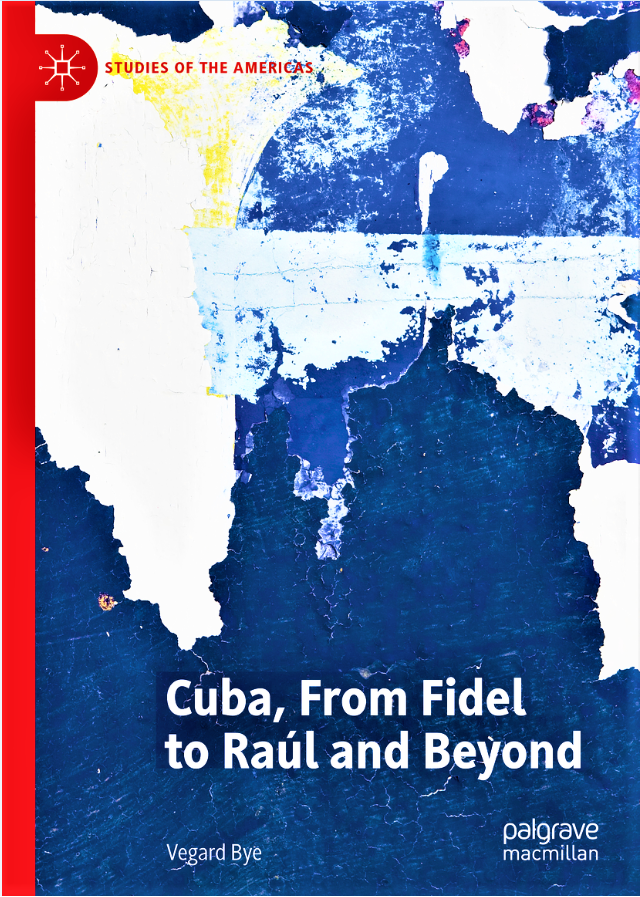
INFORMATION ON THE BOOK:
Title: Cuba,
From Fidel To Raul And Beyond
Format: Paperback
Published: August 14, 2020
Publisher: Palgrave Macmillan
Language: English
ISBN – 13:9783030218089
OVERVIEW FROM THE BACK COVER:
This book analyzes the economic
reforms and political adjustments that took place in Cuba during the era of
Raúl Castro’s leadership and its immediate aftermath, the first year of his
successor, Miguel Díaz-Canel. Faced with economic challenges and a political
crisis of legitimacy now that the Castro brothers are no longer in power, the
Cuban Revolution finds itself at another critical juncture, confronted with the
loss of Latin American allies and a more hostile and implacable US
administration.
TABLE OF CONTENTS
Introduction
Retreat of State as Economic
Actor?
Achieving the Required Surge in
Investment and Growth?
Political Implications of
Socio-economic Changes
T he Evolving International
Arena: Fitting into a New Context
More Pluralism or Continued
Authoritarianism/
Evolution of Party and State
Relations
Towards the End of Gerontocracy
Into the Critical Juncture:
Principal Dilemmas and Possible Scenarios
EDITORIAL REVIEWS
“The text that Vegard Bye
presents to us summarizes the ideas and visions that he has been developing
after years of observing closely the evolution of the Cuban social, political
and economic model, especially during the reforms process led by Raul Castro
since 2008. His proposals and analysis have the virtue of not falling into
common places and stereotypes so usual in the Cuba subject. He found
originality from his firsthand knowledge of the Cuban reality, seen from an
international perspective and from the prism of modern concepts of political
science.” (Pavel Vidal Alejandro, Professor of Economics at Pontificia
Universidad Javeriana, Colombia)
“This is
a timely book and a well-informed contribution to the ever-going debate about
Cuba’s future. The author has accumulated decades of experience in assessing
and living in the Cuban reality, and the book offers just that, a scholarly as
much as a personal view of the events in the Island. Whether you share or not
his opinions, this piece will greatly contribute to your knowledge about this
fascinating country, in a way that is both enjoyable and useful.” (Ricardo
Torres, Professor at the Center for the Study of the Cuban Economy, University
of Havana, Cuba)
“Displaying
an expertise gained through several decades of closely watching developments on
the island, Bye delivered a very perceptive and informed analysis of the
economic and political changes in the post-Fidel era, the outcomes of Raúl
Castro’s reform and the political scenarios for the future. A most-needed
assessment of Cuba’s contemporary realities from a political science
perspective.” (Nora Gamez Torres, Cuban-American journalist covering Cuba
and US-Cuban relations for Miami Herald and El Nuevo Herald)
“A timely
and thankfully heterodox volume that gives readers a front row seat and fresh
and locally informed analysis of contemporary Cuban political economy. The
book provides both a sober assessment of Raúl Castro’s 10 years of economic
reforms (2008-2018) and an early analysis of the first year of Miguel
Díaz-Canel’s―Raúl’s hand-picked successor―government. Its unique
perspective derives equally from the author’s immersion in progressive projects
of national renovation in Cuba and Nicaragua as a war correspondent, United
Nations official, and representative of various Norwegian development
agencies. Bye’s ongoing collaboration with various leading Cuban NGOs and
civil society groups gives his book an insider’s insight and balance rare for a
volume by a non-Cuban about such a controversial topic as Cuban politics.” (Ted
A. Henken, Associate Professor of Sociology at Baruch College, City
University of New York, USA)
“A study on Cuba focused on its most pressing issues. A must-read for any researcher―carefully researched and accessible to anyone interested in the past, present and future of the Cuban Revolution.” (Harold Cárdenas, co-founder of the Cuban blog La Jóven Cuba)
VEGARD BYE is
a Norwegian political scientist, writer, consultant and ex-politician. He has
represented the UN High Commissioner for Human
Rights in Angola and Bolivia, written extensively on Latin America, and is
a consultant specializing on human rights, democracy, conflict and
post-conflict societies as well as solar energy. He served as a Substitute
Representative (Vararepresentant) to the Norwegian Parliament
for the Socialist Left Party from Oslo
(1993-1997), meeting in the Standing Committee on Foreign
Affairs. He is currently
a Partner at Scanteam a.s., an Oslo-based consulting company focusing on international
development and responsible business.
El autor, aborda la
despolitización de la sociedad en Cuba a través de la consigna de la
Revolución, a su vez, reafirma la necesidad de la crítica y de la discusión
política, así como del conocimiento del sistema político.
Cuba es un país desbordado de
política, y a la vez extrañamente apolítico.
A pesar de toda la inflación de los
símbolos políticos, no hay espacio para discusiones políticas genuinas, debates
verdaderos, y análisis a fondo del proceso político. Escasean fuentes
confiables de información y evaluación de las políticas públicas en la isla. La
política está en todas partes, pero como tótem (¡La Revolución!) y tabúes, no
como un proceso deliberativo en el sentido de Aristóteles o Hannah Arendt.
A pesar de la aparente fertilidad de
las ciencias sociales en Cuba, medida por el número de revistas académicas y
institutos de investigación, lo que encontramos todavía en Cuba son ciencias
sociales y humanidades desangradas, que sí hablan de problemas en la isla, pero
nunca de poder. Eso solo lo puede hacer a fondo en el exilio y por cubanólogos
de afuera, pero casi siempre con datos insuficientes. Por eso los estudios
cubanos se basan demasiado sobre repertorios discursivos, dada los escasos
datos cuantificable y la falta de transparencia institucional en la isla.
Incluso las estadísticas económicas son, a menudo, poco confiables.
Dentro de la
Revolución, No Política
En la conocidísima novela 1984 de
Orwell, desbloqueada en la isla a partir la Feria del Libro de 2016, la
Newspeak, o neolengua, “was designed not to extend but to diminish the range of
thought, and this purpose was indirectly assisted by cutting the choice of
words down to a minimum.”[2] De la misma manera,
el gobierno cubano se ha esforzado para despolitizar la sociedad, “achicando”
el lenguaje utilizado para hablar de política en el país, reduciéndolo a
consignas (o mots d’ordre en el sentido de Bourdieu). La consigna mayor es la
misma “Revolución”: origen y fin (mito) de la política; fuerza infinita,
omnisciente y omnipresente; actor y proceso; persona, en el sentido de máscara
(Grenier, 2020). ¿Quien es responsable de tal o cual decisión? En fin, la
Revolución, es decir todo y nada.
Una temprana víctima del achicamiento
del lenguaje fueron las ciencias sociales, en particular la ciencia política,
eliminada como disciplina académica a principio de los años sesenta bajo la
consigna: “La universidad para los revolucionarios” La sociología también fue
abolida de 1980 a 1991. Un marxismo leninista de corte soviético (e.g.
Konstantinov, Yajot, Makarov) pronto se convirtió en pensée unique en la isla.
Con “las ideas de emancipación social de Marx, Engels y Lenin” (Constitución de
la República), no hace falta ciencia política—disciplina burguesa por definición,
ya que supone una autonomía de la esfera política, y que a la pregunta “quién
obtiene qué, cuándo y cómo”, para citar la famosa definición de la política del
politólogo Harold Lasswell, la respuesta no puede ser solamente la burguesía o
el proletariado.
El economista y cubanólogo canadiense
Arch Ritter destaca algunas de las implicaciones de esta situación. Para él,
“una de las consecuencias de la ausencia de la disciplina de ciencia política
en Cuba es que solo tenemos una vaga idea de cómo funciona realmente el
gobierno cubano. ¿Quién en el Politbureau y el Comité Central del partido
realmente toma decisiones? ¿Hasta qué punto y cómo las presiones de las
organizaciones de masas afectan realmente a la toma de decisiones, o el flujo
de influencia siempre es de arriba a abajo y no el inverso? ¿Qué papel
desempeñan las grandes empresas conglomeradas que se encuentran en la economía
del dólar internacionalizada y la economía del peso en el proceso de
formulación de políticas? ¿La Asamblea Nacional es simplemente una concha vacía
que, por unanimidad, aprueba cantidades prodigiosas de legislación en períodos
de tiempo extremadamente cortos?” (Ritter, 2013). Enseguida pregunta
retóricamente: “¿Por qué este análisis político está esencialmente prohibido en
las universidades cubanas? Puedes adivinar la respuesta” (Ritter, 2013). Bueno,
sí, podemos: tiene que ver con los tabúes acerca de “quién obtiene qué, cuándo
y cómo”.[3] Como lo afirmó Masha Gessen con respecto
a la sociología en la Rusia de Pútin: “An ideal totalitarian regime would find
a way to obtain sociological data without the sociologists” (Gessen, 2016). No
existe un régimen totalitario ideal, así que el plan B es tener científicos
sociales, pero controlados.
Fingir el
Pensamiento Crítico
Los estudiosos de las ciencias
sociales e intelectuales en Cuba deben rechazar el dogmatismo y celebrar la
crítica y los debates, como invariablemente lo hace el mismo liderazgo político[4].
Sin embargo, es sabido que de ninguna manera se puede cuestionar los dogmas
oficiales sobre la infalibilidad del liderazgo histórico o la identificación de
la dirección con la Revolución, así como la irrevocabilidad del sistema
político comunista de partido único. En otras palabras, hay que fingir el
pensamiento crítico.
Ha sido aconsejable para los
científicos sociales partir de un repertorio marxista leninista, como
fundamento metodológico e ideológico de todas investigaciones, o al menos no
confrontarlo con una perspectiva alternativa. Se ha podido explorar teorías
no-marxistas (el posmodernismo fue popular durante los años 90), pero con
cuidado, sin cuestionar el paradigma único. También se acogen con beneplácito
las blandas descripciones de las estructuras jurídicas y los debates pseudo
técnicos sobre las políticas públicas en revistas de ciencias sociales como
Temas.
Previsiblemente, los “debates” en Cuba
cuentan con oradores ultra-cautelosos que en su mayoría están públicamente de
acuerdo unos con otros, siendo toda la energía redirigida hacia las polémicas
contra los enemigos oficialmente sancionados y los flagelos intemporales del
gobierno: dogmatismo, burocratismo, corrupción, descontento juvenil, residuos
pre-revolucionarios del sexismo y el racismo, y por supuesto, el imperialismo
norteamericano, el “bloqueo” y el orden mundial capitalista. Todos se animan
para “mejorar el socialismo” y la revolución. El liderazgo político
rutinariamente desafía a los “intelectuales públicos” y periodistas a atreverse
más, no menos: signo infalible de la presencia de la censura sistemática.
En cualquiera de los “debates” de
“Último Jueves”, por ejemplo, las soluciones a los problemas convergen hacia el
ideal oficialista: más participación, más compromiso con La Revolución, y a
mejorar un sistema político en construcción perpetua. Es significante que
cuando unos se atreven a abordar el tema de “cómo funciona el sistema político
en Cuba,” como fue excepcionalmente el caso de un “debate” de Último Jueves en
febrero de 2016, no hubo ninguna discusión sobre “cómo funciona”, solamente
comentarios generales sobre posibles mejoras, las cuales invariablemente pasan
por una reafirmación de las aspiraciones oficiales. Cuanto menos se habla de
poder, más se habla de ideales políticos universales (justicia, participación,
igualdad).
Pensée unique
El marxismo de corte leninista permite
una politización de la “ciencia” y conlleva un aura científica a la política
(el “materialismo científico”). Ha sido una ideología conveniente para el
gobierno cubano y para otros gobiernos comunistas por dos razones, ambos
relevante para entender el marasmo de las ciencias sociales cubanas.
En primer lugar, abrazar y estudiar
sus textos canónicos adormece la curiosidad sobre los procesos de toma de
decisiones reales bajo un tipo de régimen que fue solo un sueño durante la vida
de Marx: el comunismo. Marx escribió ampliamente y a veces con perspicacia
sobre las fallas estructurales de las sociedades capitalistas (y
pre-capitalistas). Pero aparte de sus nebulosas referencias a la Comuna de
París y las glosas sobre las estrategias revolucionarias en su “Crítica del
Programa de Gotha”, el análisis de Marx del comunismo es más teleológico que
político. En la Cuba de hoy, el marxismo leninista es un repertorio de códigos
ideológicos y un arma que permite criticar los enemigos del gobierno.
En segundo lugar, el marxismo (no
tanto su versión leninista) puede usarse como una teoría o un paradigma en
ciencias sociales, como ocurre en todo el mundo–hoy en día en las humanidades
y estudios culturales más que en ciencias sociales y para nada en economía.
Pero en sociedades abiertas, el marxismo compite con otras teorías e
interpretaciones, lo que le da una vitalidad inexistente en países donde es una
pensée unique como en Cuba. No es sorprendente que el marxismo no sea muy
sofisticado en Cuba: la ausencia de crítica genuina, la cual pasa por la
confrontación con otras perspectivas, es una sentencia de muerte para cualquier
perspectiva científica o filosófica.
Un tropo común utilizado por los
porteros de las ciencias sociales oficiales es que el marxismo cubano es
crítico y humanista, al revés del marxismo soviético “rígido” y “mecánico”,
defendido (y definido) por nadie. Se puede criticar el “estalinismo”, entendido
como desviación del modelo leninista original (oficializado en la misma
constitución cubana), pero no la Constitución de Stalin de 1936, la cual es el
modelo por la constitución cubana de 1976. En Cuba, el rechazo del “marxismo
mecánico” es mecánico. Tiene que ver con posicionamiento político y
burocrático, no con la práctica de la crítica, sin la cual ningunas ciencias
sociales pueden florecer.
Hay buenos cientistas sociales en
Cuba, por la misma razón que hubo buenas pinturas erótica en la época medieval:
porqué el talento y la imaginación siempre pueden manifestarse a pesar de los
parámetros más estrechos.
MSI, 27N, y
Articulación Plebeya
El espacio público se abrió
inesperadamente con la irrupción del Movimiento San Isidro en septiembre de
2018 y la manifestación frente al ministerio de cultura el 27 de noviembre de
2020 (27N). Se trata de un movimiento de jóvenes artistas y periodistas independientes,
con demandas bastante parecidas a la Glasnost (más espacio de expresión), pero
con relámpagos de críticas metapolíticas que amenazan el régimen. Recordamos
que el mundo del arte goza de una autonomía relativa y condicional impensable
en la universidad. El arte de vanguardia, por definición disonante y elitista,
es también una fuente importante de proyección internacional y de divisas por
las arcas del estado (el embargo no se aplica a la venta de producción
artística).
No hubo, que yo sepa, apoyo
significativo de la universidad al movimiento, salvo una larga petición, con
más de quinientos nombres de “intelectuales cubanos,” titulada “Articulación
Plebeya”.[5] Si no me equivoco, la grande mayoría de
los firmantes viven en el extranjero, y el texto de la petición se limita a
celebrar el bien común, la paz, el medio ambiente, el diálogo, la inclusión, y
mucho más parecido, todo “dentro del marco de las leyes y la Constitución.”
Aunque llama la atención el pasaje sobre el rechazo a “toda acción estatal
violenta,” el tono más conciliador que el del MSI o 27N indica claramente la
presencia de parámetro más estrechos en la academia que los que rigen el
mundillo de las artes y de lo que podemos llamar la sociedad civil cubana.
Conclusión
Un país no puede sobrevivir sin
historiadores, matemáticos, economistas, biólogos, etc. Aparentemente sí se
puede subsistir sin genuinas ciencias políticas … pero ¿a qué precio? Y las
ciencias sociales en general, ¿que pueden cumplir si el máximo de crítica
posible es la revista “Temas”? ¿Y si Cuba Posible ya no es posible?
Para funcionar bien y utilizar
plenamente su capital humano, un sistema político necesita transparencia, información,
examen crítico de las políticas públicas, sin miedo a la verdad. En Cuba se
necesita mejores datos sobre cómo funciona realmente su sistema político, y
análisis a fondo de los problemas y de sus posibles causas políticas,
levantando el velo del secreto que cubre la mayoría de las transacciones
políticas. ¿Es esto posible “dentro de la Revolución”?
Referencias
Grenier, Y. (2020). Cuban Studies and
The Siren Song of La Revolución. Cuban Studies.
[2]. “Achicar” el lenguaje también es una
característica de la distópia totalitaria en la obra maestra de Boualem Sansal,
2084, La fin du monde (Paris: Gallimard, 2015).
[3]. Asimismo, Armando Chaguaceda afirma
que “la ausencia de estudios a fondo y la falta de acceso público a temas clave
como la composición de la élite política cubana y su circulación real y
mecanismos de toma de decisiones mantienen casi toda la producción en el campo
en un nivel superficial.” Armando Chaguaceda, “House of Cards and Political
Science in Cuba,” Havana Times, 21 March 2014,
[4] Ver el último capítulo de mi libro:
Yvon Grenier, Culture and the Cuban State, Participation, Recognition, and
Dissonance under Cmmunism (Lexington Books, 2017): chapter 6: “Faking
Criticism.”
[5] “Articulación plebeya: a propósito de los
sucesos en el Ministerio de Cultura,” El Toque, 28 de noviembre, 2020.
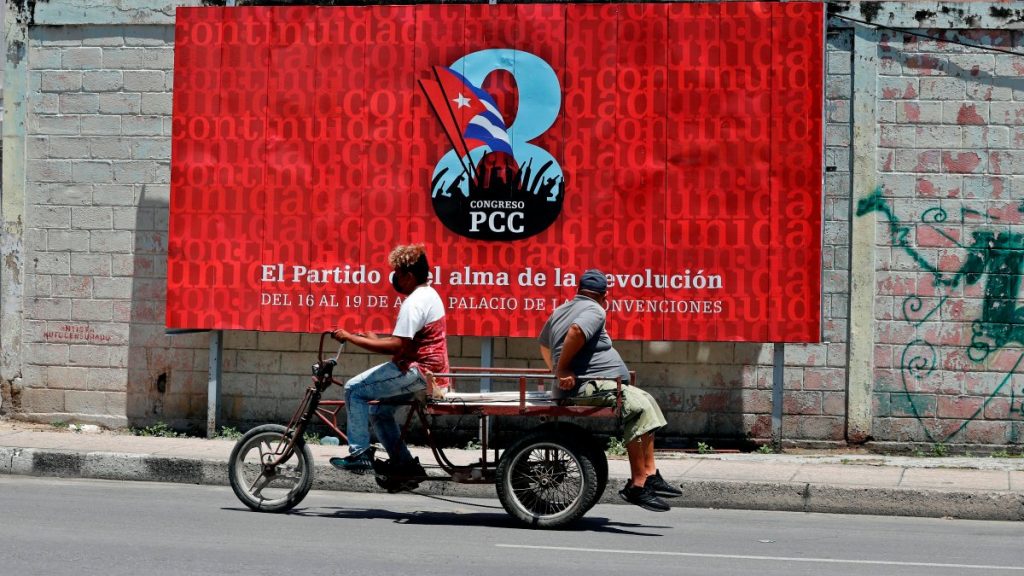
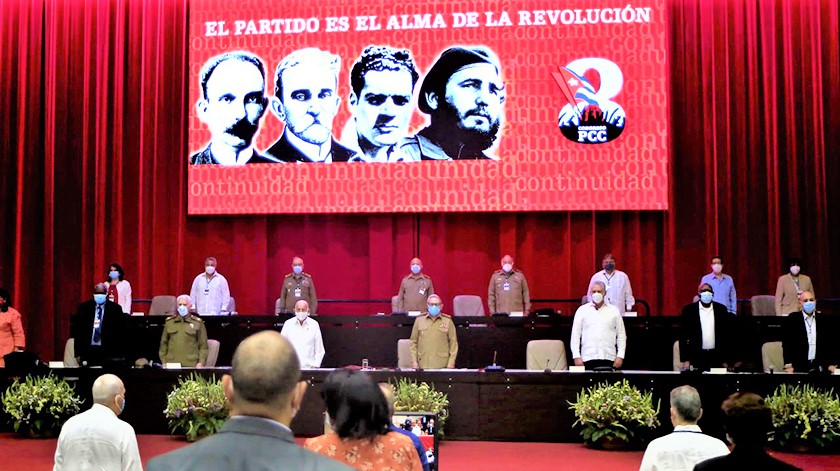
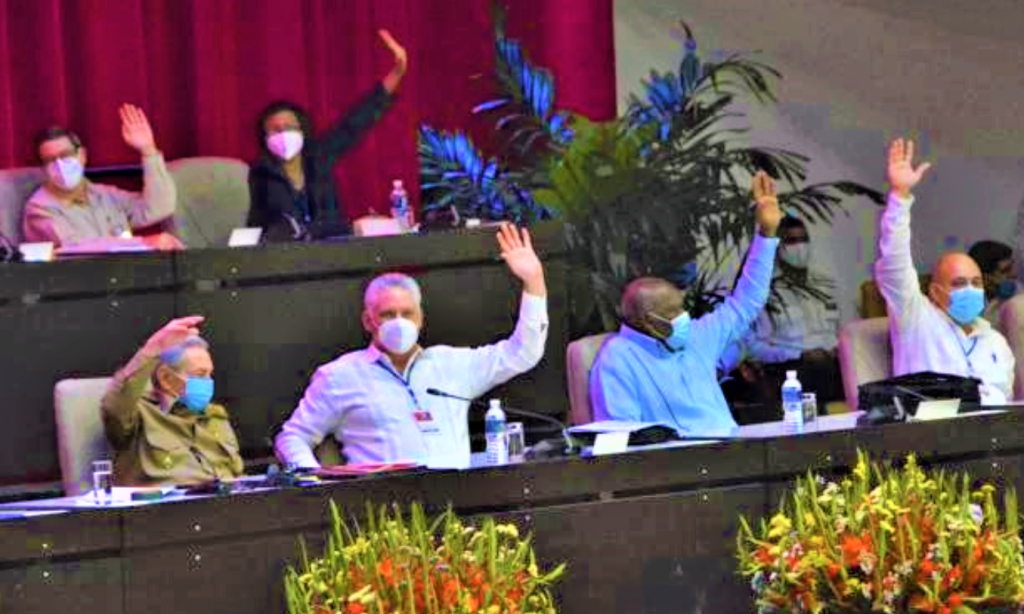
Continuidad política y reformas económicas de calado, y más lo segundo que lo primero, he ahí donde se juega el futuro de la Cuba tras el VIII Congreso del Partido Comunista, que tuvo lugar el pasado fin de semana en La Habana. El encuentro unificó todo el poder político en el presidente cubano, Miguel Díaz-Canel, y en una nueva generación de líderes nacidos después del triunfo revolucionario. Su principal desafío será realizar una apertura económica e introducir transformaciones profundas, que necesariamente deben ampliar el marco del mercado y de la iniciativa privada, avanzando hacia un modelo mixto, para tratar de hacer sostenible el sistema heredado, sin negar su espíritu..
Es la primera vez que se alinean el Gobierno y las estructuras de la
cúpula del partido, hasta ahora encabezado por la vieja guardia, en la figura
de un civil que no luchó en la Sierra
Maestra, Diaz-Canel, que ya ejercía la presidencia desde 2018. Hasta
este jueves el Partido Comunista de Cuba (PCC) rendía cuentas a Raúl Castro y a
los históricos, que ahora abandonan todos los cargos.
Sabido es que el modelo de partido único no va a cambiar, pero
mantenerse en el inmovilismo y en las reformas rácanas sería el mejor modo de
que la economía se vaya a pique, lo que equivale a decir todo el sistema, dado
que la crisis y la situación por la que atraviesa la isla es de extrema
gravedad. Los
problemas estructurales acumulados y la ineficiencia de la empresa estatal,
agravados por la epidemia y el recrudecimiento del embargo norteamericano, no
se resuelven con parches, se admite en las altas instancias, y también que las
reformas introducidas hasta ahora claramente han sido insuficientes para
garantizar un mejor nivel de vida a los cubanos, principal reto de los nuevos
dirigentes, que no cuentan con la legitimidad “histórica” sino que la
valoración que se haga de ellos dependerán de lo que logren.
“El PCC necesita ampliar las zonas de legitimidad de su mandato con un desempeño económico que lo justifique o se le va a complicar la gobernabilidad”, opina el académico cubanoamericano Arturo López-Levy, señalando que “a mediano plazo, la economía es el primer renglón para medir sus capacidades”. Hay bastante consenso en este punto, y también en otro asunto que menciona López-Levy: “Se necesita orientar prioridades y recursos hacia la seguridad alimentaria, pues sin comida no hay país, por muchos hoteles que se construyan o reparen. Díaz-Canel ha enfatizado el discurso de la continuidad para asegurar la confiabilidad de los que lo han elegido, pero para resolver las demandas y quejas de una Cuba globalizada y signada por una crisis estructural, va a tener que prometer y hacer grandes cambios, tanto sustantivos como en la forma de gobernar”.
¿Qué lectura puede hacerse del VIII Congreso? ¿Defraudó las expectativas
de los que esperaban una apuesta decidida por la apertura? ¿O era lo que podía
esperarse de un cónclave cargado de simbolismo en el que lo que se escenificaba
era la despedida de Raúl y la generación histórica? Hay diversas opiniones. En
su informe central, Raúl Castro criticó el “egoísmo” de los que demandan el
ejercicio privado de algunas profesiones y reclaman la importación comercial
privada para establecer un sistema no estatal de comercio, advirtiendo que hay
“límites” que no se pueden rebasar porque implicarían la
destrucción del socialismo. La mención cayó como un jarro de agua
fría en los sectores que defienden la apertura y en muchos emprendedores,
aunque pasados los días, y tras el primer discurso de Díaz-Canel, algunos de
los analistas consultados se inclinan a pensar que “la reforma va” y que cada
vez será más profunda. Hasta donde se llegará, sea por propia voluntad o por
necesidad, es la gran incógnita.
“El VIII Congreso del PCC no ha traído grandes sorpresas, pero tampoco ha significado un retroceso en lo que al sector privado se refiere”, asegura Oniel Díaz Castellanos, fundador de Auge, empresa consultora que brinda asesoramiento a decenas de emprendedores privados. Admite que “ciertas palabras en el Informe Central alarmaron a varios colegas”, entre los que se incluye, pero dice que “una mirada serena” a las intervenciones de Díaz-Canel así como a las resoluciones emanadas de la cita, confirman que “hay una combinación de voluntad política para abrir más espacios económicos, a la vez que se establecen límites que no se deberían pasar según la lógica del PCC”. Su conclusión: “en ninguno de los Congresos anteriores se ha hablado y escrito tanto” sobre el sector no estatal, de las pymes y la iniciativa privada, de lo que deduce que “no hay marcha atrás” en la reforma.
Es de la misma opinión el economista Omar Everleny, que apunta que “el Congreso tiene varias lecturas: podría parecer que no hay cambios ya que se critica a personas que quieren obtener más ingresos y se precisa que Raúl estará presente en la toma de las decisiones fundamentales; pero por otro lado, se ha apelado a hacer ingentes esfuerzos por salir de la crisis económica, de implementar en el corto plazo medidas para potenciar el trabajo, la necesidad de descentralizar decisiones, de utilizar las formas no estatales, de implementar las pequeñas empresas….”. El camino, cree, no es inmovilista sino “reformista, pues si no será complejo producir los resultados económicos que espera la nación”.
En la composición del nuevo Buró Político, destaca Everleny la entrada
de dos figuras “con un corte empresarial”: Manuel Marrero, que hoy es primer
ministro, “pero que fue presidente de la corporación turística Gaviota”, y Luis
Alberto López-Callejas, que al frente de GAESA (el grupo empresarial del
ejército) “controla el mayor por ciento de los negocios en divisas cubanos sean
tiendas, hoteles, marinas, aviación, y la zona Especial de Mariel, y no es un
político al estilo de los que se conocen, sino un hombre de negocios clásico”.
Rafael Hernández, director de la revista Temas y miembro del PCC, consideró fuera de la realidad a los que pensaron que el Congreso iba a “rifar” el sector estatal y que “ahora sí era el turno de la privatización”. “Naturalmente, esos augurios no tenían sustento”, opinó, aclarando que ninguna “las resoluciones aprobadas desandan lo avanzado durante el año y pico de pandemia respecto a la legitimidad y consolidación del sector privado”. “La Resolución sobre la Conceptualización del modelo reitera ‘reconocer y diversificar las diferentes formas de propiedad y gestión adecuadamente interrelacionadas”, asegura.
Diversos economistas han puesto énfasis en que tan relevante como el
Congreso fue lo sucedido justo antes de su inauguración, cuando Díaz-Canel
presidió un inédito encuentro con emprendedores privados y representantes de la
empresa estatal, en el que se habló del necesario impulso a las pymes y el
papel creciente que ocupará el sector no estatal. En otra reunión con el sector
agrícola, en la que resulto cesado el ministro del ramo, se aprobaron un
conjunto de medidas para incentivar a los productores privados y reactivar esta
esfera de la economía, vital en estos momentos de crisis, y allí el presidente
advirtió de que no había “tiempo para pensar en el largo plazo”.
Sobre los “límites” en la apertura al sector privado de los que
habló Raúl Castro —pero
que no especificó—, López-Levy considera que no es la cuestión más relevante.
“Los límites y las líneas rojas irán moviéndose con la vida. Las reformas
traerán más presión de otras reformas, y otro tipo de cambios llegarán por
carambola”. Los más escépticos indican que otros intentos de reforma se
frustraron en el pasado, cierto, aunque hoy la situación es distinta, el tiempo
y el ritmo son ahora vitales, pues la crisis es gravísima y las urgencias son
cada vez mayores. Habrá que ver los próximos movimientos de los encargados por
los ‘históricos’ en asegurar la “continuidad” y hacer sostenible el socialismo
cubano.
The Castro era in Cuba came to a
carefully choreographed end on Monday, as President Miguel Díaz-Canel was
elected head of the ruling Communist party, replacing the retiring leader,
89-year-old.
The Castro era in Cuba came to a carefully choreographed end on Monday,
as President Miguel Díaz-Canel was elected head of the ruling Communist party,
replacing the retiring leader, 89-year-old Raúl Castro.
The reshuffle in the top ranks also saw the departure from the politburo
of the final survivors of the 1959 revolution that brought brothers Fidel and
Raúl Castro to power. For those hoping for a significant shift in policy,
however, there was little to cheer about.
The changes came at a four-day party congress held largely behind closed
doors under the banner of “Unity and Continuity”. During the proceedings, many
dissidents found their phone and internet service was cut, and they were not
allowed to leave their homes, making it all but impossible to comment.
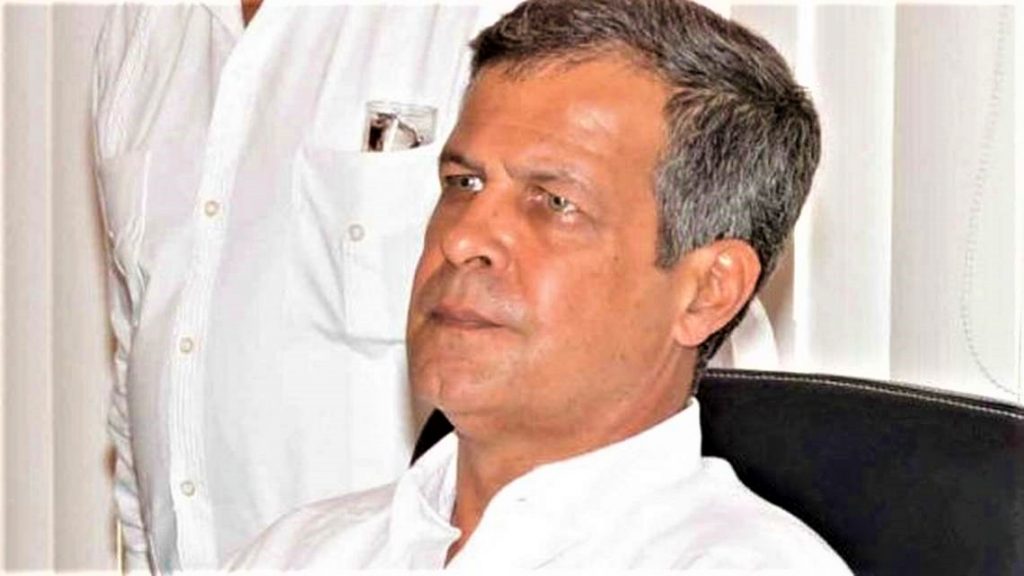
Among those promoted to the politburo was Brigadier-General Luis Alberto
Rodríguez López-Callejas, once married to Raúl’s daughter Deborah and head of
the armed forces’ civilian holding company, GAISA, which controls important swaths of the
economy such as tourism and the retail trade. Rodríguez López-Callejas is close
to Díaz-Canel, who has referred to him as his economic adviser, according to
two European diplomats. He is also a competent businessman, according to three
foreign counterparts who have worked with him.
“He comes by early in the morning once a week to check on everything and
tour the place,” said one manager at the Mariel Special Development Zone just
outside Havana, requesting anonymity. He is already under sanctions imposed by
the Trump administration.
The appointment of the head of the military’s civilian companies will
anger hardline Cuban exiles in the US and is unlikely to please the Biden
administration, which has already signalled that it does not plan any overtures
towards Havana in the near term.
As part of its tightening of restrictions on Cuba, the Trump
administration placed sanctions on nearly all military-run companies on the
island from hotels to financial services. The Biden administration has given no
indication that it plans to lift these.
Monday’s appointment consolidates the power of Díaz-Canel, who has risen
steadily through the ranks of Cuba’s bureaucracy with a reputation as a capable
but cautious leader focused on economic reform. His Twitter account is peppered
with the hashtag #SomosContinuidad (We are continuity).
Raúl Castro said upon stepping down at the weekend that “as long as I
live, I will be ready with my feet in the stirrups to defend the motherland,
the revolution and socialism with more force than ever”, a remark taken to
indicate his continued involvement. Díaz-Canel confirmed this on Monday, saying
his mentor “will be consulted about strategic decisions”.
Raúl Castro has been effectively running the country since his ailing
brother Fidel handed power to him in 2006. Fidel Castro died in 2016.
One of the new leadership’s first orders of business will be to conduct
a nationwide discussion of Raúl Castro’s last central committee report, in which
he doubled down on existing foreign policy, the need for a single-party system
and cautious market reforms to avoid “a restoration of capitalism and
dependence on the United States”.
Nevertheless, many analysts believe the crisis that has led to widespread
food shortages and long queues in shops for basic necessities will push forward
economic reforms, particularly now that younger generations hold almost all
positions. “A new cohort of leaders
will have a much freer hand to implement policies permitting a gradual turn to
a more market-driven economy,” said Brian Latell, a former CIA Cuba analyst who
followed the Castros for decades.
For example, Raúl Castro in the report castigated party members for
their reticence to fully support the integration of small- and medium-sized
private business into the national economy, while simultaneously drawing a red
line over the extent of changes.
He said allowing private businesses to engage in foreign trade without
going through the state was unacceptable. “There are limits that we cannot exceed
because the consequences . . . would lead to . . . the very destruction of
socialism and therefore of national sovereignty and independence.”
Similar words were uttered before just about every reform undertaken
over the past decade, signalling that serious resistance remains in the ranks.
The party congress spent a great deal of its time on the need to improve
cadres and strengthen ideological work as the internet smashes its information
monopoly at a time of crisis and destabilising monetary reforms. Opposition to
the system was characterised as part of a US plot.
Bert Hoffmann, a Latin America expert at the German Institute of Global and Area Studies, said Cuba’s old guard might remain influential behind the scenes, particularly in the military. He added: “To weather the current crisis, further economic policy change will be imperative for Cuba.”
Brigadier-General Luis Alberto Rodríguez López-Callejas
In response to crippling economic
stagnation, Cuba has passed regulations which hint at a turn towards a more
market-driven economy. However, political control over key sectors including
education and the media still lies heavily with the state. The most striking
policy, which allows thousands of professions to run outside the remit of the
state, will change the character of business within Cuba and may lead to
increased innovation and interaction with international markets. Could Cuba’s
economic liberalisation lead to further political freedoms?
Hints of Change
In 2020,
the number of tourists visiting Cuba dropped by 80% and its economy accordingly shrank by 11%.
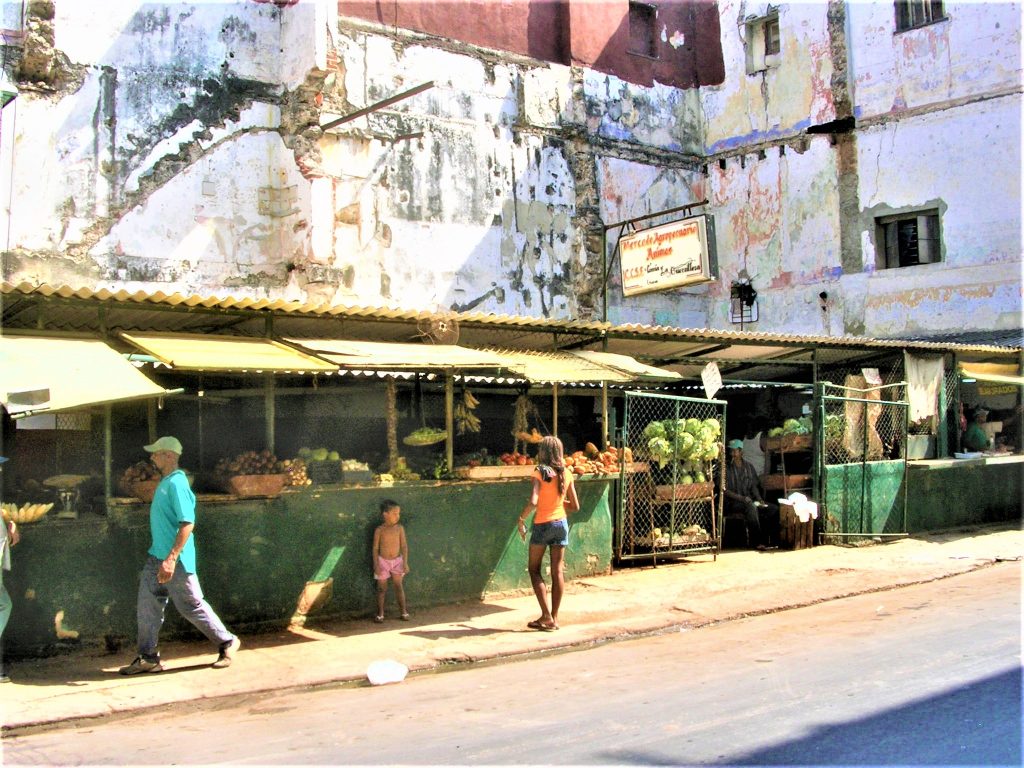
Times are hard for Cubans, with queues growing outside grocery stores and
businesses being forced to close. The economic downturn has been lurking for
many years. In particular, Cuba has suffered from the Trump Administration’s
sanctions, imposed to placate the Republican voter base by designating the
Cuban government as a “sponsor of terrorism” from its support for
Venezuela’s Maduro.
In
response to economic hardships and US sanctions, Cuba has indicated an
intention to liberalise the economy. A strong signal of change to Castroist
economic ideas are demonstrated by the Díaz-Canel government’s removal of the somewhat confusing dual currency system
in January 1, 2021, previously established in 1994 after the loss of Soviet
subsidies. This major change, which led to a surge in inflation and devaluation
of the peso, had costly implications for Cubans by placing downward pressure on
the purchasing power of salaries and pensions.
A Landmark Shift in Business Privatisation
The
currency change is just one part in a series of major reforms. On 6th February,
Labour Minister Marta Elena Feito Cabrera stated that the government would
allow private participation in more than 2000 professions; a stark contrast to
the previous limit of 127 professions. The expansion in private participation
means that previously illegal enterprises can now function openly.
It is
hoped that this will unleash a wave of innovation in a wide range of sectors. This
could work in tandem with recovery from the pandemic. For instance, there
has been encouraging news regarding Cuba’s own “Soberana 2” Covid-19 vaccine: The government
believes that it can administer this vaccine to the whole of Cuba’s population
by the end of the year and export the vaccine to Latin America as a source of
income.
However,
the new private business law does have many caveats: private enterprises lack
certain resources and access to supply chains that state-owned enterprises
possess. For instance, the government maintains control of all large industries
and wholesale shops and monopolises 124 professions, thereby restricting
options for obtaining supplies. In the short-term, the large restructuring of
the economy will inevitably cause painful effects with bankruptcies and unemployment rising.
Yet, in the long-term, opening up may yield positive benefits through increased
opportunities for entrepreneurs. The sectors included within the 124 professions remaining under state remit (including
law enforcement, defence, the media, education) suggest that Cuba is looking to
follow the model of China or Vietnam through the
introduction of capitalist economic policies with the maintenance of tight
political control.
Could Improved Relations with the US Spur Political
Change in Cuba?
One
follow-on effect of Cuba’s economic liberalisation could be a strengthening of
relations with the Biden administration. Indeed, the recent theme of economic
policy changes would require more foreign investments and capital, for which
improved relations with the US would be important.
Strengthened
ties could have political liberalisation effects in Cuba. The Obama
Administration’s relationship with Cuba was emblematic of this trend: Obama’s approach
of normalising relations with Cuba, which was designed to “create economic opportunities for the Cuban people”,
increased US influence in other spheres of Cuban society. Citizens began to criticise issues such as access to medical care,
education, unemployment and domestic media sources while religious leaders and
artists started to articulate positions contrary to the official narrative. This
suggested that civil society was for the first time open to vocally opposing
the political system, despite the government responding with detentions of some dissidents and censorship of blog posts . A similar phenomenon
is possible if Havana’s new economic policies leads to a strengthening of
economic ties with the Biden Administration.
Is a new Cuba Realistic?
Cuba is ripe for change. The push and pull of reform efforts in recent years suggest disputes between traditionalists and more progressive, youthful factions. In April, Raúl Castro will step down as leader of the Communist party which will see the end of the Castro name in Cuban politics for the first time in over 60 years. This has major symbolic significance: Fidel Castro established the political and economic systems that endure today, such as the characteristics of a one-party state with complete control of the media. Combined with the election of Biden, who will likely take a more lenient approach to Cuba in comparison to Trump, and an array of free market policies in the midst of an economic crisis, it seems a realistic possibility that Cuba could undergo major structural change in the coming years.
Después de hacerse pública la decisión de efectuar el VIII Congreso del
Partido en abril de 2021, un evento extraordinario marcó de forma crucial la
vida de la nación. La pandemia de la COVID-19 puso a prueba la capacidad y la
voluntad de la Revolución, y el temple de nuestro pueblo para enfrentar
cualquier dificultad, por compleja que esta sea.
Una vez más se mostró ante el mundo la verdad de Cuba, sus valores, su
probada vocación humanista, solidaria y de justicia social que, junto a la
capacidad organizativa del país y el desarrollo científico alcanzado, nos ha
permitido traducir en resultados visibles el compromiso con la vida y el
bienestar de nuestros compatriotas y de otros pueblos, a pesar de la constante
agresividad del Gobierno de Estados Unidos.
El capitalismo y sus defensores neoliberales demuestran no tener
solución alguna ante problemas cardinales de la humanidad. Sus teorías del
papel mínimo del Estado y la magnificación del mercado, solo reforzaron su
incapacidad para salvar vidas.
Inmersos hoy los cubanos en la superación de los dísimiles obstáculos
derivados de la pandemia, en particular los vinculados a nuestra economía,
sumados a otros que ya venían gravitando sobre nosotros, el Comité Central del
Partido Comunista de Cuba ratifica con esta convocatoria la decisión de
desarrollar el VIII Congreso en la fecha prevista.
El Congreso centrará su atención en la evaluación y proyección de
asuntos medulares para el presente y futuro de la nación, lo cual incluirá la
actualización de la Conceptualización del Modelo Económico y Social Cubano de
Desarrollo Socialista, los resultados alcanzados y la actualización de la
implementación de los Lineamientos de la Política Económica y Social del
Partido y la Revolución, así como los resultados económico-sociales obtenidos
del VII Congreso a la fecha; analizará de igual forma el funcionamiento del
Partido, su vinculación con las masas, la actividad ideológica y valorará la
situación que presenta la política de cuadros en el Partido, la Unión de
Jóvenes Comunistas, las Organizaciones de Masas y el Gobierno.
Será un escenario oportuno para la actualización de nuestra estrategia
de resistencia y desarrollo. Significará un estímulo a la participación de
militantes, revolucionarios y patriotas en las soluciones que se demandan para
enfrentar la aguda crisis mundial que nos impacta y continuar las
transformaciones que fortalezcan la economía nacional. Para lograrlo contamos
con una vasta experiencia de lucha en la construcción del socialismo como única
opción de desarrollo, y con el ejemplo imperecedero del Comandante en Jefe
Fidel Castro Ruz.
Digno heredero de la confianza depositada por el pueblo en su líder,
nuestro Partido, único, martiano, fidelista, marxista y leninista, asume una
alta responsabilidad en la preservación de la unidad, factor estratégico para
la victoria.
En estos años el Gobierno de Estados Unidos ha acentuado su hostilidad
contra Cuba, arreciando el genocida bloqueo económico, comercial y financiero,
y la subversión político-ideológica. A ello se suman las consecuencias de la
crisis económica mundial. Frente a estas dificultades, el pueblo ha respondido
con firmeza, disciplina y conciencia, lo cual requiere traducirse aún más en
aportes de eficiencia y superiores resultados en la economía. Ello implica
nuevas formas de pensar y hacer para alcanzar la prosperidad, fruto de nuestro
trabajo diario.
En este escenario, la implementación de los Lineamientos de la Política
Económica y Social del Partido y la Revolución enfrenta amplios desafíos. Se
afrontan problemas objetivos y subjetivos que influyen en el ritmo de
aplicación de las políticas y medidas aprobadas.
La situación actual no puede convertirse en justificante que retarde los
procesos; por el contrario, impone la necesidad de dar un impulso a la
actualización de nuestro modelo económico y social para cumplir lo que hemos
acordado y eliminar las trabas que aún persisten en el desarrollo de las
fuerzas productivas y la eficiencia, asunto definido como problema estratégico
principal por el General de Ejército Raúl Castro Ruz.
Urge incrementar la producción de alimentos en el país, empleando todas
las reservas internas, que incluye, como en el resto de los sectores de la
economía y la sociedad, la investigación, la innovación y el desarrollo
tecnológico, además de la sistematización de los resultados.
Los vínculos entre el sector estatal y el no estatal de la economía han
de seguir desarrollándose, como parte de la estrategia económica definida. La
industria nacional deberá responder cada vez más a la demanda interna. Es
imprescindible desterrar la inercia, la apatía y explotar con creatividad todas
las potencialidades existentes, estimulando el aporte de todo el pueblo, sus
ideas e iniciativas.
Debemos avanzar en la eficiencia de los procesos productivos y la
calidad de los servicios, así como en el ahorro de los recursos, el incremento
de las exportaciones, la sustitución de importaciones y la participación de la
inversión extranjera directa. En ese empeño, la empresa estatal socialista está
llamada a cumplir el papel principal que le corresponde en la economía
nacional.
Nuestro objetivo es llegar al VIII Congreso con definiciones precisas y
concretas, que fortalezcan y den continuidad al programa de gobierno
emprendido, en cumplimiento de la Estrategia Económico-Social para el impulso
de la economía y el enfrentamiento a la crisis mundial provocada por la
COVID-19.
La prevención y enfrentamiento constantes a la corrupción, el delito,
las indisciplinas sociales y otras manifestaciones negativas incompatibles con
las esencias del socialismo que construimos, deberá ser una tarea de todos.
Para alcanzar este y otros objetivos, debemos continuar fortaleciendo el
funcionamiento del Partido desde el núcleo hasta las instancias superiores, a
partir de la ejemplaridad de quienes militan en sus filas. A la par, resulta
imprescindible contar con cuadros que mantengan en todo momento una actitud
revolucionaria frente a los problemas, desarrollen la capacidad de análisis en
la búsqueda de soluciones, estimulen el diálogo franco y se caractericen por
una ética intachable en su actuación cotidiana.
El Partido mantendrá una prioritaria atención a la Unión de Jóvenes
Comunistas, sus cuadros, militantes y las nuevas generaciones, en cuya
formación y educación en valores tiene una responsabilidad especial.
Igualmente, apoyará a las organizaciones de masas y sociales, en sus misiones
de integrar, movilizar y representar a nuestro pueblo, propiciando una
participación superior de sus miembros en los procesos políticos y
socio-económicos que deciden nuestro futuro como nación.
Hoy adquiere mayor importancia el trabajo político-ideológico para
enfrentar los intentos de restauración capitalista y neoliberal. Las redes
sociales e Internet se han convertido en un escenario permanente de
confrontación ideológica, donde también deben prevalecer nuestros argumentos frente
a las campañas enemigas.
Ante la guerra cultural y de símbolos que se nos hace, la defensa de la
identidad nacional, y la cultura, así como el conocimiento de nuestra historia,
reafirman nuestra soberanía e independencia.
El imperialismo estadounidense no ha podido cumplir su objetivo de
destruir la Revolución Cubana. Insiste en provocar la inestabilidad en el país,
legitimar la oposición mercenaria y fracturar la unidad de los cubanos,
convertida en valladar infranqueable para garantizar la libertad, la justicia y
la democracia socialista que no se negocian.
Ratificamos una vez más la importancia estratégica de mantener la
defensa y seguridad nacional del país como asunto de máxima prioridad.
Compatriotas:
En el 64 Aniversario del Desembarco del Granma, fecha que trasciende por
mostrarnos el valor del sacrificio, la confianza en el triunfo de las ideas que
hace suyas el pueblo y la voluntad de vencer, ratificamos que este será el
Congreso de la Continuidad, expresado en el tránsito paulatino y ordenado de
las principales responsabilidades del país a las nuevas generaciones, con la
certeza de que la Revolución no se circunscribe a quienes la llevaron al
triunfo aquel glorioso Primero de Enero, sino a la voluntad y el compromiso de
quienes la han hecho suya en todos estos años y los que continuarán la obra.
El VIII Congreso del Partido, que realizaremos del 16 al 19 de abril de
2021, será de todo el pueblo. Como en Girón, 60 años después, frente al imperio
que nunca logrará doblegarnos, y ante dificultades presentes y futuras por
poderosas que sean, una vez más proclamaremos ante el mundo nuestra convicción
irreductible de Victoria.
Author’s Note – This article originally appeared
in Spanish in La Joven Cuba (Young Cuba), one of the most important
critical blogs in the island, where the Internet remains the principal vehicle
for critical opinion because the government has not yet succeeded in
controlling it. The article elicited some strong reactions including that of a
former government minister who called it a provocation.
The New Economic Policy (NEP) introduced by the revolutionary government in
1921 was in fact an attempt to reduce the widespread discontent among the
Russian people with measures designed to increase production and popular access
to consumer goods. Even though the Civil War (1918-1920) caused great hardship
among the rural and urban populations, it was the politics of War Communism,
introduced by the Bolshevik government during that period, that significantly
worsened the situation. This led to a profound alienation among those who had
been the pillars of the October Revolution in 1917: the industrial workers, and
the peasantry that constituted 80 percent of the population.
In the countryside, the urban detachments, organized to confiscate from the
peasantry their agricultural surplus to feed the cities, ended up also
confiscating part of the already modest peasant diet in addition to the grain
needed to sow the next crop. The situation worsened when under the same policy
the government, based on an assumed class stratification in the countryside
that had no basis in reality, created the poor peasant committees (kombedy)
to reinforce the functions of the urban detachments. Given the arbitrary
informal and formal methods that characterized the operations of the kombedy,
these ended up being a source of corruption and abuse, frequently at the hands
of criminal elements active in them, who ended up appropriating for their own
use the grain and other kinds of goods they arbitrarily confiscated from the
peasantry.
Moreover, during the fall of 1920, symptoms of famine began to appear in the
Volga region. The situation became worse in 1921 after a severe drought ruined
the crops, which also affected the southern Urals. Leon Trotsky had proposed in
February 1920, to substitute the arbitrary confiscations of War Communism with
a tax in kind paid by the peasantry as an incentive to have them grow more
surplus grain. However, the party leadership rejected his proposal at that
time.
The politics of War Communism was also applied to the urban and industrial
economy through its total nationalization, although without the democratic
control by the workers and the soviets, which the government abolished when the
civil war began and replaced with the exclusive control from above by state
administrators. Meantime, the workers were subjected to a regime of militarized
compulsory labor. For the majority of the Communist leaders, including Lenin,
the centralized and nationalized economy represented a great advance towards
socialism. That is why for Lenin, the NEP was a significant step back.
Apparently, in his conception of socialism, total nationalization played a more
important role than the democratic control of production from below.
The elimination of workplace democracy was only one aspect of the more general
clampdown on soviet democracy that the Bolshevik government launched in
response to the bloody and destructive civil war. Based on the objective
circumstances created by the war, and on the urgent need to resolve the
problems they were facing, like economic and political sabotage, the Bolshevik
leadership not only eliminated multiparty soviets of workers and peasants, but
also union democracy and independence, and introduced very serious restrictions
of other political freedoms established at the beginning of the
revolution.
Since the
decade of the nineties, and especially since Raúl Castro assumed the maximum
leadership of the country in 2006–formally in 2008 – economic reform has been
one of the central concerns of the government. The logic of that
economic reform points to the Sino-Vietnamese model–which combines an
anti-democratic one-party state with a state capitalist system in the
economy–and not to the compulsory collectivization of agriculture and the
five-year plans brutally imposed on the USSR by Stalinist totalitarianism after
the NEP. The Cuban government’s decision to authorize the creation of the PYMES
(small and medium private enterprises), a decision frequently promised but not
yet implemented, would constitute a very important step towards the establishment
of state capitalism in the island. This state capitalism will very probably be
headed by the current powerful political, and especially military, leaders who
would become private capitalists.
Until
now, the Cuban government has not specified the size that would define the
small and especially the mid-size enterprises under the PYMES concept. But we
know that several Latin American countries (like Chile and Costa Rica) have
defined the size in terms of the number of workers. Chile, for example, defines
the micro enterprises as those with less than 9 workers, the small-size with 10
to 25 workers, the medium-size with 25 to 200 workers, and the big size with
more than 200 workers. Should Cuba adopt similar criteria, its mid-size
enterprises would end up as capitalist firms ran by their corresponding
administrative hierarchies. If that happens, it is certain that the official
unions will end up “organizing” the workers in those medium size enterprises
and, as in the case of Chinese state capitalism, do nothing to defend them from
the new private owners.
Regarding
political reform, there has been much less talk and nothing of great importance
has been done. As in the case of the Russian NEP, the social and economic
liberalization in Cuba has not been accompanied by political democratization
but, instead, by the intensification of the regime’s political control over the
island. Even when the government has adopted liberalizing measures in the
economy, like the new rules increasing the number of work activities permitted
in the self-employed sector, it continues to ban private activities such as the
publication of books that could be used to develop criticism or opposition to
the regime. This is how the government has consolidated its control over the
major means of communication –radio, television, newspapers and magazines –
although it has only partially accomplished that with the Internet.
The
government is also using its own socially liberalizing measures to reinforce
its political control. For example, at the same time that it liberalized the
rules to travel abroad, it developed a list of “regulated” people who are
forbidden to travel outside of the island based on arbitrary administrative
decisions, without even allowing for the right of appeal to the judicial system
it controls. Similar administrative practices lacking in means for judicial
review control have been applied to other areas such as the missions organized
to provide services abroad. Thus, the Cuban doctors who have decided not to
return to the island once their service abroad has concluded, have been victims
of administrative sanctions – eight years of compulsory exile – without any
possibility of lodging a judicial appeal.
Still
pending is the implementation of the arbitrary rules and the censorship of
artistic activities of Decree 349, that allows the state to grant licenses and
censor the activities of self-employed artists. The implementation of the
decree has been postponed due to the numerous and strong protests that it
provoked. All of these administrative practices highlight the fact that the
much discussed rule of law proclaimed by the Constitution is but a lie. Let us
not forget that the Soviet constitution that Stalin introduced in 1936 was very
democratic … on the paper it was written. Even so, Cubans in the island should
appeal to their constitutionally defined rights to support their protests and
claims against the Cuban state whenever it is legally and politically
opportune.
At the
beginning of the Cuban revolutionary government there was a variety of
political voices heard within the revolutionary camp. But that disappeared in
the process of forming the united party of the revolution that established the
basis for what Raúl Castro later called the “monolithic unity” of the party and
country. That is the party and state model that emulates, along with China and
Vietnam, the Stalinist system that was consolidated in the USSR at the end of
the twenties, consecrating the “unanimity” dictated from above by the maximum
leaders, and the so-called “democratic centralism”, which in reality is a
bureaucratic centralism.
The Cuban
Communist Party (CCP) is a single party that does not allow the internal
organization of tendencies or factions, and that extends its control over the
whole society through its transmission belts with the so-called mass
organizations (trade unions, women’s organization), institutions such as the
universities, as well as with the mass media that follow the “orientations”
they receive from the Department of Ideology of the Central Committee of the
CCP. These are the ways in which the one-party state controls, not necessarily
everything, but everything it considers important.
The
ideological defenders of the Cuban regime insist in its autochthonous origins
independent from Soviet Communism. It is true that Fidel Castro’s political
origin is different, for example, from that of Raúl Castro, who was originally
a member of the Socialist Youth associated with the PSP (Partido Socialista
Popular), the party of the pro-Moscow orthodox Communists. But Fidel
Castro developed his “caudillo” conceptions since very early on, perhaps as a
reaction to the disorder and chaos he encountered in the Cayo Confites
expedition in which he participated against the Trujillo dictatorship in the
Dominican Republic in 1947, and with the so-called Bogotazo in Colombia in
1948.
In 1954,
in a letter he wrote to his then good friend Luis Conte Aguero, Fidel Castro
proclaimed three principles as necessary for the integration of a true civic
movement: ideology, discipline and especially the power of the leadership. He
also insisted in the necessity for a powerful and implacable propaganda and
organizational apparatus to destroy the people involved in the creation of
tendencies, splits and cliques or who rise against the movement. This was the
ideological basis of the “elective affinity” (to paraphrase Goethe) that Fidel
Castro showed later on for Soviet Communism.
So, what
can we do? The recent demonstration of hundreds of Cubans in front of the
Ministry of Culture to protest the abuses against the members of the San Isidro
Movement and to advocate for artistic and civil liberties, marked a milestone
in the history of the Cuban Revolution. There is plenty of room to reproduce
this type of peaceful protest in the streets against police racism, against the
tolerance of domestic violence, against the growing social inequality and
against the absence of a politically transparent democracy open to all, without
the privileges sanctioned by the Constitution for the CCP. At present, this
seems to be the road to struggle for the democratization of Cuba from below,
from the inside of society itself, and not from above or from the outside.
The
lesson of the Russian NEP is that economic liberalization does not necessarily
signify the democratization of a country, and that it may be accompanied by the
elimination of democracy. In Cuba there has been economic and social
liberalization but without any advance on the democratic front.