Yearly Archives: 2011

News and Articles, January 17 – 23, 2011

Havana Times, January 23: Expanded Private Initiatives in Cuba http://www.havanatimes.org/?p=36572

El País, 23 de enero: EE UU retrata la corrupción en Cuba http://www.elpais.com/articulo/internacional/EE/UU/retrata/corrupcion/Cuba/elpepuint/20110123elpepiint_1/Tes

Generation Y, January 22: The Elderly http://www.desdecuba.com/generationy/?p=2271

The Miami Herald, January 22: Corruption is pervasive, USINT cables say http://miamiherald.typepad.com/cuban_colada/2011/01/corruption-is-pervasive-usint-cables-say.html

Cuba Headlines, January 22: Venezuela improves interconnection with 994 miles of optical fiber to reach Cuba http://www.cubaheadlines.com/2011/01/22/29119/venezuela_improves_interconnection_with_994_miles_of_optical_fiber_to_reach_cuba.ht

Cuba Standard.Com, January 21: Angola seeking Cuban biotech know-how http://www.cubastandard.com/2011/01/21/angola-seeking-cuban-biotech-know-how/

Reuters, January 21: Cuba stops U.S. mail in new hiccup in relations http://www.reuters.com/article/idUSTRE70K6BL20110122

Reuters, January 21: Analysis: Traffic jams unlikely on Cuban data highway
http://www.reuters.com/article/idUSTRE70K1ET20110121

Diario de Cuba, 21 de enero: El guajiro y su narigón http://diariodecuba.com/cuba/2754-el-guajiro-y-su-narigon

The Nation, January 21: Cuba is ready to receive US tourist tide: tourism minister
http://www.nation.com.pk/pakistan-news-newspaper-daily-english-online/International/21-Jan-2011/Cuba-is-ready-to-receive-US-tourist-tide-tourism-minister

Reuters, 21 de enero: Capital cubana pierde 70 por ciento agua potable por redes rotas http://espanol.news.yahoo.com/s/reuters/110121/internacional/internacional_cuba_agua

Granma, 21 de enero: La urgencia de ahorrar agua en la capital http://www.granma.cubaweb.cu/2011/01/21/nacional/artic01.html

Europa Press, 21 de enero: La llegada de turistas españoles a Cuba cayó un 20 por ciento en 2010 por la crisis, según el ministro de Turismo
http://www.europapress.es/latam/cuba/noticia-cuba-llegada-turistas-espanoles-cuba-cayo-20-ciento-2010-crisis-ministro-turismo-20110121113033.html

Cuba Headlines, January 20: U.S. Cuba travel to shake Caribbean — a bit
http://www.cubaheadlines.com/2011/01/20/29087/us_cuba_travel_to_shake_caribbean_a_bit.html

Cubaencuentro, 20 de enero: Cadena hotelera española construirá tres hoteles en Cuba http://www.cubaencuentro.com/cuba/noticias/cadena-hotelera-espanola-construira-tres-hoteles-en-cuba-254108

AFP, 20 de enero: Los cubanos aprenden a ser empresarios y a cambiar la mentalidad de prohibiciones http://espanol.news.yahoo.com/s/afp/110120/latinoamerica/cuba_econom__a_pol__tica

The American, January 19: Cuban Entrepreneurs: From Necessary Evil to Strategic Necessity http://american.com/archive/2011/january/cuban-entrepreneurs-from-necessary-evil-to-strategic-necessity

Havana Times, January 19: A Culture of Work and Illegality http://www.havanatimes.org/?p=36329

El Mundo, 19 de enero: Brasil considera que el régimen de los Castro ‘no se sostiene’, según WikiLeaks http://www.elmundo.es/america/2011/01/20/brasil/1295482628.html

Global Post, January 19: US eases travel restrictions to Cuba
http://www.globalpost.com/dispatch/cuba/110118/travel-embargo-obama

Elnuevodia.com, 19 de enero: Puente boricua hacia Cuba http://www.elnuevodia.com/puenteboricuahaciacuba-867476.html

El Economista, 19 de enero: Cuba se hunde http://eleconomista.com.mx/columnas/columna-especial-politica/2011/01/19/cuba-se-hunde

Reuters, January 18: Venezuela, Cuba outfox U.S. with fiber optic cable
http://ca.reuters.com/article/technologyNews/idCATRE70H5ZZ20110118

NPR, January 18: Cuba Issues Thousands Of Self-Employment Licenses http://www.npr.org/2011/01/18/133020988/cuba-issues-thousands-of-self-employment-licenses

Reuters, 18 de enero: Cuba reforzará medidas de seguridad ante perforación petrolera http://mx.reuters.com/article/topNews/idMXN1815383420110118

The Engineer, January 18: Sugarcane by-product could help power Cuba
http://www.theengineer.co.uk/news/sugarcane-by-product-could-help-power-cuba/1006950.article

ACN, January 18: Angola to Strengthen Economic Bonds with Cuba http://www.ain.cubaweb.cu/idioma/ingles/2011/0117-angola-strengthen-economic-bonds-cuba.htm

Analitica.Com, 18 de enero: El cambio inevitable http://www.analitica.com/va/internacionales/opinion/8888915.asp

Generation Y, January 17, The Nicotine Business http://www.desdecuba.com/generationy/?p=2260

ONE, 17 de enero: Cuba: viviendas terminadas 2010 http://www.one.cu/publicaciones/08informacion/panorama2010/13Vivienda.pdf

Pjstar.com, January 17: Illinois farmers see opportunity in Cuba http://www.pjstar.com/news/x198684981/Illinois-farmers-see-opportunity-in-Cuba

CubaStandard.Com, January 17: Venezuela state airline starts Havana flights http://www.cubastandard.com/2011/01/17/venezuelan-state-airline-starts-havana-flights/

Europa Press, 17 de enero: Cuba mejorará su conexión a Internet en julio http://www.europapress.es/latam/sociedad/noticia-cuba-mejorara-conexion-internet-julio-20110117221544.html

CubaStandard.com, January 17: Cubans with phone line will have ‘right’ to Internet at home
 http://www.cubastandard.com/2011/01/17/cubans-with-phone-line-will-have-right-to-internet-at-home/

Homesgofast, January 17: Cuba Now Ready For Overseas Property Investors?
http://www.homesgofast.com/view_news/2053/

BBC, January 17: UK firm signs Cuban renewable energy deal
http://www.bbc.co.uk/news/uk-scotland-scotland-business-12204109

BBC, January 17: Cuba: US easing of travel rules ‘positive but limited’
http://www.bbc.co.uk/news/world-latin-america-12204363

The Miami Herald, January 17: Text of Cuban Foreign Ministry statement http://miamiherald.typepad.com/cuban_colada/2011/01/text-of-cuban-foreign-ministry-statement.html

Posted in News on the Cuban Economy | Leave a comment

Carmelo Mesa-Lago: “Cincuenta años de servicios sociales en Cuba”

Carmelo Mesa-Lago. Professor Emeritus, University of Pittsburgh

Hyperlink: Revista TEMAS, no. 64: 45-56, octubre-diciembre de 2010

Revista Temas has published a valuable work by Carmelo Mesa-Lago analysing Cuba’s major social issues, namely health, education, pensions, and housing, and drawing on the work of various analysts from the Centro de Estudios sobre la Economia Cubana. Inclusion of Mesa-Lago’s work in Revista TEMAS is indeed encouraging in my view and contrasts with the situation some 25 years ago when he and other Cuban-American analysts were villified as “Cubanologos.”

Here is the Table of Contents for  followed by its concluding session. Unfortunately an English translation is not available right now.

Introducción

Evolución de los servicios sociales (1959-2000

Costo actual de los servicios sociales en Cuba

Un caso de estudio: el costo creciente de las pensiones

Capacidad económica para sostener los servicios sociales a largo plazo

Cambios necesarios para mejorar y hacer sustentables los servicios sociales

No es posible resolver los problemas que los costosos servicios sociales enfrentan sin un aumento de la producción, la productividad y las exportaciones que permitan, a su vez, reducir las importaciones. Pero para lograrlo, se necesita implementar las reformas estructurales anunciadas por el presidente Raúl Castro y recomendadas por numerosos economistas cubanos.

El tema de la sostenibilidad de los servicios sociales ha sido planteado por varios economistas cubanos. Viviana Togores y Anicia García consideran que

la crisis económica y el proceso de ajuste han mostrado que la preservación de los beneficios sociales debe transitar hacia una nueva etapa donde su sustentabilidad financiera quede asociada al desarrollo de la economía y los cambios estructurales y organizativos [necesarios] […] las decisiones de política social deben tomarse no solo teniendo en cuenta las funciones sociales, sino que debenrespetar los principios de equilibrio económico.34

Por ejemplo, la seguridad y asistencia socials agravan seriamente el déficit fiscal y su carga, hoy solo asumida por el Estado; debe ser compartida por otros contribuyentes (los trabajadores). Mayra Espina agrega:

El primer reto [de la renovación social] es el de la sustentabilidad económica de la política de desarrollo social […] es necesario encontrar fórmulas de reinserción  de la economía cubana en los mercados internacionales que reactiven la producción interna y doten a los programas sociales de los recursos suficientes, sin los cuales siempre estarán enfrentados al déficit.35

Las decisiones cruciales sobre la economía y los servicios sociales competen a los cubanos. Pero a  diferencia de la crisis de los años 90, en que hubo una estrategia para hacerles frente, en la presente esta no se ha definido. El VI Congreso del PCC, anunciado inicialmente para fines de 2008, debe decidir los lineamientos económicos para el próximo quinquenio y también dictar las directrices en materia de servicios sociales. Habiendo dedicado cincuenta años de mi vida al estudio de este tema en toda América Latina, incluida  Cuba, hago unas sugerencias —parte de estas coinciden con las de economistas y académicos cubanos— como aporte para el debate. A mi juicio, sería posible aumentar el ingreso fiscal y reducir el gasto social, mediante mejoras en la asignación y uso de los recursos, con las medidas siguientes:

Educación: En la enseñanza elemental habría que transferir fondos hacia el pago de mejores sueldos a los maestros (en vista de la caída en la fecundidad y de la población en edad primaria) y, en la secundaria,  riorizar la educación vocacional. Respecto a la superior, Juan  Triana propone invertir más en las carreras técnicas y las que contribuyen al conocimiento, aunque son más costosas que las humanidades, la pedagogía y las ciencias sociales.36 Las carreras científicas son esenciales para el desarrollo, incluyendo la administración de negocios y la economía moderna, por lo que habría que transferor recursos de carreras no tan esenciales, imponiéndoles cuotas y estándares de ingreso más estrictos. Ya en 2008-2009 se estaba reduciendo la matrícula en medicina, humanidades y ciencias sociales, pero también en agronomía y ciencias técnicas.37 Además, habría que continuar y expandir las medidas recién iniciadas que  establecen exámenes de ingreso para la educación superior y requisitos más estrictos de admisión, lo cual ayudaría a aumentar la relación de graduados por matriculados; considerar el establecimiento de pago de matrículas en las universidades a los grupos de altos ingresos, y legalizar el trabajo por cuenta propia de los maestros y profesores.

Salud: Sería aconsejable priorizar la infraestructura de agua potable y alcantarillado,38 reasignar los recursos destinados a la continuada reducción de la mortalidad infantil (un problema resuelto hace años) hacia la reparación de la infraestructura deteriorada, la importación de medicinas, la disminución de la mortalidad materna y otras áreas de mayor necesidad; subordinar el número de profesionales de la salud que  trabajan en el extranjero a las necesidades internas, e invertir parte de los ingresos en divisas que generan sus servicios en la mejora de las instalaciones y equipos  internos y el suministro de medicinas; convertir  hospitales de  aternidad y pediatría que tienen bajas tasas de ocupación en hospitales geriátricos y asilos para ancianos; terminar las becas a estudiantes extranjeros y cobrar el costo básico de los servicios que hoy se regalan  a otros países; cargar el costo de cuartos privados al grupo de altos ingresos de la población cubana; autorizar el trabajo por cuenta propia del personal de salud y permitir la organización de cooperativas médicas.

Pensiones de seguridad social: Habría que realizar un studio que determine cuál es la cotización de  quilibrio del sistema; establecer cotizaciones a todos los trabajadores de empresas no estatales con un mínimo de empleados, incorporándolos al sistema; cargar a los trabajadores por cuenta propia y empleados en el sector  rivado el mismo 5% que paga parte de los asalariados (en lugar de 10% y 15%) para promover su afiliación; ajustar las pensiones al costo de la vida, lo que requiere, primero, aumentar la producción y la productividad y, a su vez, avanzar en las reformas estructurales. Medidas más complejas serían cerrar el actual sistema de pensiones, que el Estado se haga responsable de las pensiones en curso de pago, y crear un nuevo sistema público para los asegurados jóvenes y los nuevos trabajadores, con una reserva que se invierta para generar un retorno del capital y ayudar en el financiamiento a largo plazo y mejorar las pensiones.

Vivienda: Rafael Hernández argumenta que la ley originalmente estipuló que la vivienda es propiedad de los ciudadanos, y es lógico que ellos puedan hacer con ella lo que quieran, venderla y también comprarla; además, hay que facilitar que la gente pueda reparar y construir viviendas por medios propios.39 Habría que proporcionar a la población el acceso a materiales de construcción, y otorgar pequeños créditos estatales rembolsables con interés para la construcción y reparación de viviendas; permitir el uso de la casa propia como colateral para obtener  réstamos destinados a su reparación; posibilitar la inversión de remesas externas en esas actividades; eliminar el actual sistema de permutas y autorizar la compraventa con regulaciones adecuadas.

Asistencia social. Para reducir la pobreza, Lía Añé recomienda eliminar la dualidad monetaria,

disminuir la segmentación del mercado, mejorar los salaries más bajos, y consolidar y evaluar la efectividad de los nuevos programas sociales.40 Pedro Campos propone eliminar la libreta de racionamiento, previa concesión de subsidios directos focalizados en las personas de bajos ingresos, y un reajuste salarial para compensar el incremento de precios que ocurriría.41 Alexis Codina agrega que los cuantiosos recursos fiscales asignados a subsidios de precios por la libreta, recibidos por todos, independientemente de sus ingresos, deberían quedar solo para la población más vulnerable y el resto utilizaría el mercado.

En mi opinión, el sistema de racionamiento no debería aliminarse de golpe, pues o bien sería muy  costoso o dejaría parte de los necesitados sin protección. Lo ideal sería hacerlo gradualmente, de manera paralela a los incrementos en la producción y la productividad  que resulten de reformas estructurales, a la par que se focaliza la asistencia social en toda la población pobre y vulnerable, a fin de crear una amplia red mínima de protección. Ello requeriría mecanismos eficientes para determinar el grado de necesidad de la población y una estimación confiable de la incidencia de pobreza. También habría que permitir a iglesias y ONG que establezcan y expandan asilos gratuitos para ancianos pobres con ayuda externa directa.

La Revolución transformó los servicios socials —salvo la vivienda—,  universalizó su cobertura, eliminó desigualdades entre grupos de ingreso y zonas urbanas y rurales, y otorgó servicios gratuitos de calidad. Las crisis de los años 90 y la actual, unidas a deficiencias de las políticas económicas, han afectado severamente esos servicios y agravado su falta de sustentabilidad a largo plazo. Resulta crucial, por tanto, implementar  las reformas estructurales necesarias y los cambios en dichos servicios para restaurar su calidad y garantizarlos a las generaciones futuras.

.

Posted in Blog | Tagged , , , , , , , | Leave a comment

Micro-enterprise Tax Reform, 2010: The Right Direction but Still Onerous and Stultifying

By Arch Ritter

As part of the policy reforms designed to absorb almost 1.2 million redundant state sector workers into the private sector, the Government of Cuba has modified the micro-enterprise tax regimen. Some of the modifications were positive in the sense that they will reduce the heavy tax burden on self-employment. However, the changes are modest, and the tax system will continue to limit job-creation and the expansion of micro-enterprise.
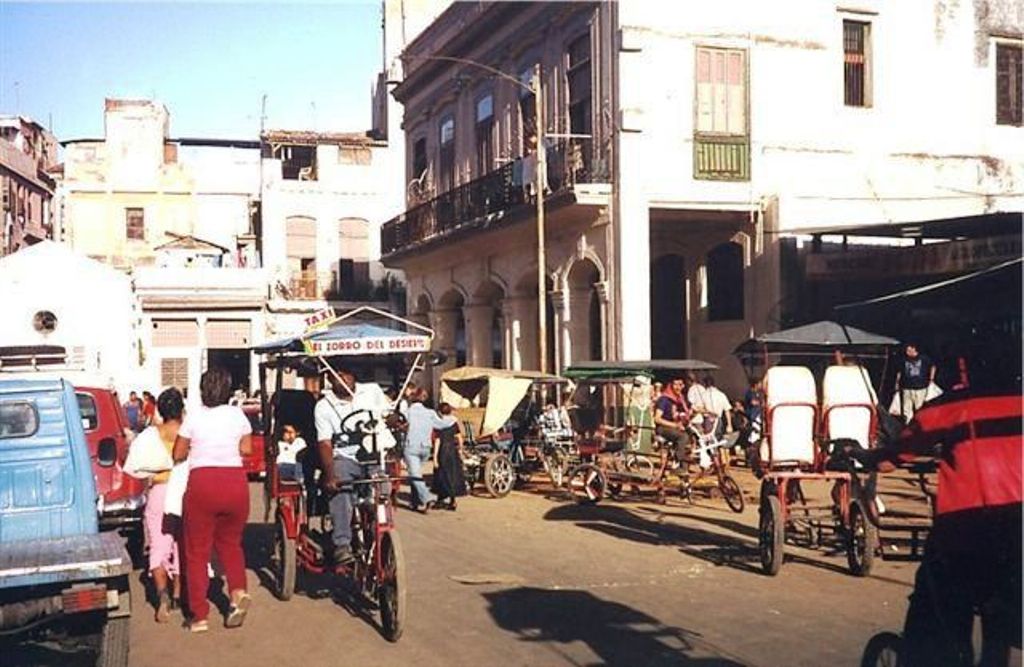
Bicitaxis, Central Havana

I. The New Tax Regime

The new taxation system, presented in the Gaceta Oficial, número 11, and Gaceta Oficial, número 12 on October 1 and 8, 2010, has five components:

1.      Sales Tax on Goods

2.      Tax on Hiring of Workers

3.      Income Tax

4.      Surtax on Services

5.      Social Security or Social insurance Payments

Taxes generally will now be payable in Moneda Nacional or “old” pesos. For purposes of tax payment, taxes owing in convertible pesos (CUCs) are to be exchanged into Moneda Nacional at the going quasi-official rate (around 22 to 26 “old” pesos per convertible peso, over the 2001-2010 period). There is a special regimen for bed-and-breakfast operations that is not considered here.

1. Sales Tax

This is a 10% tax levied on the value of sales of goods and payable by all micro-enterprises that do not qualify for the Simplified Tax Regime (See 3. below.)  While this tax in principle is reasonable and is used in most countries, the administrative cost of monitoring the value of sales and collecting the tax for the many of the smaller self-employed activities will be high.

2. Tax on the “Utilization of Labor”

This tax on the hiring of employees is set at “25% of 150%” (that is, 37.5%) of the average national wage which was 429 pesos per month in 2009 (ONE, AEC Table 7.4). The tax would thus be about 161pesos per month per employee or 1,932 pesos per year.

A “Minimum” requirement for the hiring of employees for tax determination purposes is set at two employees for paladares and one for other food vendors and a few other activities. There appears to be no exception or adjustment of the tax for part-time employees.

(Note that some 74 self-employment activities are prohibited from hiring employees and another 7 can hire one employee only.)

3. The Income Tax

There are two tax income regimes, a simplified regime for lesser self-employment activities and a more complex regime for larger activities.

The Simplified Tax Regime applies to some 91 activities. In place of the income tax, sales tax, tax on public services, they instead pay a consolidated tax, constituted by the monthly licensing fee which ranges from 40 to 150 pesos per month, payable in the first ten days of each month. (It is unclear whether overpayments would be refunded – they were not under the previous system.)

Other enterprises fall under the general tax regime, and pay all of the individual taxes discussed here. These activities pay the up-front monthly tax/license ranging from 40 to 700 pesos per month.

For the determination of the tax payment, the “tax base” is defined as total revenue less a fixed amount for deductible expenses. The maximum amounts allowed for deductible expenses range from 10% for 10 activities, 20% for room rental operations, 25% for 40 activities, 30% for 10 activities and 40% for 6 food and transport activities. (Bed and breakfast operations have their own specific regimen.)

The income tax rates rise progressively from 0% for the first 5,000 pesos, through 25% for additional income between 5,000 and 10,000, 30% for income increments from 10,000 to 20,000, 30% for 20,000 to 30,000, 40% for 30,000 to 50,000 and 50% for additional income exceeding 50,000.00 pesos. This rate is high but not unreasonable in international comparison.

4. Sales Tax on Services

A 10% additional sales tax is levied on services provided by micro-enterprise. Those enterprises qualifying for the Simplified Tax Regime are exempt from this tax.

5. Social Security Payments

These payments are destined ultimately for old age support, maternity leave, disability and death in the family. They are determined according to a scale that the self-employed worker selects, and may range from 25% of 350 to 2000 pesos per month depending on the choice of the self-employed person. This is a social insurance scheme though the payments are similar to taxes.

II. Evaluation of New Tax Arrangement

This new tax regime represents a minor improvement over the previous regime. The main improvement is that it permits the deduction as costs of production of more than a maximum of 10% of total revenues as was the case previously. This is a reasonable adjustment to the tax base as most of the self-employed activities generate costs that are higher than the maximum allowable 10% of total revenues.  This is especially beneficial for activities such as gastronomic, transport and handy-craft or artisan activities for which input costs are far beyond 10% of total revenues.

The progressive structuring of the income tax regime is reasonable though stiff.

However there are a number of flaws in the taxation regimen which will continue to stunt the development of small enterprise and will prevent the absorption of the redundant workers being displaced from the public sector.

1. The Blocking of Job-Creation

First, the tax on employment is problematic as it adds to the employer’s cost of hiring a worker. The obvious impact of this tax will be to limit hiring and job creation. Or employment will be “under the table”, unrecorded, and out of sight of officialdom.

2. Onerous Overall Tax Levels

The overall tax level is punitive. The sum of the income tax, employee hiring tax, and public service surtax is high- and as noted below can help create effective tax rates exceeding 100%, as is explained on Section III. This will continue to promote non-compliance. It will discourage underground enterprises from becoming legal. The establishment of new enterprises will be discouraged.

3. Erroneous and Unrealistic Base for the Income Tax

The most serious shortcoming of the income tax regime involves the tax base which is not “net revenues” after the deduction of input costs, but an arbitrary proportion of total revenues.

The tax regime limits the maximum for input costs deductible from total revenues to 10 to 40% depending on the type of enterprise involved. When the actual micro-enterprise input costs exceed the maximum allowable, the tax rate on true net income can become very high. In the example below, the effective tax rate (defined as the taxes payable as a percentage of true net income) can exceed 100%. Obviously this would kill the enterprise and promote cheating and non-compliance. It will discourage underground economic activities from becoming legal and block the establishment of new enterprises.

4. Continued Discrimination versus Cuban Enterprise in Favor of Foreign Enterprise

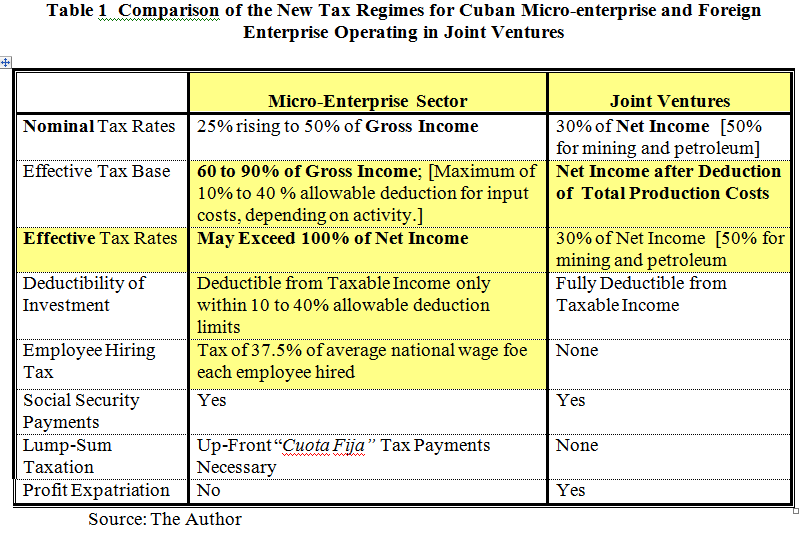
The minor reforms of the micro-enterprise tax regime do relatively little to reduce the fiscal discrimination favoring foreign enterprise. (See Table 1.) The main difference is the determination of the effective tax base which is total revenues minus costs of production for foreign firms but for micro-enterprise is gross revenue minus an arbitrary and limited allowable level of input costs. The result of this is that the effective tax rates for foreign enterprises are reasonable but can be unreasonable for Cuban microenterprises. For Cuban micro-enterprises, the effective tax rate could reach and exceed 100%.

Moreover, investment costs are deductible from future income streams for foreign firms this being the normal international convention. But on the other hand, for Cuban micro-enterprise, investment costs are deductible only within the 10 to 40% allowable cost deduction levels.
III. Example: Three Taxation Cases for a Paladar or Restaurant

To illustrate the character of the tax regime, a case of a “Paladar” is examined below. It is assumed that the total revenues or gross earnings of the Paladar are 100,000 pesos per year (Row 1) or a modest 280 CUP or about $US 10.50 per day.

It is imagined then that there are three costs of production cases: Case A, B and C where costs of production are 40%, 60 and 80% of total revenues respectively. A situation where input costs for a Paladar are 80% of total revenues is reasonable, given the required purchases of food, labor, capital expenses, rent, public utilities etc. On the other hand, the 40% maximum is unreasonably low.

The differing true input cost situations (Rows 2 and 3) generate different true net income (Row 6). The tax base however is determined by the legal maximum allowable of 40,000 (Row 4 and 5) and is 60,000 pesos in all three cases (Row 7). The income tax payable is determined by the progressively cascading scale noted above and is 19,750 in all three cases (Row 8, based on calculations not shown here). The tax on hiring the legal minimum two employees is 25% of 150% (that is, 37.5%) of the average national wage which was 429 pesos per month or 161 pesos for 12 months for two employees = 3,864 pesos per year (Row 9). A guess for the surtax on use of public services is 1,200 pesos per year (Row 10). The total taxes then are the sum of Rows 8 t0 10 and are 26,614 per year (Row 11).

The effective tax rate is then calculated as Tax Payment as a percentage of Actual Net Income (Row 11 divided by Row 6). For the third case where true costs of production are 80% of total revenues, the effective tax rate turns out to be well over 100% (124.1%). This is due to fixing the maximum allowable for costs in determining taxable income at an unrealistic 40% while the true costs of production were 80% of total revenues.

The chief result of this example is that effective tax rates can be much higher than the nominal tax rates for all the activities where true input costs exceed the defined maximum. In some cases, taxes owed could easily exceed authentic net income – assuming full tax compliance.  This situation likely occurs for all activities not covered by the simplified tax regime.

Such high effective rates of taxation of course could destroy the relevant microenterprise, and block the emergence of new enterprises. While under the previous policy environment for microenterprise, this was perhaps the objective of policy. However, the objective of the new policy environment is to foster and enable micro-enterprise and to create jobs.

IV. Conclusion

Can the Micro-enterprise sector generate about 500,000 new jobs by April 2011 and 1.2 million in the next year? On the positive side, there have been some measures of a non-tax nature (e.g. the stigmatization has been relaxed, licensing has been liberalized; there has been a minor increase in legal activities; prohibitions and regulations have been eased somewhat; and improved access to inputs will likely be possible.) But on the negative side, a narrow definition of legal activities will limit enterprise and job creation; the prohibition of professional activities remains; restrictions and prohibitions on hiring workers remain; and restrictions and prohibitions remain.

The timid revisions of the tax regimen will not facilitate job creation in the microenterprise sector.

  • The high level of taxes generally will limit enterprise creation and legalization.
  • The underground economy will continue to be encouraged.
  • The tax on the hiring of employees will discourage the absorption of labor into microenterprise activity.
  • Microenterprises will remain stunted by the high effective tax rates that are incurred when costs of production exceed the minimum deductible for tax determination purposes.
  • The tax discrimination favoring foreign firms in joint ventures continues.

In order for the micro-enterprise sector is to expand so as to absorb the 1.2 million redundant public sector workers in the process of being fired, further reform of the tax system is necessary.
Posted in Blog, Featured | Tagged , , , , , , , , | 1 Comment

News and Articles, January 10 – 16, 2011

Financial Times, January 16: Joint UK-Cuban venture to build power plants
http://www.ft.com/cms/s/0/2100689a-2174-11e0-9e3b-00144feab49a.html#axzz1BJ0kommx

El País, 16 de enero: Cuba rectifica en privado http://www.elpais.com/articulo/reportajes/Cuba/rectifica/privado/elpepuintlat/20110116elpdmgrep_5/Tes

Juventud Rebelde, 16 de enero: Destacan papel de economistas cubanos en discusión popular de cambios económicos http://www.juventudrebelde.cu/cuba/2011-01-16/destacan-papel-del-economistas-cubanos-en-discusion-popular-de-cambios-economicos/

IBTraveler, January 16: Obama’s call to ease travel restrictions to Cuba draws criticism
http://www.ibtimes.com/articles/101451/20110116/barack-obama-cuba-travel-cuba-tourism-us-cuba-travel-restriction.htm

LAHT, January 16: Cuban Dissidents Optimistic About U.S. Measures; Havana Silent
http://www.laht.com/article.asp?ArticleId=384090&CategoryId=14510

The Hindu, January 16: Cuba raps Facebook, YouTube for closing its account
http://www.thehindu.com/news/international/article1095189.ece

The Miami Herald, January 15: A (semi) oficial reaction to eased travel http://miamiherald.typepad.com/cuban_colada/2011/01/a-semiofficial-reaction-to-eased-travel.html

Reuters, January 15: Cuba calls relaxed rules blow to U.S. conservatives
http://www.reuters.com/article/idUSTRE70D7AA20110115

Straits Times, January 15: Cuba says “hasta la vista” to CNN en Espanol http://www.straitstimes.com/BreakingNews/World/Story/STIStory_624453.html

IPS, 15 de enero: Cuba: Los retos de la inclusión social http://cubaalamano.net/sitio/client/report.php?id=1236

Tampabay.Com, January 15: Obama’s new policy opens way for flights to Cuba out of Tampa 
http://www.tampabay.com/news/business/airlines/obamas-new-policy-opens-way-for-flights-to-cuba-out-of-tampa/1145674

Cubadebate, 14 de enero: Obama restituye políticas de Bill Clinton sobre Cuba derogadas por George Bush http://www.cubadebate.cu/noticias/2011/01/14/obama-restituye-politicas-de-bill-clinton-sobre-cuba-derogadas-por-george-bush/

The Gazette, January 14: U.S. to ease travel restrictions to Cuba, allow more cash to island http://www.montrealgazette.com/news/ease+travel+restrictions+Cuba+allow+more+cash+island/4112146/story.html

The Miami Herald, January 14: Text of White House note on eased travel http://miamiherald.typepad.com/cuban_colada/2011/01/text-of-white-house-note-on-eased-travel.html

Reuters, January 14: US food sales to Cuba fall further in 2010 http://news.yahoo.com/s/nm/20110114/us_nm/us_cuba_usa_5

Caribepreferente.com, 14 de enero: La cadena Iberostar se queda con los hoteles de NH en Cuba http://www.caribepreferente.com/index.php?option=com_content&task=view&id=12029&Itemid=40

Cubaencuentro, 14 de enero: Ajustes en el sector cultural en Cuba http://www.cubaencuentro.com/cuba/noticias/ajustes-en-el-sector-cultural-en-cuba-253791

Cubanet, 14 de enero: La economía cubana en 2010 http://www.cubanet.org/articulos/la-economia-cubana-en-2010-2/

Global Post, January 14: Cuba trades doctors for dollars http://www.globalpost.com/dispatch/cuba/110113/cuba-oil-doctors-castro

The Miami Herald, January 13: Castro’s ‘adjustments’ get no support from Argentine Marxists, who suspect a sellout http://miamiherald.typepad.com/cuban_colada/2011/01/castros-adjustments-get-no-support-from-argentine-marxists-who-suspect-a-sellout.html

PTS, 13 de enero: Cuba: Medidas de “ajuste” contra los trabajadores http://www.pts.org.ar/spip.php?article16928

Granma International, January 13: Cuba: its provinces and municipalities over time
http://www.granma.cu/ingles/cuba-i/13enero-Cuba.html

EFE, 13 de enero: Cuba ha celebrado 55.000 debates ciudadanos sobre el plan de ajustes económicos http://es.noticias.yahoo.com/9/20110113/twl-cuba-ha-celebrado-55-000-debates-ciu-e1e34ad.html

Diario de Cuba, 13 de enero: La ‘libreta’ y el socialismo http://www.diariodecuba.com/cuba/2623-la-libreta-y-el-socialismo

The Miami Herald, January 13: Operarius interruptus http://miamiherald.typepad.com/cuban_colada/2011/01/operarius-interruptus.html

Radio Rebelde, 13 de enero: Reordenamiento laboral, una política necesaria http://www.radiorebelde.cu/noticia/reordenamiento-laboral-una-politica-necesaria-20110113/

Bernama-PRELA, January 13: Preparations Underway for Cuba-Venezuela Submarine Cable http://www.bernama.com/bernama/v5/newsworld.php?id=556463

Cubaencuentro, 13 de enero: Calculan que el cemento de Cuba permitirá construir 500 casas en Venezuela http://www.cubaencuentro.com/cuba/noticias/calculan-que-el-cemento-de-cuba-permitira-construir-500-casas-en-venezuela-253651

Havana Times, January 12: What Cuba’s Reforms May Bring http://www.havanatimes.org/?p=35917

Café Fuerte, 12 de enero: Creció el turismo, pero los visitantes gastaron menos http://cafefuerte.com/2011/01/12/crecio-el-turismo-a-cuba-pero-los-visitantes-gastaron-menos/

Cubaencuentro, 12 de enero: Los servicios sociales cubanos son insostenibles en el actual modelo económico http://www.cubaencuentro.com/cuba/noticias/los-servicios-sociales-cubanos-son-insostenibles-en-el-actual-modelo-economico-253549

Temas, octubre-diciembre de 2010: Carmelo Mesa-Lago: Cincuenta años de servicios sociales en Cuba http://www.temas.cult.cu/revistas/64/045%20MesaLago.pdf

Diario de Cuba, 12 de enero: Holguín: Trabajadores del central Urbano Noris, en huelga http://www.diariodecuba.com/derechos-humanos/2611-holguin-trabajadores-del-central-urbano-noris-en-huelga

Cuba Standard.Com, January 11: Argentinean tour operator starts weekly flights http://www.cubastandard.com/2011/01/11/argentinean-tour-operator-starts-weekly-flights/

AP, 11 de enero: Comercio internacional de Cuba crece 5,5% en 2010 http://es.noticias.yahoo.com/11/20110111/tbs-car-eco-cuba-comercio-cabeza-f8250da.html

The Miami Herald, January 11: Cuba, U.S. need to talk about oil drilling, says co-chair of the BP oil spill task force http://miamiherald.typepad.com/cuban_colada/2011/01/cuba-us-need-to-talk-about-oil-drilling-says-co-chair-of-the-bp-oil-spill-task-force.html

People’s Daily, January 11: Local Chinese restaurant benefit from economic reform in Cuba
http://english.peopledaily.com.cn/90001/90778/7256504.html

El Nuevo Herald, 11 de enero: ‘Paladares’ brotan como hongos en La Habana http://www.elnuevoherald.com/2011/01/10/867015/paladares-brotan-como-hongos-en.html

People’s Daily, January 11: Cuba in search of own economic path http://english.peopledaily.com.cn/90001/90778/7256503.html

Wall Street Journal, January 10: So much for Cuban economic reform http://online.wsj.com/article/SB10001424052970203418804576039640218425926.html

Solvisión, January 10: Cuba at the Epicenter of Aid to Haiti http://www.solvision.co.cu/english/index.php?option=com_content&view=article&id=1812:cuba-at-the-epicenter-of-aid-to-haiti-&catid=34:portada&Itemid=171

LAHT, January 10: Cuba Touts Therapeutic Vaccine for Lung Cancer
http://www.laht.com/article.asp?ArticleId=383573&CategoryId=14510

Europa Press, January 10: Cuba recibió 2,5 millones de turistas en 2010 y aumentó un 5,5% sus ingresos por turismo http://es.noticias.yahoo.com/5/20110110/tbs-cuba-recibi-2-5-millones-de-turistas-9e5b28e.html

The Miami Herald, January 10: Errors that led to a minister’s ouster are hinted at by paper; Raúl wants ‘exigency’ http://miamiherald.typepad.com/cuban_colada/2011/01/errors-that-led-to-a-ministers-ouster-are-hinted-at-by-paper-ra%C3%BAl-wants-exigency.html

El Nuevo Herald, 10 de enero: Un principio de año espeluznante http://www.elnuevoherald.com/2011/01/10/866409/oscar-espinosa-chepe-un-principio.html

Cuba Standard.Com, January 10: Ecuador seeking small-business exports to Cuba
http://www.cubastandard.com/2011/01/10/ecuador-seeking-small-business-exports-to-cuba/

EFE, 10 de enero: Mil delegados participarán en el VI Congreso del Partido Comunista de Cuba
http://es.noticias.yahoo.com/9/20110110/twl-mil-delegados-participaran-en-el-vi-e1e34ad.html

Granma, 10 de enero: Elegirán este mes precandidatos al VI Congreso del Partido
http://www.granma.cubaweb.cu/2011/01/10/nacional/artic05.html

IPS, 10 de enero: Producción agrícola se desplomó en 2010 http://cubaalamano.net/sitio/client/brief.php?id=8685

El Universal, 10 de enero: La realidad de los números http://www.eluniversal.com/2011/01/10/opi_art_la-realidad-de-los-n_2152029.shtml

IPS, 10 de enero: Caen tasas de fecundidad y reproducción http://cubaalamano.net/sitio/client/brief.php?id=8686

Posted in News on the Cuban Economy | Leave a comment

News and Articles, January 3 – 9, 2011

Cuba Standard.Com, January 9: New Cohiba cigar deemed a ‘commercial success’
http://www.cubastandard.com/2011/01/09/new-cohiba-cigar-deemed-a-commercial-success/

PRELA, 9 de enero: Reiteran en Cuba valor del trabajo para solucionar problemas
http://www.prensa-latina.cu/index.php?option=com_content&task=view&id=253623&Itemid=1

Diario de Cuba, 8 de enero: El gobierno dice que enseñará a los cubanos en 24 clases cómo hacer su propia casa http://www.diariodecuba.com/cuba/2562-el-gobierno-dice-que-ensenara-los-cubanos-en-24-clases-como-hacer-su-propia-casa

Juventud Rebelde, 8 de enero: A pesar de todo, adelante http://www.juventudrebelde.cu/columnas/acuse-recibo/2011-01-08/a-pesar-de-todo-adelante/

Reuters, January 8: Cuba offshore oil rig delayed til mid-summer-sources
http://af.reuters.com/article/energyOilNews/idAFN0723371820110108

El Nuevo Herald, 8 de enero: Ecuador ratifica protocolo en materia económica con la isla
http://www.elnuevoherald.com/2011/01/08/865941/ecuador-ratifica-protocolo-en.html

Diario de Cuba, 8 de enero: ¿Cómo publicar un libro en Cuba? http://www.diariodecuba.com/cultura/2351-como-publicar-un-libro-en-cuba

Europa Press, 7 de enero: Cuba suspende su Vuelta Ciclista 2011 para reducir gastos
http://es.noticias.yahoo.com/5/20110107/tsp-cuba-suspende-su-vuelta-ciclista-201-d27ad05.html

Generation Y, January 7: Layoffs and Farewells http://www.diariodecuba.com/cultura/2351-como-publicar-un-libro-en-cuba

Reuters, January 7: Cash-strapped Cuba says trade surplus doubled
http://www.reuters.com/article/idUSN0721538620110107

Deutsche Welle, 7 de enero: Cuba: ¿comienzo del fin del socialismo? http://www.dw-world.de/dw/article/0,,14755929,00.html

EFE, 7 de enero: Otorgadas en Cuba más de 75.000 licencias para ejercer el trabajo privado
http://es.finance.yahoo.com/noticias/Otorgadas-Cuba-m%C3%A1s-75-000-efenews-3602030235.html?x=0

Granma, 7 de enero: A limpiar de ataduras la venta liberada http://www.granma.cubaweb.cu/2011/01/07/nacional/artic04.html

AFP, January 7: Cabinet reshuffle in Cuba http://www.google.com/hostednews/afp/article/ALeqM5gjkGiuAQJwAfgmtyVkr5dxmUDDWg?docId=CNG.a66be4aff7d2a273c8eaaf1d153a465e.1a1

Granma, 7 de enero: Nota oficial http://www.granma.cubaweb.cu/2011/01/07/nacional/artic07.html

Xinhua, January 7: Cuba to publish financial results of public firms for the first time
http://news.xinhuanet.com/english2010/world/2011-01/07/c_13680408.htm

Reuters, January 6: Cuban police to get tough as reforms progress https://research.tdwaterhouse.ca/research/public/Markets/NewsArticle/1314-N06122809-1

Cuba Standard.Com, January 6: Banks reducing exposure to Cuba http://www.cubastandard.com/2011/01/06/banks-reducing-exposure-to-cuba/

Cuba Standard.Com, January 6: Piñón on Energy: Russia and China racing for Cuba’s refineries?
http://www.cubastandard.com/2011/01/06/pinon-on-energy-russia-and-china-racing-for-cubas-refineries/

Infolatam, 6 de enero: Cuba: Sin libreta y sin trabajo http://www.infolatam.com/2011/01/06/cuba-sin-libreta-y-sin-trabajo/

The Miami Herald, January 6: State-run businesses, even the smallest, must report finances to statistics agency http://miamiherald.typepad.com/cuban_colada/2011/01/state-run-businesses-even-the-smallest-must-report-finances-to-statistics-agency.html

Cubanet, 6 de enero: Cuba inicia 2011 con el agua al cuello http://www.cubanet.org/articulos/cuba-inicia-2011-con-el-agua-al-cuello/

El País, 6 de enero: La agonía cubana http://www.elpais.com/articulo/opinion/agonia/cubana/elpepuopi/20110106elpepiopi_2/Tes

Granma, 6 de enero: La sociedad precisa de la PNR el máximo de rigor
http://www.granma.cubaweb.cu/2011/01/06/nacional/artic08.html

El País, 6 de enero: Suerte, Cuba http://www.elpais.com/articulo/ultima/Suerte/Cuba/elpepiult/20110106elpepiult_1/Tes

Diario de Cuba, 6 de enero: La vanguardia intelectual trata de economía http://www.diariodecuba.com/opinion/2521-la-vanguardia-intelectual-trata-de-economia

The Guardian, January 6: Cubans give warm welcome to British cruise liner
http://www.guardian.co.uk/world/2011/jan/06/cuba-warm-welcome-british-cruise-liner

The Miami Herald, January 6: Head of import agency flees to U.S., paper reports; a corruption probe was under way http://miamiherald.typepad.com/cuban_colada/2011/01/head-of-import-agency-flees-to-us-paper-says-a-corruption-probe-was-under-way.html

Juventud Rebelde, 5 de enero: Cuentas nuevas y claras http://www.juventudrebelde.cu/cuba/2011-01-05/cuentas-nuevas-y-claras

El Mundo, 5 de enero: Escapa de Cuba el ‘gurú’ del comercio entre la isla y los Estados Unidos
http://www.elmundo.es/america/2011/01/06/cuba/1294275152.html

Ahora, January 5: More than 56,000 Russian Tourists Visited Cuba in 2010 http://www.ahora.cu/english/sections/national/3421-more-than-56000-russian-tourists-visited-cuba-in-2010.html

CNA, January 5: Cuba hanging between unbridled capitalism and socialist totalitarianism, dissident warns http://www.catholicnewsagency.com/news/cuba-hanging-between-unbridled-capitalism-and-socialist-totalitarianism-dissident-warns/

The Miami Herald, January 5: Economic reforms could hurt Castros http://www.miamiherald.com/2011/01/05/2001430/economic-reforms-could-hurt-castros.html

Radio Cadena Agramonte, January 5: Cuba-Ron Company Launches New Rum to the Market http://www.cadenagramonte.cu/english/index.php?option=com_content&view=article&id=3843:cuba-ron-company-launches-new-rum-to-the-market&catid=2:cuba&Itemid=14

Benzinga, January 5: Cuba Drills Deep, Losers And Winners http://www.benzinga.com/11/01/752143/january-5-2011-cuba-drills-deep-losers-and-winners

Radio Nederland, 5 de enero: Cambios estructurales y de mentalidad en Cuba http://www.rnw.nl/espanol/article/cambios-estructurales-y-de-mentalidad-en-cuba

Havana Times, January 5: Cuba & the Plan to Export Professionals http://www.havanatimes.org/?p=35580

El Nuevo Herald, 5 de enero: Inicio de despidos genera temores en Cuba
http://www.elnuevoherald.com/2011/01/04/863908/inicio-de-despidos-genera-temores.html

Granma, 5 de enero: Exige ministro de Educación Superior vincular eficiencia económica y académica http://www.granma.cubaweb.cu/2011/01/05/nacional/artic04.html

La Vanguardia, 5 de enero: El azúcar amarga a Cuba http://www.lavanguardia.es/internacional/20110105/54098090941/el-azucar-amarga-a-cuba.html

El País, 4 de enero: Comienzan en Cuba los despidos masivos http://www.elpais.com/articulo/internacional/Comienzan/Cuba/despidos/masivos/elpepuintlat/20110104elpepuint_8/Tes

Cuba Standard.Com, January 4: Cuba trying to attract Canadian cruise tourists
http://www.cubastandard.com/2011/01/04/cuba-trying-to-attract-canadian-cruise-tourists/

BBC, January 4: British cruise ship Thomson Dream to dock in Cuba
http://www.bbc.co.uk/news/world-latin-america-12116832

The Miami Herald, January 4: Cuba will help Ecuador treat disabled kids http://miamiherald.typepad.com/cuban_colada/2011/01/cuba-will-help-ecuador-treat-disabled-kids-.html

Comunidades. Semana. Com, 4 de enero: Cuba debe adecuar su modelo económico a la situación mundial actual para profundizar la Revolución http://comunidades.semana.com/wf_InfoNoticia.aspx?IdNoticia=6694

Cubaencuentro, 4 de enero: ¿Exportar gente o servicios profesionales?
http://www.cubaencuentro.com/cuba/articulos/exportar-gente-o-servicios-profesionales-252970

IPS, 4 de enero: Economía cubana se librará de “hojarasca”, asegura experto
http://cubaalamano.net/sitio/client/brief.php?id=8667

Havana Times, January 3: Cuba Has New Look Starting 2011 http://www.havanatimes.org/?p=35505

Bloomberg, January 3: Cuba official says state worker layoffs have begun
http://www.businessweek.com/ap/financialnews/D9KH6DS82.htm

Bloomberg, January 3: Cuba’s tobacco company sues Mich. shop over name
http://www.bloomberg.com/news/2011-01-03/cuba-s-tobacco-company-sues-mich-shop-over-name.html

El Nuevo Herald, 3 de enero: Cuba comenzará su plan de reajuste laboral desde mañana http://www.elnuevoherald.com/2011/01/03/863012/cuba-comenzara-su-plan-de-reajuste.html

Reuters, January 3: FACTBOX-Key political risks to watch in Cuba  http://af.reuters.com/article/energyOilNews/idAFRISKCU20110103

Business Report, January 3: Cuba’s economic reforms get Catholic nod
http://www.iol.co.za/business/international/cuba-s-economic-reforms-get-catholic-nod-1.1007326

Cuba Standard.Com, January 3: Brazil to increase Haiti aid via Cuba http://www.cubastandard.com/2011/01/03/brazil-to-increase-haiti-aid-via-cuba/

Posted in News on the Cuban Economy | Leave a comment