Tag Archives: Freedom of Expression

Paul Hare: “Cuba: What Might Happen Now?”

Paul Hare has just published a valuable analysis on Cuba’s current overall economic and political situation. It is certainly worth some careful attention. Especially interesting is the Appendix which presents a detailed and comprehensive comparison of the positions of the Government with those of dissident groups on a broad range of issues.

Paul Hare was the British Ambassador to Cuba from 2001-2004. He is  currently a Lecturer in International Relations at Boston University.

Paul Webster Hare, Cuba, What Might Happen Now in Cuban Affairs: Quarterly Electronic Journal, Volume 6 Issue 2, 2011

Summary

It didn’t happen 20 years ago. It hasn’t happened so far in 2011. Despite massive popular uprisings against totalitarian governments elsewhere in the world, Cuba continues to buck the trend. If there are no mass protests and sit-ins at the Plaza de la Revolución, what might happen now in Cuba? What changes are taking place in Cuba, and what are the implications for its economic and political future?

This paper analyzes the new political and economic space that is opening up in Cuba. The space is developing because the government has recognized that it needs to salvage the economy if it is to salvage the Revolution. This paper argues that Cuba is unlikely in the near-term to see a grass roots movement that demands the wholesale replacement of its leadership. But the surge of interest in the economy, perhaps unwittingly stimulated by the government, is shifting activity to territory that favors the opposition. Raul Castro is promoting a language of reform, even though his own definitions require some linguistic contortions. His speeches are still more of the parade ground, rather than of a CEO growing a business in the world market. And there is no new product; instead a striving to perfect the old one – socialism – through greater efficiency, reducing state spending and cutting imports. But so far there is no acceptance by Raul Castro that by allowing individuals to get rich, the Cuban economy will grow.

None of this means that democracy with features such as freedom of expression, freedom of movement, and an end to communist party monopoly is around the corner in Cuba. Indeed there have been many times in the 52 year revolution when signals of greater openness were withdrawn. But in 2011 the scenario is moving away irreversibly from the communist comfort zone. The debate is not yet in the political center but it is hard to see how it can be contained, given the principles that are being discussed.

The government is seeking to implement limited reform, change economic calculations, revise revolutionary definitions, and deal with a potential explosion in cell phone use (now 25% of all Cubans) plus demands that internet access be unrestricted for economic and political reasons. The goalposts of 52 years of government are moving slightly. The objective remains a state-controlled economy where the ilitary/government dominates the strategic sectors and not one where a private sector will be given free license. This suggests that those who want an increase in fundamental freedoms in Cuba, and greater political and economic openness, need to engage and show by example in politics, economics and above all in business what works and what offers Cubans a better future. This paper examines how such actions might develop and how a new cadre of “civic entrepreneur” might have a significant influence. The annex provides a summary of what Cubans on the island are saying about current issues of debate.

Annex: How Far Apart are Cubans?

It is difficult if not impossible to gauge opinions on key issues of Cubans on the island. As an attempt to measure the scope of the debate, I have compared below what the government has been saying on a variety of issues with public comments of Cubans not in government positions who live on the island. Some are from members of the “opposition,” some from semi-official centers of studies, and some from popular cultural figures. All are producing the critical comments and new ideas which Raul Castro professes to value. These issues are some of those on which Cubans must join in a debate and where the civic entrepreneurs will have a key contribution.

Ambassador Paul Hare

Posted in Blog | Tagged , , , , , | 4 Comments

Cuba Calls for “Cyberdefence” of the Revolution

Original here: Cuba calls for “cyberdefence” of the revolution

By Isaac Risco Dec 2, 2011, December 2, 2011

HAVANA: Just days after Cuban dissident blogger Yoani Sanchez was named one of the world’s 100 “most influential global thinkers” by US magazine Foreign Policy, the Cuban government is

preparing for “active cyberdefence”.

Despite poor Internet access for the average Cuban, which the authorities in Havana blame on the US embargo, Cuba is now stressing the importance of “occupying the web”. The website Cubadebate, the main pro-government online news outlet, has called for a move “from cyberwarfare to active cyberdefence”.

Cuban Foreign Minister Bruno Rodriguez on Wednesday urged more active involvement in the web and for greater defence mechanisms to fight what the island regards as the hostile attitude of major media outlets. “Euphoria over social networks co-exists with the risk of regime change operations, which has increased, as has the threat to peace. But these dangerous conditions make it necessary and urgent for us to make those platforms our own,” he said. “It is essential to have a political strategy in cyberspace.”

Rodriguez was addressing a workshop on “Alternative Media and Social Networks” with participants from 12 countries, to which Sanchez complained she and other bloggers critical of the government had not been invited. The authorities continue “to exclude the alternative part of (Cuba’s) blogosphere and twittosphere,” Sanchez wrote on Twitter. On her Twitter feed, @yoanisanchez, the 36-year-old regularly criticises Cuban authorities for their attitude to the Internet, among other things. Her campaign to denounce what she termed “political apartheid” at the event reached her more than 180,000 Twitter followers.

Indeed, on Wednesday, Foreign Policy said Sanchez’s influence shows “that the Internet really does go everywhere, even Castro’s Cuba”.

Sanchez, in turn, wrote on Twitter of the limitations of online stardom in communist Cuba. “Beautiful paradoxes of life. My name on FP’s list of 100 thinkers, and me now ‘thinking’ how to stretch the rice so as to get to the end of the month,” she wrote in a post.

Such “cyberwarfare” has been waged for some time. Blogs like Vision desde Cuba, which openly support the government, seek to counter the influence of those like Sanchez’s.

Despite “the limitations inherent to narrow bandwidth” and the “archaic and extremely slow dial-up connections”, Vision desde Cuba writes that “revolutionary bloggers” like himself back the government against those who, they argue, are being financed from abroad. Havana has traditionally accused dissidents of accepting funds from the United States.

Cubadebate has carried out a broad campaign to promote the use of social networks. Editor Rosa Miriam Elizalde asked in an article that readers “accept the technological challenge”. “I do not have the slightest doubt that if (Cuban national hero) Jose Marti were alive today he would be on Facebook and Twitter,” she said.

Mariela Castro, daughter of the Cuban leader as well as head of Cuba’s National Centre for Sex Education, also recently entered the world of Twitter. She openly confronted Sanchez, among others, in defence of the Cuban government.

Protagonists:

Mariela Castro, Daughter of the Regime

Yoani Sanchez, Daughter of the Revolution

Posted in Blog | Tagged , , | Leave a comment

Larry Press on “The Past, Present and Future of the Internet in Cuba”

At the dawn of the Internet, Cuba led the Caribbean in computer networking and was well positioned to continue to lead.  But the Cuban Internet stagnated due to the collapse of the Soviet Union, the US embargo, and the “dictator’s dilemma” — a desire to enjoy the benefits of connectivity without its political and cultural risks.

Today, Cuban infrastructure, skills, and application sophistication are behind the rest of the Caribbean and most of the world.  The Cuban Internet is like their old cars — Cuba is stuck at Web 1.0.

What of the outlook for the future?  Here we have questions and predictions, but few certain answers.  The ALBA-1 undersea cable connecting Cuba and Venezuela has been installed and will begin service in the fall of 2011.[1][2]  The cable will dramatically increase the speed of Cuban international connectivity and decrease its cost.  It seems safe to predict that current users in areas like education, health care, government and tourism will be first to reap the benefit of ALBA-1.New domestic communication infrastructure and human resources will be needed if Cuba is to utilize the cable, but it is not clear how this investment will be financed or how much progress has been made to date.  Given the US trade embargo and Chinese involvement in the ALBA-1 cable, it is likely that the Chinese will also be involved in the upgrading of domestic infrastructure.  U. S. and Cuban leaders are also aging and will doubtless change, but it is uncertain how those changes will impact the Internet.

Larry Press produces a valuable Blog on the Internet in Cuba which is well worth examination. Its address is here: The Internet in Cuba.
Larry Press

Posted in Blog | Tagged , , , | 2 Comments

Yoani Sánchez: ETECSA: From Surveillance to Indiscretion

Original essay here: Generation “Y”, ETECSA: From Surveillance to Indiscretion

How many telephones do you think are listened into by the political police? I asked a man who once worked for State intelligence and who now is just one more private citizen. I ventured a three-digit number, a modest count that provoked gales of laughter across his wrinkled face. “Up to the mid-nineties about 21,000 lines were tapped, and now it must be double that with the addition of cellphones.” Another gentleman confirmed the number; his work had once been nosing around in other people’s conversations and installing microphones in the homes of dissidents, state officials and even inconvenient artists. I spent the day I heard such a bloated number feeling Big Brother’s eye on every tree, in every corner of my house, thinking about the indiscreet ear stationed in that little gadget with a screen and a keyboard that I carry in my pocket.

ETECSA, the only phone company in the country, uses its status as a state monopoly over communications to provide listening services to the Ministry of the Interior. This is not a delusion of my fevered brain. I have tried taking apart my phone, even removing the battery and leaving town; the “shadows” who keep watch over my house immediately get edgy. Sometimes, just to amuse myself — I freely admit it — I use my cellphone to invite several friends to participate in some presentation of an official book or an event organized by a State institution. The resulting operation would seem almost comical, if it weren’t for the evidence of the excessive resources — which should be contributing to the well-being of the people — that the government devotes to such things.

The watchers, however, can also become the watched. ETECSA employees leaked a data base through the alternative networks with many details about the country’s telephone numbers. Without a doubt a violation of the discretion any company should exercise over its information about its clients. But this has served to unmask the phone numbers of those who watch and denigrate us. From journalists working for the newspaper Granma, to members of the Central Committee, to senior police officials, their data appeared with their identity card numbers and even their home addresses. Brief acronyms show which phones are paid for by government agencies and which are private. Which exposes the official links of many who call themselves independent. For once, the detailed inventory they’ve made on every citizen has served for us to know about “them,” to know that those who are listening on the other end of line have names, not just pseudonyms. Now, anyone can call them, send them a message, something as short and direct as a text saying “Enough already!”

Posted in Blog | Tagged , , | Leave a comment

Cubans Test Official Limits on Criticism

By THE ASSOCIATED PRESS
PINAR DEL RIO, Cuba (AP) — Pedro Pablo Oliva was the kind of model citizen the Cuban government wants to show the world.

Oliva proclaimed his loyalty to Fidel Castro’s revolution, his support for its goal of social equality and his gratitude for cultural largesse that nurtured his
development into an internationally celebrated painter and sculptor. He even
did a turn as a delegate in the regional assembly of the western province of
P nar del Rio. But when Oliva criticized harassment of dissidents and suggested there might be room for a party other than the Communists, he was abruptly expelled from the assembly, accused of counterrevolutionary behavior. He found himself with no choice but to shutter his home-based community workshop after the government withdrew its support.

President Raul Castro has called on Cubans to openly air their opinions as his government tries to revive the struggling economy with economic reforms. But officials have sent mixed signals about where it draws the invisible frontier between loyal criticism and what they consider to be dangerous attacks on the system.

A prominent socialist intellectual who made a sharp attack on corruption at high levels found himself booted out of the Communist Party for months. But in another case, officials just seemed to shrug when two state economists
criticized the country’s economic reforms as insufficient.

And while Oliva was punished for denouncing attacks on dissidents, when famous singers Pablo Milanes and Silvio Rodriguez did the same, their comments prompted debate in official media but no reprisals.

“It’s a very difficult question to know where the line is, because the line depends on the moment,” said Arturo Lopez Levy, a Cuban-born economist who lectures at the University of Denver.

Read the Rest of the Article: Cubans Test Official Limits on Criticism

Pablo Milanes: Testing the Limits?

Posted in Blog | Tagged , , | Leave a comment

Oscar Chepe Espinosa, “PERIODISMO OFICIAL EN CRISIS”

La falta de credibilidad de la prensa oficial ha llegado a niveles insospechados. Hasta el General Raúl Castro, actual Primer Secretario del PCC,  en el Informe Central al VI Congreso   admitió  que “en este frente  [el periodismo] se requiere dejar atrás, definitivamente, el hábito del triunfalismo, la estridencia y el formalismo al abordar la actualidad nacional…”.

En realidad el Presidente al hacer esta acertada afirmación sobre el periodismo cubano solo se refería a lo que puede observarse en la superficie, pero dejó un lado la génesis del problema, la cual es la permanencia por decenios de un régimen totalitario basado en la mentira y la más grosera manipulación de los hechos, a través de un estricto control de toda la prensa, convertida en un dócil instrumento  para servir  loas a los dirigentes y engañar a la población. Los ciudadanos dignos que se han revelado han sido represaliados con saña, convertidos en personas sin derechos y en ocasiones condenados a largas penas de cárcel por querer expresarse pacíficamente y denunciar la  situación en que malvive la mayoría abrumadora de los cubanos.

En este entorno, los periodistas oficiales han sido escogidos por sus dotes de servilismo al estado-partido y no por el talento o dedicación a la hermosa tarea de informar y analizar los problemas de forma honesta. Ha sido la creación de un ejército de propagandistas, personas –salvo contadas excepciones-  mediocres y carentes de ética; formadas para distorsionar la realidad, y actuar en la prensa escrita, televisiva y radial como verdaderos mercenarios. Hasta el  intelectual marxista Alfredo Guevara, al parecer asqueado por este escenario, reconoció hace unos meses en una reunión con estudiantes de periodismo que la prensa cubana “es muy pobre, no es convincente”, y se preguntó “dónde están esos paradigmas en nuestro periodismo; no sé los profesores que estén aquí cuanto trabajo pasarán para citar un paradigma contemporáneo en el periodismo.”

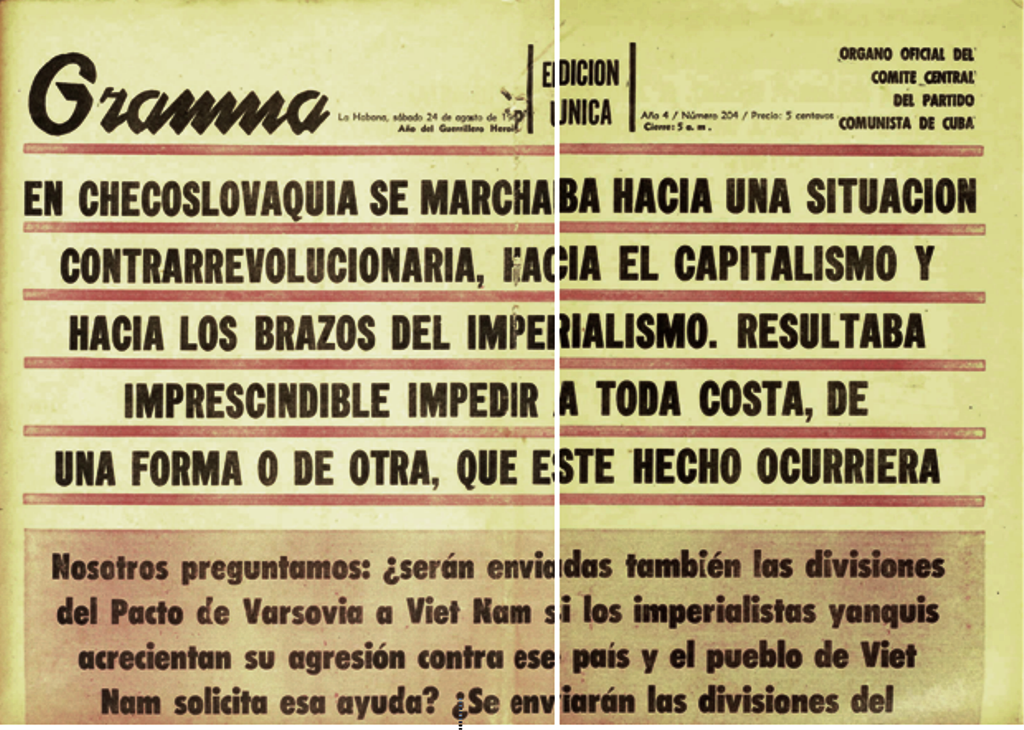
Criterios semejantes han sido vertidos por otros reconocidos intelectuales cubanos, como es el caso del cineasta y escritor Eduardo del Llano, quien llamó a un cambio en la prensa, empezando por la Mesa Redonda a la que critico como el ejemplo “más escandaloso”   de la falta de debate e ideologización de  los medios.  Incluso hasta el periódico Granma se ha tenido que hacer eco del clamor popular por un cambio radical en la prensa cubana, con la publicación de cartas criticas fundamentalmente hacia el mismo programa de televisión abordado por del Llano.

Realmente es escandalosa la utilización de los medios en Cuba.  Se ha perdido la tradición de hacer buen periodismo. La nación en el pasado tuvo órganos de prensa que desde variadas concepciones  eran referencia de magnífico periodismo para todo el continente.  Entre ellos podría mencionarse los periódicos Información, El Mundo, Prensa Libre, Diario de la Marina y Noticias de Hoy, así como las revistas Bohemia, Carteles, Vanidades, Orígenes, Revista de Avance y otras.   No pueden olvidarse plumas tan sobresalientes como las de José Martí, Juan Gualberto Gómez, Don Fernando Ortiz, Manuel Márquez Sterling, Alejo Carpentier, Jorge  Mañach, Enrique José Varona, Ramiro Guerra, Sergio Carbó, Guillermo Cabrera Infante, Ramón Vasconcelos, sin soslayar a los comunistas Carlos Rafael Rodríguez, Juan Marínello, Salvador García Agüero, Nicolás Guillén, Jacinto Torras, Mirta Aguirre y otros.


Hoy la prensa sin credibilidad alguna, de forma manipuladora, busca en el exterior cuantos problemas existen para magnificarlos y examinarlos de forma casi siempre superficial, mientras se obvian los problemas de un país que está al borde del precipicio, como ha calificado el General Raúl Castro.  La Mesa Redonda es el ejemplo más prominente de la estafa informativa, con supuestos periodistas y académicos usualmente sumergidos en análisis torcidos y parcializados. No por gusto, este programa a nivel popular es objeto de burlas de toda clase, al mismo tiempo que se bromea con que los noticieros de la televisión nacional y el periódico Granma son los “únicos verdaderos productores agrícolas” en Cuba.

Incluso los sucesos internacionales están sujetos a análisis caprichosos y se ocultan hechos trascendentales, como la matanza de miles de oficiales polacos en el bosque de Katyn por el ejército soviético -horripilantes sucesos reconocidos hoy hasta por Rusia-, los genocidios en el Kurdistán iraquí por Sadam Husein, y el de Bosnia por los serbiobosnios.  La matanza de Srebrenica,  donde  se  ejecutó   8 000 personas en una noche, no existió en la prensa cubana. Los actos terroristas cometidos por Gadafi, como el derribo del avión en Lockhead, Escocia, nunca han sido analizados en la Mesa Redonda ni otros medios.  Pero los terroristas afganos, fieles aliados de Al Qaeda,  con sus manos manchadas de sangre inocente y salvajes opresores de las mujeres, se les llama “insurgentes” y prácticamente se aplauden sus criminales hechos; mientras,  se mantienen “fraternales” relaciones con los despóticos gobiernos de Corea del Norte, Irán y Siria, entre otros por el estilo, conocidos verdugos de sus pueblos.

En realidad es difícil encontrar en el mundo una prensa tan mendaz y periodistas tan oportunistas.  Las palabras del General Raúl Castro, sobre la difusión en la prensa cubana de materiales aburridos, improvisados y superficiales  son ciertas, pero no resolverán el problema, si al mismo tiempo no se avanza en la tolerancia y el respeto a las opiniones diversas, renunciándose al absurdo monopolio de la supuesta verdad por el Partido Comunista.  Un paso indispensable es que los cubanos podamos utilizar Internet libremente, y que puedan surgir otros órganos de prensa con libertad para reflejar con responsabilidad la variedad de opiniones existente en la sociedad cubana.

El Presidente en variadas ocasiones ha expresado estar en desacuerdo con la falsa unanimidad y  favorecer el debate y el libre intercambio de opiniones.  No obstante,  no se ha avanzado en ese sentido.  Incluso se han producido recientemente preocupantes casos de intolerancia y hechos reprobables, como las presiones sobre el renombrado pintor Pedro Pablo Oliva, solo por expresar pacíficamente sus criterios.

El Primer Secretario del PCC también ha manifestado la disposición de realizar cambios económicos para sortear la crisis.  Resulta imposible lograrlos sin una apertura a las libertades y la democracia, lo cual implica abrirse a una prensa dispuesta a analizar y proponer soluciones, de manera plural y seria sobre la implementación de las transformaciones urgentemente demandadas por la nación. Una prensa maniatada y servil como la actual poco podrá contribuir a que Cuba pueda enrumbarse hacia el progreso y el bienestar de su pueblo.

La Habana, 30 de mayo de 2011

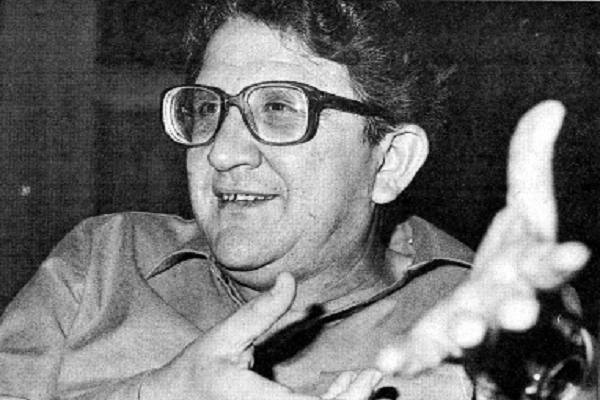
Oscar Chepe and Miriam Leiva, February 2010. Photo by Arch Ritter


Posted in Blog | Tagged , | Leave a comment

Cuban Public Opinion Survey, 2011, International Republican Institute

The International Republican Institute has just published the results of a public opinion survey taken in Cuba, the fifth such survey since 2007. A series of questions were asked concerning general perspectives on Cuba, attitudes towards political and economic change, and access to information technology. Some of the same questions have been asked since 2007 providing some interesting comparisons over time.

The complete survey is located here: Cuban Public Opinion Survey, 2011, Int’n'l Republican Institute

The survey methodology was as follows

  • Dates of Interviewing: The fieldwork was conducted Jan, 28 – Feb. 10, 2011.
  • Data Collection Method: Stratified-intercept methodology based on personal, face-to-face interviews in Cuba.
  • Sample Size: 463 Cuban adults (age 18 and older).
  • Sample: Interviews were conducted in twelve (12) Cuban provinces
  • The sample was stratified by province, then by sub-units within each province. Interviewees were allocated by gender and age quotas. The final selection of each interviewee was random.
  • Respondents: The sample selection for province, gender and age are based on the last available Cuban census data, released in 2002.
  • Maximum Sample Margin of Error: Margin of error of ± five percent for a 95 percent level of confidence.

There are a number of interesting results of the survey. Here are a couple.

1. What do you think is the biggest problem in Cuba?   60.7% said that Low Salaries / High Cost of Living were the most serious, up from 40% in 2009,  while 12.7% said that food scarcity was the most serious. 1% of the respondents stated that the Lack of Freedoms / Political System was the most serious. This suggests that Raul Castro’s priority on the economy is not misplaced.

2.      If you were given the opportunity to vote to change from the current economic system to a market economy system – with economic freedoms, including opportunities for Cubans to own property and run businesses – would you vote in favor of, or against, that change?  90.7 of the respondents were in favor. The prospective pro-market reforms of the Sixth Congress would appear to be in line with public opinion.

3.      Do you believe the current government will succeed in solving Cuba’s biggest problem in the next few years?     77% say no, a higher proportion than in any IRI survey since 2007.

4.      If you were given the opportunity to vote to change from the current political system to a democratic system – with multi-party elections, freedom of speech and freedom of expression – would you vote in favor of, or against, that change? 78.2% were in favor.

5.      Do you regularly use a cellular phone?  25.3% said yes, up from 10% in 2007.

Presumably the Government of Cuba conducts similar studies but with differently worded questions that produce results somewhat more congenial to the status quo.

But the results of the IRI surveys certainly must be of deep concern to the Government and the Party.

Posted in Blog | Tagged , , , , , , | Leave a comment

New Publication: Oscar Chepe, Cambios en Cuba: Pocos, Limitados y Tardíos

Oscar Chepe’s recent  work on Cuba’s economic situation and the reform process has just been published and is available on the web site: Reconciliación Cubana, or here: Oscar Chepe, Cambios Cuba: Pocos, Limitados y Tardíos

Oscar continues to be a courageous and  outspoken analyst of Cuba’s economic policies. In this past, this earned for him a period of forced labor in the 1960s and incarceration in March 2003 along with 75 others. Despite this, he continues to express his views openly and honestly. Although his voice is heard easily outside his own country, within Cuba, his views unfortunately are blocked rather effectively by state control of the publications media, the electronic media and by the continuous violation of the right to freedom of assembly.

Below is a Table of Contents followed by an Executive Summary by Rolando Castaneda.

Table of Contents:

Prologo por Carmelo Mesa Lago 1
Resume Ejecutivo por Rolando Castañeda 6
I. Introducción 11
II. Pequeñas y medianas empresas 14
III. Actualización del modelo económico cubano 16
IV. Problemas de orden externo e interno 19
V. La empresa estatal socialista 22
VI. Mercados mayoristas, precios 24
VII. Cooperativas 27
VIII. Política fiscal 29
IX. Políticas macroeconómicas 31
X. Política monetaria 34
XI. Política económica externa 37
XII. Inversión extranjera 40
XIII. Política inversionista 43
XIV. Ciencia, tecnología e innovación 45
XV. Política social 47
XVI. Salud 51
XVII. Deporte 54
XVIII. Cultura 56
XIX. Seguridad social 59
XX. Empleo y salarios 61
XXI. Política agroindustrial 64
XXII. Política industrial y energética 68
XXIII. Política energética 71
XXIV. Turismo 74
XXV. Política de transporte 77
XXVI. Construcciones, las viviendas y los recursos hidráulicos 79
XXVII. Comercio 82
XXVIII. Conclusiones 84
A 20 años de Primer Informe de Desarrollo Humano de ONU 87
Cuba Bordeando el Precipicio 90
La Economía Cubana en 2010 93
Cuba: Un Principio Espeluznante 100

Oscar Chepe and Miriam Leiva, February 2010. Photo by Arch Ritter

Resumen Ejecutivo, por Rolando Castañeda

Planteamiento general
Los instrumentos aprobados por el gobierno para la implementación del trabajo por cuenta propia, el proceso de la reducción de las plantillas infladas, el recorte de los gastos sociales y el Proyecto de Lineamientos de la Política Económica y Social, revelan pocos, parciales e insuficientes cambios, que no solucionarán la crisis socioeconómica existente.
El gobierno sólo actualiza (“le pone parches”) a las fuentes principales de los problemas actuales: el sistema socioeconómico, que no ha funcionado, es irreparable y está mal gestionado, así como el régimen político totalitario carente de libertades civiles fundamentales. Ellos han llevado al desastre, la dependencia externa e impiden la sustentabilidad económica.
La baja eficiencia, la descapitalización de la base productiva y de la infraestructura, el envejecimiento y estancamiento en el crecimiento poblacional, entre otros muchos males, son consecuencias de ese modelo.
El gobierno elude medidas indispensables mientras propone unas pocas medidas insuficientes, llenas de limitaciones y prohibiciones. También reitera sin corregir apropiadamente medidas anteriores que han sido implementadas con muchas limitaciones y sin tener una concepción integral de la economía, tales como: la entrega de tierras en usufructo, el pago por resultado a los trabajadores y los recortes fiscales.
Los Lineamientos definen que primará la planificación y no el mercado, o sea continuará la burocratización de la sociedad, bajo rígidas normas centralizadoras, que imposibilitan la flexibilidad requerida por la actividad económica y la vida en general de la nación. No se reconoce la propiedad privada y se subraya la política de no permitir el crecimiento de la actividad individual.
La seria contradicción de una política con ribetes neoliberales de drásticos recortes, sin que se brinde a los ciudadanos posibilidades reales de ganarse el sustento decentemente, e incluso aportar de forma racional a los gastos del Estado, podría determinar convulsiones sociales, en un ambiente ya permeado por la desilusión y la falta de esperanza.

El despido de trabajadores y el trabajo por cuenta propia
El vital proceso de racionalización laboral, con el despido hasta abril de 2011 de 500.000 trabajadores considerados innecesarios, el 10% de la fuerza de trabajo ocupada, para continuar haciéndolo posteriormente con otros 800.000, que fue postergado por tantos años, ahora se pretende realizar de forma muy rápida. No se ha contado con la preparación apropiada ni la organización para que tenga éxito en un plazo tan breve y se pueda reubicar una cantidad tan grande de despedidos. Ni siquiera se han modificado los artículos de la Constitución Política (i.e. el 21 y el 45) que se contraponen a lo propuesto.
Al desestimulo por los bajos salarios, la carencia de información técnica, el vacío de reconocimiento social y las generalizadas malas condiciones laborables, a las nuevas generaciones de estudiantes se une ahora la incertidumbre de hallar empleo futuro por el despido masivo de trabajadores.
El trabajo por cuenta propia en sólo 178 actividades permitidas que deberá absorber el despedido masivo de trabajadores, enfrenta graves limitaciones, más severas que las existentes para las empresas estatales y las mixtas con capital extranjero. Incluyen los impuestos por seguridad social del 25% que el trabajador por cuenta propia deberá contribuir, así como los trabajadores que se contraten con base en un salario fijado por el gobierno, a un nivel 50% mayor que el salario medio prevaleciente. También están los elevados impuestos sobre los ingresos personales que pueden llegar hasta el 50% cuando excedan de $50,000 anuales, y las restricciones a los gastos de operación que se permiten deducir de los ingresos brutos para fines tributarios, en algunos oficios de sólo hasta el 10% de los ingresos anuales.
A ello hay que añadir algunas prohibiciones arbitrarias, tal como las sobre el número de sillas de los restaurantes (20) y las barberías (3), así como la ausencia de un mercado mayorista de abastecimiento de insumos. Hasta tanto ese mercado no aparezca, continuará desarrollándose la ilegalidad y, sobre todo, el robo de los recursos estatales, estimulado por el extendido descontrol existente y el miserable salario de los trabajadores. ‘
De esta forma el Estado reduce la actividad individual a iniciativas arbolitos bonsái e impide el crecimiento del trabajo por cuenta propia y el surgimiento de pequeñas y medianas empresa. Un mecanismo configurado para mantener el estrecho control del Estado-Partido sobre la sociedad, temeroso de que el fortalecimiento y desarrollo de la actividad privada pueda convertirse posteriormente en un peligro.

Aspectos generales y macroeconómicos

La mayoría de los Lineamientos sobre aspectos generales, macroeconómicos y sectoriales son enunciativos, generalidades que soslayan la grave situación con la continuada acumulación de graves problemas y sin proponer soluciones reales para los mismos. Desafortunadamente, los cambios requeridos no se avizoran. Este conjunto de 28 artículos se refiere a estos temas y por qué considera que su tratamiento es insuficiente para una sociedad estatizada, llena de distorsiones y carente de racionalidad económica
El problema de la descapitalización física es sumamente serio. Desde inicios de los años 1990 se mantienen tasas de formación bruta de capital fijo en relación con el PIB usualmente inferiores al 10%, menores a las tasas de amortización de los medios de producción y la infraestructura, aceleradas por la falta de reposición, actualización tecnológica y mantenimiento adecuado.
Desprovisto el país de la “ayuda” a inicios de 1990, empezó el deterioro paulatino de la salud pública, la educación, la seguridad social, el deporte y la cultura, con una incidencia muy negativa en los salarios, que como indicara el presidente Raúl Castro el 26 de julio de 2007 son insuficientes para vivir. La permanencia de los esquemas sociales con oportunidades de acceso para todos está en peligro debido a la falta de sustentación económica.
Resulta indispensable introducir tasas de cambio reales. Las tasas actuales, recargadas por gravámenes absurdos, que pueden conducir a análisis distorsionados y por consecuencia a decisiones equivocadas. En especial respecto a la política de inversiones, el comercio exterior y otros aspectos vitales para el desarrollo nacional. Una moneda sobredimensionada representa un serio obstáculo para el crecimiento de la llegada de turistas, al reducir arbitrariamente la competitividad del mercado cubano.
Cuba paga intereses bancarios muy altos a los prestamistas extranjeros; sin embargo, a los nacionales se les abonan intereses sumamente bajos, incluso por debajo de las tasas de inflación reales. Es necesario motivar a la población a depositar sus ahorros en los bancos, en especial aquellos en moneda convertible, dándosele las debidas garantías y el pago de intereses estimulantes y acordes con la situación financiera del país.
El gobierno no contempla la participación de la comunidad cubana en el exterior en la reconstrucción nacional. Un sector de nuestro pueblo que, con el otorgamiento de las garantías necesarias, podría ser fuente de importantes recursos financieros, tecnologías avanzadas, conocimiento y experiencia en la gestión de negocios y posibles nuevos mercados. Habría que adoptar una política pragmática e inteligente de acercamiento a nuestros hermanos en el extranjero, muy en especial hacia la comunidad afincada en EEUU, que además podría ser un puente para mejorar las relaciones con ese país, con enormes beneficios para nuestra economía.

Aspectos sectoriales
En los aspectos sectoriales de los Lineamientos se habla mucho acerca de ejecutar proyectos e inversiones, de potenciar capacidades de diseño y proyección, y fortalecer determinadas capacidades, pero no se define como hacerlo ni como financiarlo.

La esencia de los problemas nacionales, pueden hallarse en la destrucción de la agricultura que ha provocado una extraordinaria dependencia de alimentos importados, incluido azúcar, café y otros muchos que antes Cuba exportaba, mientras, los Lineamientos, reconocen que “ …las tierras todavía ociosas,.. constituyen el 50%…”. El sector está afectado por los precios fijados por el Estado unilateralmente por debajo del mercado, con frecuentes largas demoras en los pagos y las tradicionales deficiencias en la gestión de las empresas acopiadoras oficiales. Las tiendas abiertas para la venta de herramientas e insumos tampoco constituyen una solución, los precios son demasiado altos.
Las Cooperativas de Crédito y Servicios (CCS), donde los productores con muchas dificultades mantienen sus tierras individualmente, con sólo el 18% de la superficie agrícola total (cierre de 2007) han generado tradicionalmente más del 60% de la producción agrícola nacional, así como el más bajo por ciento de tierras ociosas, a pesar de la crónica falta de recursos, el permanente hostigamiento, las prohibiciones y la obligatoriedad de entregar las cosechas total o parcialmente al Estado en las condiciones y a los precios arbitrarios fijados por él.
En este escenario si se continúa con la mentalidad de ejercer estrictos controles sobre los posibles cooperativistas y negando la voluntariedad como concepto básico para la formación de las cooperativas, por muchos “buenos deseos” e indefinidos planteamientos que existan, el movimiento cooperativo no avanzará.
En la industria se refleja con mayor fuerza el proceso de descapitalización generalizado desde principios de la década de 1990. Por ello se requiere con urgencia su modernización y reequipamiento para poder detener la tendencia al actual atraso tecnológico, e incluso la paralización del sector. En 2009 se alcanzó una producción correspondiente al 45% de 1989, incluida la industria azucarera. Si se excluyera esta industria, el indicador sería del 51%. La producción nacional de materiales de construcción es muy baja, con un índice de volumen físico, al cierre de 2009, solo del 27% del nivel de 1989.
El gobierno cubano no publica los ingresos netos por concepto de turismo, por lo cual es difícil evaluar con precisión sus beneficios. Debido al pobre desarrollo de la economía cubana, se importa muchos productos consumidos por los visitantes. Esta actividad podría ser una de las locomotoras que impulse las demás ramas de la economía, pero para ello habría que realizar reformas estructurales, que reduzcan radicalmente la dependencia del exterior.
Conclusión

El aniquilamiento de los sueños de un futuro más justo y próspero para Cuba, podría detenerse si se propiciara un proceso de reconstrucción radical, con el abandono de los dogmas que tanto daño han hecho. Cuba posee significativas reservas productivas inexplotadas y un pueblo que debidamente estimulado, con libertad para crear, podría sacar a la nación de la crisis. Para ello resulta indispensable un nuevo modelo económico, político y social en el cual participarían en paridad de derechos y deberes las iniciativas públicas y privadas, estableciéndose un círculo virtuoso propiciador de desarrollo, que en la medida en que progresen ambas iniciativas se beneficie el país con mayores niveles de eficiencia, así como más y mejores productos, y el incremento del pago de impuestos que haga sostenible la financiación de la educación, salud pública, seguridad y asistencia social, y otros.

Posted in Blog | Tagged , , , , , , , , , , , , , | 2 Comments

An Overview Evaluation of Economic Policy in Cuba circa 2010

By Arch Ritter

The essay attached and summarized briefly here was presented at a conference at CIAPA, in San Jose, Costa Rica, February 3 and 4, 2009 organized by Paolo Spadonu of Tulane University.

The full essay is entitled An Overview Evaluation of Economic Policy in Cuba, circa 2010, June 30, 2010 and can be seen “HERE”. The Introduction and Conclusion are presented below.

Hopefully, this evaluation will change considerably for the better after the Sixth Congress of the Communist party of Cuba in April.

I. Introduction

The economic development of Cuba has been characterized by high levels of investment in people with successful results, but with weak performance in terms of the production of goods and services generally. Cuba’s achievements regarding human development are well known and are epitomized by the United Nations Development Program’s “Human Development Index” (HDI). On the one hand, this index ranks Cuba at #1 in the world for the Education component (somewhat surprisingly) and #31for the Life Expectancy component. On the other hand, Cuba’s world ranking is for GDP per capita in purchasing power parity terms is #94 with an overall world HDI ranking of #51(UNDP, HDR, 2009, 271.) These rankings underline the inconsistency between the Cuba’s high level of human development on the one hand and its economic underperformance on the other. The strong economic performance of the 2004 to 2008 period appeared to constitute a rapid recovery in terms of Cuban GDP statistics. However, this recovery, while perhaps not illusory, was fragile and unsustainable, based on factors such as support from Venezuela and high nickel export prices, and indeed it has been reversed in 2009-2010.

Given the quality of Cuba’s human resources, the economic performance for the last 15 years should have been excellent. The central argument of this essay is that Cuba’s weak economic performance has been the result of counter-productive public policy. The objective of this essay is to analyze and evaluate a number of central policy areas that shape Cuba’s economic performance, including monetary and exchange rate policy, policy towards micro-enterprise; agricultural policy, labor policy, foreign investment policy, policies towards infrastructure renewal, and the policy approach to self-correction and self-renewal.

In order to present a brief overview of the evaluations, an academic style of grading is employed, with an “A+” being excellent through to an “F” representing “failure”.

This evaluation schema is of course subjective, impressionistic and suggestive rather than rigorous. It is based on brief analyses of the various policy areas. However, the schema is similar to the scoring systems widely used in academia, and is used here with no more apology than is normally the case in the academic world.

Before proceeding with the policy analysis and evaluation, a brief overview of economic performance in the decade of the 2000s is presented to provide the context for the examinations of economic policy.

II. General Economic Performance

III.  Evaluation of Some Central Policy Areas

IV.   Summary and Conclusion:

A summary of the evaluations of the various assessment areas yields an overall evaluation of   “D +”. This is not a strong assessment of Cuban economic policies.

1. Monetary & Exchange Rate Policy                  C-

2. Micro-Enterprise Policy                                    F

3. Policy towards Agriculture                              C-

4. Labor Policy                                                        D+

5. Foreign Investment Policy D+

6. Infrastructure Renewal                                   D

7. Capacity for Self Correction                            D

Overall Grade: D +

The result of such weak policies in these areas is weak economic performance. Badly conceived economic policies nullify the potential efforts of the Cuban citizenry. The major investments in human capital, while fine in their own right, are not yielding strong economic performance. Indeed, misguided policies are undermining, sabotaging and wasting the economic energies and initiatives of Cuba’s citizens.

Major policy reforms amounting to a strategic reorientation of Cuban economic management are likely necessary to achieve a sustained economic recovery and future economic trajectory. So far, writing in June 2010, the Government of Raul Castro has made some modest moves, principally in agriculture, as mentioned earlier. Other policy areas such as those relating to micro-enterprise are reported to be under discussion at high levels in the government. On the other hand, the replacement of the reputed pragmatists Carlos Lage, (Secretary of the Council of Ministers) and Jose Luis Rodriguez, (Vice President of the Council of Ministers and Minister of Economy and Planning) and the replacement of Lage by Major General José Amado Ricardo Guerra of the Armed Forces seems to suggest that the Raul Castro Government may be moving towards a less reformist approach to economic management ( Granma International, 2009.)

The types of policy reforms that would be necessary to strengthen the policy areas discussed above would include the following:

  1. Monetary & Exchange Rate Policy: movement towards realistic and unified monetary and exchange rate systems;
  2. Micro-Enterprise Policy: establishment of an enabling and supportive policy environment rather than a punitive policy of containment;
  3. Policy towards Agriculture: further support for small-scale farmers plus a reinvigoration of the abandoned sugar fields with cane for ethanol, among other policies;
  4. Labor Policy: implement the International Labour Organization approach to fundamental labor rights;
  5. Foreign Investment Policy: establish a clearer and more unequivocal rules-based policy framework;
  6. Infrastructure Renewal: strengthening resource flows towards maintenance, especially for housing, water, and sanitation, and facilitating self-managed and do-it-yourself maintenance on the housing stock by liberalizing the trades and making repair supplies available at reasonable cost;
  7. Capacity for Self Correction: permit an authentic implementation of freedom of expression and freedom of association thereby permitting economic analysis and criticism through a free press and media and the formation of alternate “teams” of potential economic managers – some within political parties.

In sum, effective economic management requires new ideas, transparency and criticism, and, indeed, a major policy reform process in order to reverse the current wastage of human energies, talents and resources. Policy reorientations in the directions noted above are unlikely to be forthcoming from the Government of Raul Castro, which appears to be deeply conservative as well as “gerontocratic”. Cuba will likely have to wait for a “New Team” or more likely a “generational change” in its overall economic management before such major reforms can be implemented.


Posted in Blog, Featured | Tagged , , , , , , , , , , , , , , , , , | Leave a comment

Cuba’s Standings in Social, Political, Economic and Environmental Indices in Comparative International Perspective

By Arch Ritter

In the last week of January 2011, the Heritage Foundation (HF), a conservative US “Think Tank”. published its 2011 Report on Economic Freedom. No surprise: Cuba ranks #175 of the 177 countries included in that report, ahead only of North Korea and Zimbabwe.

The concept or definition used for “Economic Freedom” is:

“Economic freedom is the fundamental right of every human to control his or her own labor and property. In an economically free society, individuals are free to work, produce, consume, and invest in any way they please, with that freedom both protected by the state and unconstrained by the state. In economically free societies, governments allow labor, capital and goods to move freely, and refrain from coercion or constraint of liberty beyond the extent necessary to protect and maintain liberty itself.”

The components of economic freedom in the Heritage Foundation’s definition include business freedom, trade freedom; fiscal freedom, government spending, monetary freedom, investment freedom, financial freedom, property rights, freedom from corruption, and labor freedom.

What the HF definition misses is the capability to utilize one’s freedom, such as good health, a useful education, and a reasonable income. Presumably the HF types of freedom are more effective when people live longer, have good health so that they can work and appreciate life, and are not mired in poverty. Cuba would score better if life expectancy, health, education and income distributional measures were included in the concept and the index.

Other Measures of Human Achievement or Performance

The HF’s Economic Freedom Index brought to mind some other measures of social, economic, environmental and political performance. A listing of these and Cuba’s place therein is presented in Table 1 and hyperlinks to some basic definitions and methodological sources are summarized in the next section.

Again, it is no surprise that Cuba fares badly on the political and economic freedom rankings, coming at the very bottom in Latin America on the “democracy” and “freedom of the press” rankings.

Cuba’s high ranking for the EIU Political Instability Index – second only to Costa Rica- is unexpected. Cuba would have scored well on “ethnic fragmentation”, labor unrest (no strikes, collective bargaining or independent unions), economic growth in 2009, income inequality (as officially measured), unemployment (at least the official rate) and “status of minorities”.

Cuba’s standing in the “corruption perceptions” listing does not seem unreasonable.

Cuba’s high standing in the Environmental Performance rankings – again second only to Costa Rica-  will be a surprise to those who have spent time inhaling the exhaust of urban traffic in Havana or observing the fumes of the Havana’s thermal electric plant, pictured below.  Indeed, a close study of the Yale-Columbia-World Economic Forum calculations for Cuba would be worthwhile. One suspects some statistical creativity such as has been employed in the area of basic economic measures such as GDP, unemployment and the Consumer price Index.

Data Sources and Methodology

The full sources of the information are hyperlinked below. The methodologies can also be found at these web sites.

UNDP Measures

1, 2, 3, and 4: Human Development Index 2009, HDR 2009 Statistical Tables

Democracy Measures

5.      The Economist Intelligence Unit’s Index of Democracy 2010,  This index is based on electoral process and pluralism; civil liberties; the functioning of government; political participation; and political culture.

6.      The Economist Intelligence Unit’s “Political Instability Index”. This measure is based on   I. Underlying vulnerability: 1.Inequality Measured by Gini coefficient; 2.State history; 3.Corruption; 4.Ethnic fragmentation; 5.Trust in institutions; 6. Status of minorities; 7.History of political instability; 8.Proclivity to labor unrest; 9.Level of social provision; 10.A country’s neighborhood; 11.Regime type; 12.Regime type and factionalism and II. Economic distress: 1.Growth in incomes Growth in real GDP per head in 2009; 2.Unemployment; 3.Level of income per head

7.      Freedom House, Freedom of the Press index an annual survey of media independence in 195 countries and territories. “The index asesses the degree of print, broadcast, and internet freedom in every country in the world, provides numerical rankings and rates each country’s media as “Free,” “Partly Free,” or “Not Free.””  Freedom House, Freedom of the Press, 2010

8. Press Freedom Index 2010, Reporters Without Borders

9. Freedom House, Freedom in the World, 2010, Tables and Graphs measures freedom according to political rights and civil liberties.

(See also Wikipedia’s list of freedom indices.)

10. The 2010 ENVIRONMENTAL PERFORMANCE INDEX, of the Yale Center for Environmental Law & Policy, Yale University and Center for International Earth Science Information Network, Columbia University and the World Economic Forum. This measure includes some 25 indicators in 10 categories including Environmental Health. Air Pollution (effects on humans), Water (effects on humans), Air Pollution (effects on ecosystems), Water (effects on ecosystems), Biodiversity and Habitat, Forestry, Fisheries, Agriculture and Climate Change

11. “Index of Economic Freedom” The Heritage Foundation. (See discussion above.)

12. Transparency International. Corruption Perceptions Index Report, 2010

Havana Thermal-Electric Plant, from Edificio Fochsa, Hotel Capri on the left, 1997, Photo by Arch Ritter

Posted in Blog, Featured | Tagged , , , , , , | Leave a comment